

What types of materials are best suited for shot blasting before powder coating?
Steel and iron are generally best suited to shot blasting before powder coating because they tolerate abrasive preparation and benefit from thorough removal of rust, mill scale and contaminants. Aluminium and other softer metals can also be blasted, but require a suitable fine media and controlled pressure to avoid distortion or an overly rough surface.
Material suitability for shot blasting depends on the substrate’s hardness, thickness, geometry and existing surface condition, as well as the media and blasting pressure selected. Robust metal components with enough thickness to resist deformation are usually the most predictable candidates, while thin, soft, porous or coated substrates require a more controlled preparation method before powder coating.
Mild steel and structural steel components are well suited to abrasive preparation where the parts have welded areas, fabrication residue or an aged coating that needs to be removed. Their surface profile can be controlled by selecting the appropriate abrasive grade and blast intensity. The profile should be sufficient for the powder coating system to key into without leaving unnecessarily deep peaks and valleys that could affect the final appearance.
Cast iron can also respond well to blasting, particularly where corrosion or an old coating has built up on a complex casting. Its porous structure needs additional attention, however. Oil, moisture and other contaminants may be held within pores and recesses, and trapped gases can cause pinholing or blistering during powder curing. Castings should therefore be assessed for contamination, cavities and deep recesses rather than treated in exactly the same way as flat fabricated steel.
Stainless steel is suitable when the aim is to create a clean, receptive surface, but it should be blasted with equipment and media that will not introduce ferrous contamination. Ordinary steel shot or grit can leave iron particles embedded in the surface, which may later produce staining or compromise the intended corrosion resistance. Dedicated equipment, clean media and appropriate post-blast handling are important for stainless components that will remain exposed in service.
Galvanised and zinc-coated steel needs a different approach. Aggressive blasting can remove or substantially reduce the zinc layer that provides sacrificial corrosion protection. Where the zinc coating is to remain, a light sweep blast or another approved preparation method is generally more appropriate than heavy abrasion. The powder coating specification should also account for the zinc surface, any conversion treatment and the possibility of gases escaping from the coating during curing.
Copper, brass and other non-ferrous alloys may be prepared by blasting, but their hardness and surface response vary considerably. Softer alloys can be marked or distorted by coarse media, while residues from previous processes may be difficult to remove from detailed surfaces. Media cleanliness is particularly important because contamination can affect both the appearance and the adhesion of the powder coating.
Some materials are technically blastable but are not automatically good candidates for conventional powder coating. Magnesium and certain light-alloy castings require specialist risk assessment because of their reactivity, flammability considerations and tendency to contain porosity. Zinc die-castings can also release gases during curing, leading to surface defects unless the part and coating process are specifically suited to them.
Part design is as important as the material itself. Thin sheet, narrow brackets, sharp edges and delicate fins can be damaged by excessive impact even when the parent metal is suitable. Deep holes, threaded sections and overlapping joints may also retain abrasive, dust or moisture. These areas may need masking, plugs, drainage or a less aggressive preparation process to prevent defects after coating.
- Thick, sound metal sections: generally provide the greatest tolerance for conventional abrasive preparation.
- Thin or intricately formed parts: need lower impact energy and careful control to preserve dimensions and edges.
- Previously coated parts: should be checked for unknown coating layers, lead-based finishes or residues before blasting.
- Porous castings: require checks for oil, moisture and trapped gases that could emerge during powder curing.
- Plated or galvanised components: need a process that protects any corrosion-resistant layer intended to remain in service.
The best preparation method is therefore chosen by considering the complete component rather than its metal name alone. A coating specialist will normally assess the alloy, thickness, existing finish, required appearance, service environment and areas that must remain dimensionally accurate. This determines whether abrasive blasting is appropriate, which media is compatible, and whether local masking or an alternative preparation stage is needed before powder is applied.
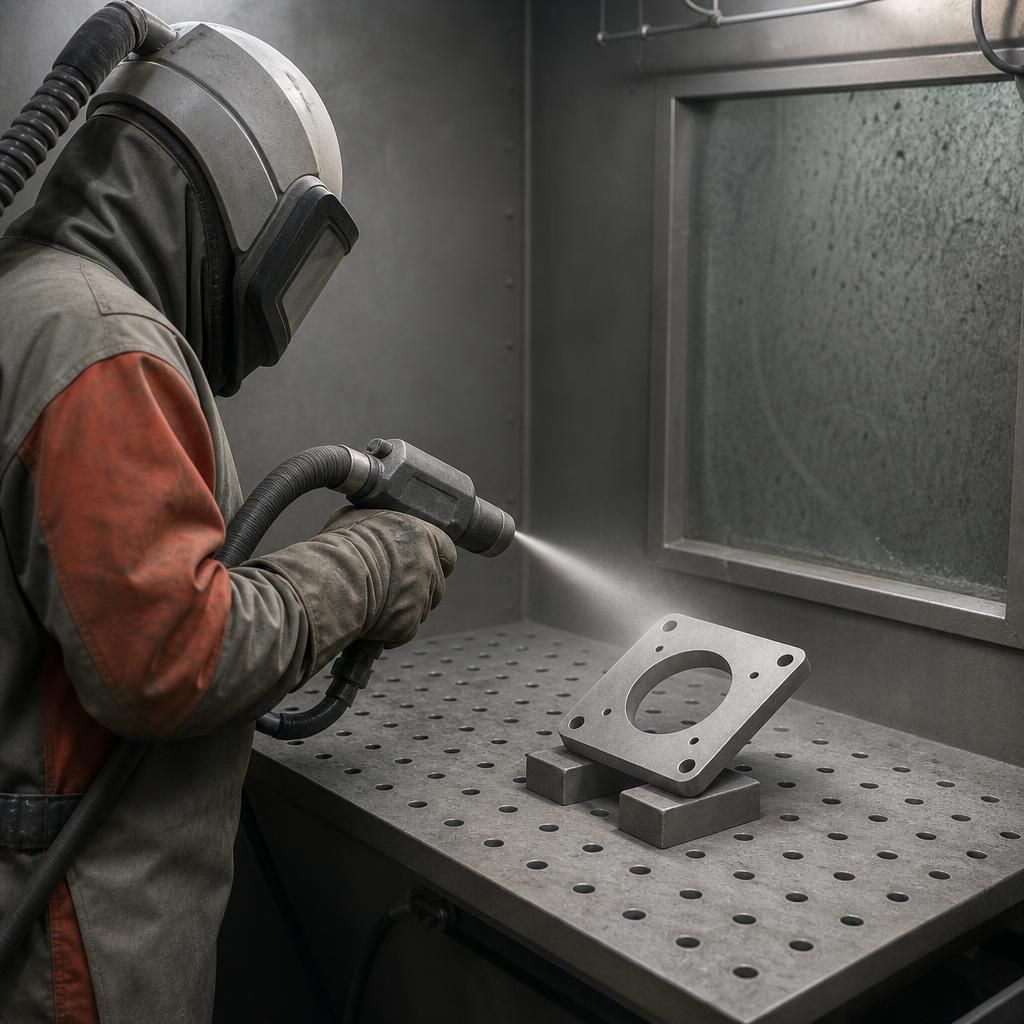
A controlled trial blast is often the most reliable way to confirm whether a material is suitable before an entire batch is processed. This is particularly useful where the component is made from an unfamiliar alloy, combines different metal sections or has a surface finish that is difficult to identify.
A sample or small area can be assessed for changes in dimensions, edge sharpness, surface texture and contamination after blasting. The prepared surface should be clean and suitably keyed for powder coating, without excessive roughness, embedded abrasive or visible distortion. This practical check helps establish the appropriate media, pressure and preparation method for the specific material and component design.
Discuss your material before shot blasting
Discuss your material and component requirements with powder-coatings.co.uk before shot blasting, including the metal type, thickness, existing finish and any areas requiring protection. This helps identify a suitable preparation approach before powder coating.