

What maintenance procedures are necessary after shot blasting to ensure optimal powder coating results?
After shot blasting, inspect the metal for uniform cleanliness, the required surface profile, embedded media, dust and flash rust. Remove loose residue with clean, dry air or vacuum equipment, keep the surface dry and protected from handling or contamination, and transfer it to powder coating without unnecessary delay.
The essential maintenance procedures after shot blasting are to preserve the prepared surface, prevent recontamination, maintain the blasting equipment and control the handover into powder coating. A sound blast profile can be compromised by unsuitable storage, dirty handling equipment, residual process dust or poorly maintained blasting machinery, even when the initial preparation was satisfactory.
Use controlled handling after blasting. Operators should handle prepared components with clean gloves or other suitable protection, particularly on areas that will receive powder. Bare hands can transfer oils, salts and other contaminants. Components should be placed on clean supports rather than directly onto workshop floors, benches or previously used pallets. Contact points should be kept to the minimum necessary and positioned where they will not interfere with coating coverage or electrical earthing during application.
Keep storage and transfer conditions suitable. Prepared metal should be kept in a clean, dry area protected from rain, condensation, spray, process fumes and airborne workshop contamination. Components should not be stored beside grinding, welding or machining operations where fresh dust, oil mist or spatter could settle on the surface. If storage is unavoidable, use clean covers that do not shed fibres or trap moisture against the metal. Any sign of condensation, corrosion or contamination should trigger a documented review before coating rather than allowing the component to proceed automatically.
Maintain racks, hooks and contact fixtures. Suspension equipment accumulates old powder, blast residue and other deposits. Racks, hooks and jigs should therefore be cleaned at a controlled frequency and checked for damage, contamination and loss of reliable electrical contact. Build-up on a hook can affect both the hanging position and the conductivity needed for electrostatic powder application. Fixtures should also support the component securely without masking important surfaces or creating areas that are difficult to coat.
Control compressed air and cleaning equipment. Where air is used around the preparation or coating process, the air supply should be checked for oil, moisture and other contamination. Filters, separators, hoses and nozzles require routine care in line with the equipment manufacturer’s instructions. Cleaning tools, extraction systems and vacuum equipment should be kept dedicated or suitably cleaned so that they do not redistribute oil, powder or workshop debris onto prepared metal.
Maintain the shot blasting equipment for consistent preparation. The blast machine should be cleaned and checked after production runs so that spent abrasive, broken-down media and collected dust do not remain where they can affect the next batch. Important maintenance points include:
- checking the condition and adjustment of blast wheels, nozzles, hoses, liners and protective wear parts;
- removing accumulated dust from the machine, extraction paths and work chamber;
- checking the media charge for breakdown, excessive fines, foreign material or unwanted mixing;
- checking screens, separators and reclaim systems so that unsuitable particles are removed;
- examining dust extraction performance and emptying collection units safely and appropriately; and
- recording maintenance findings, adjustments and replacement of wear parts.
These checks help keep the blasting action stable from one batch to the next. Worn nozzles, damaged wheels, blocked extraction or an imbalanced media mix can alter the surface preparation, even if the machine appears to be operating normally.
Separate prepared and unprepared work. Finished blast-cleaned components should be clearly identified and kept physically separate from untreated stock, parts awaiting degreasing and items returned for rework. Labelling or batch records should link the components to the relevant blasting settings, media condition and any subsequent treatment. This reduces the risk of prepared parts being mixed with parts that require another process.
Manage rework carefully. A component that has been touched by oil, exposed to moisture, damaged during handling or held in unsuitable conditions should not simply be sent to powder coating without assessment. The appropriate corrective action depends on the contaminant and the substrate. It may involve further cleaning, re-blasting, corrosion removal or rejection if the surface cannot be brought back to the required condition. Rework should be recorded so that repeated problems can be traced to handling, storage, equipment or process control.
Use process records to support consistency. A practical maintenance system records the date and scope of machine cleaning, media checks, wear-part inspections, extraction checks and fixture cleaning. Batch identification, operator observations and any corrective action provide useful evidence when a coating defect is later investigated. This is particularly important for repeat production, where a gradual change in blasting performance may not be obvious from a single component.
Before powder coating begins, the prepared parts, handling route, fixtures, air supply and blasting equipment should all be in a condition that will not introduce a new defect. Maintaining the complete process in this way protects the prepared substrate and gives the powder coating stage a consistent surface on which to work.
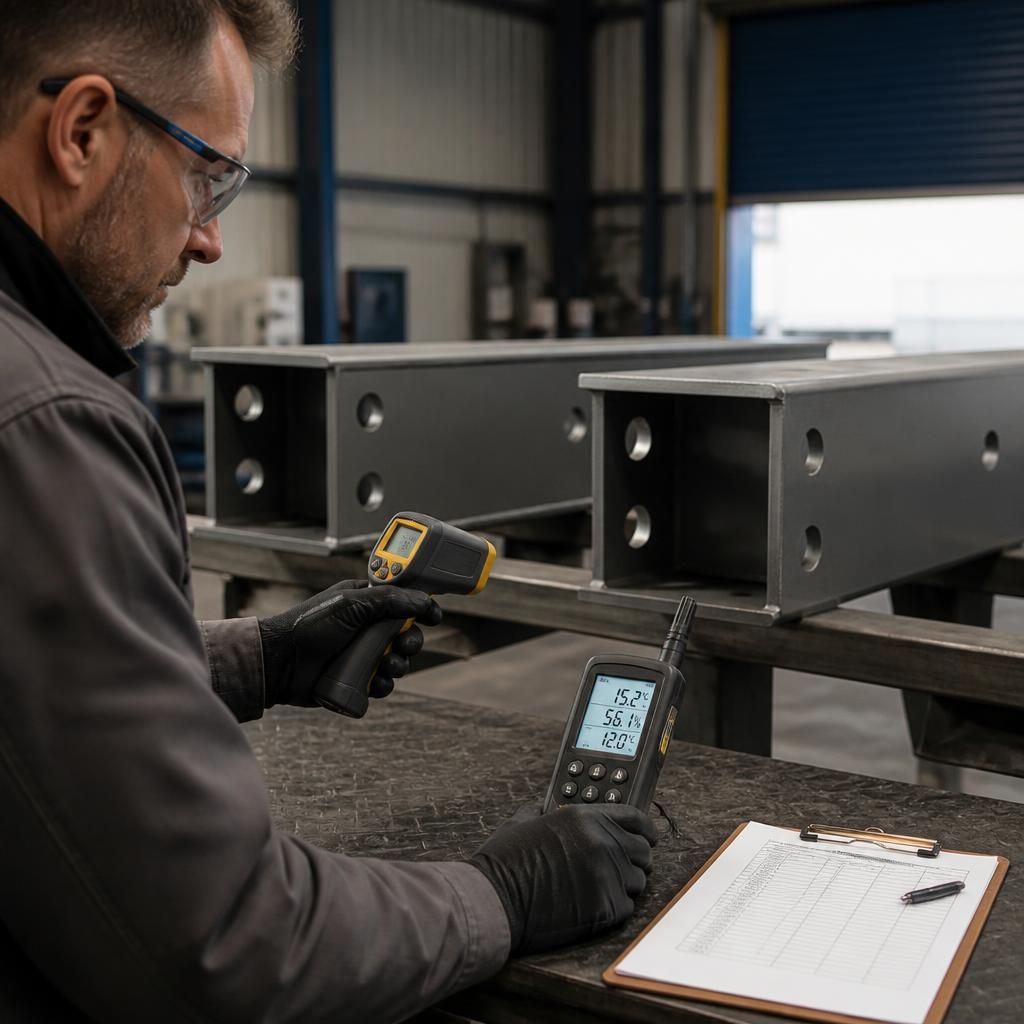
Environmental checks are an important final control before powder coating. Record the metal temperature, surrounding air conditions and risk of condensation, particularly where components move between preparation, storage and the coating area. If moisture has formed or the substrate is too close to the dew point, pause the handover and allow conditions to stabilise before proceeding. This prevents an apparently clean blasted surface from carrying hidden moisture into the coating process.