

What are the common types of shot blasting media used for powder coating?
Common shot blasting media used before powder coating include steel shot, steel grit, aluminium oxide, glass bead and garnet. Steel media provide an aggressive profile for removing scale and corrosion, while aluminium oxide and garnet offer strong cutting action; glass bead produces a smoother, more uniform finish for suitable metal components.
The most commonly selected shot blasting media for powder coating are steel shot, steel grit, aluminium oxide, glass bead, garnet, crushed glass and, for more delicate work, plastic or organic media. The appropriate choice depends on the base metal, the contamination being removed, the surface profile required and whether the component can tolerate impact without distortion.
Steel shot consists of rounded particles that impact the surface without cutting deeply into it. It is generally used where the objective is to remove loose scale, rust or old coating while producing a relatively even, compacted surface. Its rounded shape makes it different from steel grit, which has sharper edges and cuts into the substrate more aggressively.
Steel grit is available in different grades, allowing the blasting intensity and resulting profile to be varied. Coarser grit is suited to heavy corrosion, mill scale and firmly bonded coatings on robust steelwork. Finer grades are more appropriate when a less pronounced anchor profile is needed. Excessive use on thin sections or softer metals can create an unnecessarily rough surface or alter edges and details.
Aluminium oxide is a hard, angular abrasive used where strong cutting action and consistent surface preparation are required. It is particularly useful for removing tenacious contamination and creating a defined profile for coating adhesion. Because it cuts rather than simply peens the surface, the grade and blasting pressure need to be controlled on thin components, machined areas and softer alloys.
Glass bead is a rounded, relatively fine media that can clean and produce a uniform satin or matt appearance without the same degree of cutting associated with angular abrasives. It is often considered for components where maintaining a smoother visual finish is important. It may be less suitable where heavy corrosion, thick coating or deep scale needs to be removed.
Garnet is a naturally occurring, angular abrasive. It provides effective cutting with comparatively low levels of embedded ferrous contamination, which can be relevant when preparing non-ferrous components or applications where iron residue must be carefully controlled. Garnet is commonly selected when a clean, defined profile is required without using steel-based media.
Crushed glass provides an angular abrasive option for removing paint, rust and other surface contamination. Its performance sits between very aggressive cutting media and gentler finishing media, depending on particle grade and operating conditions. It can be useful where a disposable or single-use abrasive is preferred, although handling, recovery and waste arrangements should be considered.
Plastic media is softer than mineral and steel abrasives. It is used for more sensitive components, delicate details or substrates where a harder abrasive could cause excessive removal, distortion or damage. Plastic media is usually chosen for controlled stripping rather than producing a deep profile, so the subsequent powder-coating specification must be considered carefully.
Organic media, such as walnut shell, is another low-impact option for light cleaning and the removal of less firmly bonded contamination. It can be appropriate for delicate surfaces, but it is not normally the first choice for heavy corrosion or a substantial existing coating. Any organic residue must be fully removed before powder coating because remaining contamination can affect wetting, adhesion or the appearance of the finish.
Media selection should also account for the component’s geometry. Recesses, drilled holes, folds and weld areas may require a media and blasting approach that reaches contamination without rounding critical edges or leaving abrasive trapped in cavities. Threaded sections and close-tolerance faces often need particular protection or inspection after blasting.
The required surface profile is equally important. A profile that is too shallow may leave insufficient mechanical keying for the powder coating, while an unnecessarily deep profile can remain visible through the finish or increase powder consumption. The abrasive grade, nozzle distance, air pressure, impact angle and blasting duration should therefore be treated as a combined set of variables rather than selecting media in isolation.
Before production blasting, the operator should check the substrate and the condition of the abrasive. Mixed or degraded media can produce inconsistent results, while media previously used on incompatible materials may introduce contamination. After blasting, components should be inspected for remaining rust, embedded abrasive, dust and uneven preparation before powder is applied. The prepared surface should also be protected from handling contamination and moisture between blasting and coating.
For a mixed batch, the best option may not be the same for every item. Robust structural steel, thin sheet, castings, aluminium and previously coated components can require different grades or entirely different media. A controlled test on a representative part is often the most reliable way to confirm the profile, cleanliness and visual effect before processing the full batch.
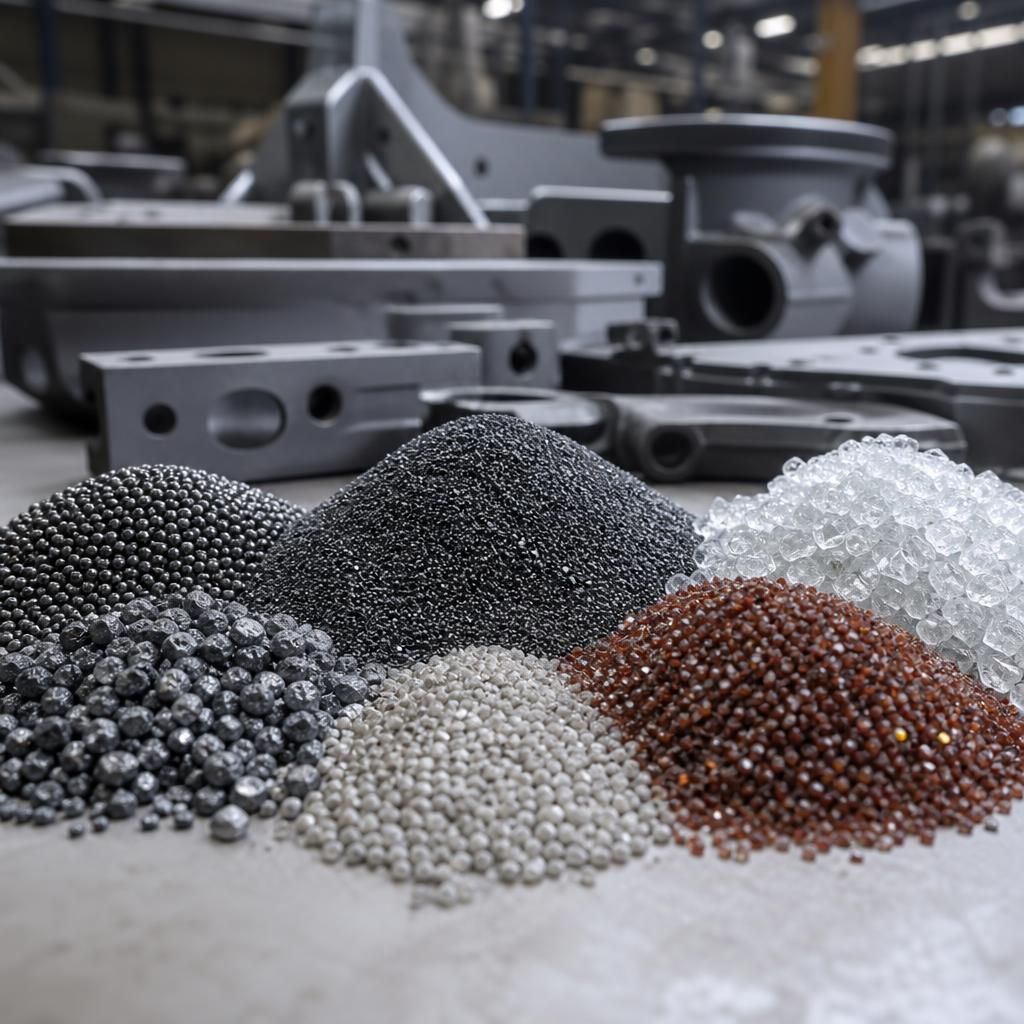
Shot blasting media also differ in how they are recovered and reused. Steel shot and steel grit are durable abrasives commonly used in enclosed blasting equipment with media recovery, whereas glass, garnet and crushed glass are generally treated as expendable abrasives. This affects process control: reusable steel media can become rounded or contaminated over time, gradually changing the blasting action, while expendable media require careful collection and replacement to maintain consistent preparation.
For powder coating work, the important consideration is not simply whether an abrasive can clean the metal. The media must remain suitable throughout the preparation process and must not introduce residues that compromise the coating. A controlled blasting specification should therefore identify the media type, grade, recovery arrangements and inspection requirements before processing begins.
Discuss Your Shot Blasting Media Requirements
Discuss your component material, existing surface condition and required powder-coating finish with the team to identify a suitable shot blasting media and preparation approach. A representative part or batch specification can help confirm the process before production work begins.