

How does shot blasting improve the adhesion and finish quality of powder coating?
Shot blasting removes rust, scale, old coatings and other contaminants while creating a controlled surface profile for the powder coating to grip. This cleaner, more uniform substrate supports stronger adhesion and a more even, consistent finish across the coated metal component.
Shot blasting improves powder coating adhesion and finish quality by preparing a consistent, mechanically receptive metal surface that allows the powder film to bond reliably during curing. Its effectiveness depends not only on the blasting operation itself, but also on media selection, pressure, coverage, handling and the time between preparation and coating.
Improved adhesion: Powder coating does not adhere equally well to every metal surface. Mill scale, oxidation, residues and previous finishes can form weak boundary layers between the substrate and the coating. If these layers remain, the powder may bond to the contaminant rather than the metal, increasing the risk of lifting, flaking or corrosion developing beneath the finish. Shot blasting exposes a more suitable substrate for the coating system and gives the powder film a stable foundation during curing.
The resulting surface also provides mechanical interlocking. As the powder melts and flows, it conforms to the fine contours produced by blasting. Once cured, the coating is held by both its chemical bond with the prepared substrate and its physical engagement with the surface texture. This is particularly important for components exposed to handling, abrasion, moisture or changing temperatures.
More consistent finish quality: Uneven preparation can produce visible differences in gloss, texture and coverage. Areas with remaining scale or residue may repel the powder, while heavily contaminated sections can cure with defects such as pinholes, craters or localised roughness. Consistent blasting produces a more uniform starting condition, helping the powder spread and cure evenly across the component.
Uniform preparation is especially valuable on fabricated parts containing welds, cut edges, corners and changes in section. These areas often behave differently from flat sheet or machined surfaces. Blasting can make the preparation more consistent across those transitions, although the operator must control the process carefully around edges and thin sections to avoid excessive impact or distortion.
Process control matters:
- Media choice: The type, size and condition of the abrasive should suit the metal, component geometry and required finish. Media that is too aggressive can create an unnecessarily coarse surface or damage delicate features; media that is too mild may not provide sufficient preparation.
- Coverage: The blast pattern needs to reach recessed areas, welds and other difficult features without overworking exposed faces. Inconsistent coverage can lead to differences in adhesion and appearance across one component.
- Pressure and distance: These affect the intensity of impact and the resulting texture. They should be controlled rather than increased simply to accelerate preparation.
- Equipment condition: Worn nozzles, contaminated media or inconsistent air supply can alter the blast pattern and create variable results from one batch to the next.
- Post-blast handling: Prepared metal should be protected from fingerprints, moisture, dust and workshop contamination. Any delay before powder application can allow the surface condition to change, particularly in humid conditions.
After blasting, the component should be inspected for uniformity, retained defects and damage to edges or fine details. Dust and loose abrasive must be removed using a suitable method that does not introduce new contamination. The prepared surface should then proceed through the agreed coating process without unnecessary handling.
Shot blasting cannot compensate for unsuitable powder, incorrect curing or poor application control. Adhesion and finish quality also depend on the powder system being compatible with the substrate, the coating thickness being appropriate, and the oven cycle meeting the powder manufacturer’s requirements. When these stages are controlled together, shot blasting provides a dependable preparation stage for durable, even powder-coated metal components.
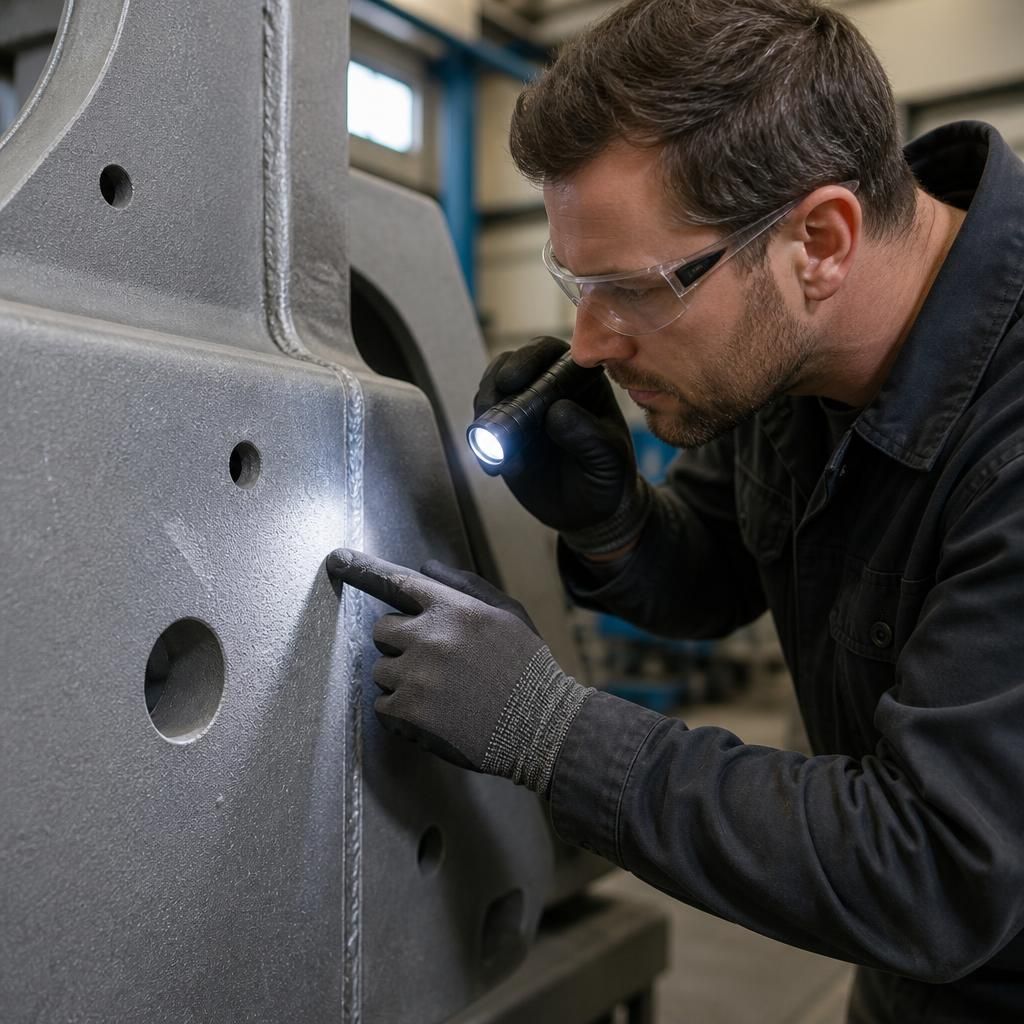
Shot blasting also improves finish quality by revealing surface defects before powder is applied. Pitting, weld spatter, sharp edges, undercut and fabrication marks can become more apparent once scale and residue have been removed. These issues can then be corrected before coating, rather than becoming permanent visible defects beneath the cured finish.
This inspection stage is important because powder coating follows the shape of the prepared metal; it will not reliably conceal deep marks, uneven welds or poor edge preparation. Identifying and rectifying such defects after blasting helps produce a cleaner appearance and reduces the risk of premature damage at vulnerable areas.
Discuss shot blasting for your powder coating project
Discuss your powder coating project with our team, providing details of the metal components, existing surface condition, batch requirements and desired finish. We can help assess whether shot blasting is suitable as part of the preparation process.