

How do I determine the appropriate shot blasting technique for different metal surfaces before powder coating?
Determine the appropriate shot blasting technique by assessing the metal type, component thickness, existing corrosion or coatings, and the surface profile required for powder coating. Select a suitable blasting medium, pressure and application method that cleans the surface without distorting or excessively abrading it, then verify the prepared finish before coating.
The appropriate shot blasting technique is established through a controlled trial that matches the abrasive action to the component’s geometry, the required surface condition and the powder coating specification. The aim is to remove unwanted material and create a consistent key without introducing distortion, embedded abrasive or an excessively rough finish.
Start with the coating and preparation specification. Before selecting the blasting process, define the level of cleanliness and surface profile that the powder coating system requires. This provides an acceptance standard for the prepared metal rather than relying solely on appearance. The specification should also identify areas that must remain free from blast treatment, such as precision-machined faces, electrical contact points, bearing seats, identification marks and close-tolerance threads.
Examine the component’s geometry. A flat, robust bracket can usually tolerate a more direct and consistent blast pattern than a thin panel, narrow tube or detailed casting. Particular attention is needed around:
- inside corners, recesses and boxed sections where abrasive may not reach evenly;
- holes, slots and threaded features where media can become trapped;
- welds and heat-affected areas with uneven hardness or surface contamination;
- sharp edges, which may receive more abrasive action than broad faces; and
- thin sections that may deform if exposed to excessive mechanical or thermal stress.
The part may therefore require different nozzle angles, masking or a staged process rather than one uniform treatment. Components with hidden cavities should be designed or positioned so that abrasive can be removed fully afterwards.
Match the process to production requirements. Wheel blasting is suited to repeatable treatment of robust components with reasonably accessible surfaces. Air blasting gives the operator greater control over direction and coverage, making it more suitable for localised cleaning, awkward profiles and smaller batches. In some cases, parts can be processed in a cabinet or on a hanger; in others, movement or rotation is needed to prevent shadowing and uneven exposure. The correct choice depends on whether consistency, access or local control is the primary requirement.
Consider the nature of the existing surface. Light surface contamination may need less aggressive treatment than firmly bonded scale, weld residue or an earlier coating. A technique that is suitable for removing heavy material can unnecessarily alter a clean, thin or softer substrate. Where several conditions occur on one component, the operator may need to remove the most difficult contamination selectively and then use a less aggressive pass to even out the finish.
Different metals also respond differently. Steel components generally provide a wider operating margin, whereas aluminium and other non-ferrous substrates can be marked, rounded or work-hardened by an unsuitable abrasive action. Zinc-coated surfaces require particular care because excessive treatment can remove protective material. Castings may contain variable hardness, pores and residual sand, so inspection after blasting is important to confirm that contamination has not been exposed or redistributed.
Use a trial piece or representative area. A test panel, sample component or concealed section allows the technique to be checked before the full batch is processed. The trial should reproduce the planned media, equipment, coverage pattern and handling method. Inspect it for:
- even removal of rust, scale, paint or other residues;
- consistent texture across exposed and recessed areas;
- rounded, damaged or distorted edges;
- embedded abrasive, visible dust or remaining contamination; and
- an appropriate profile for the intended powder coating.
Visual inspection should be supported by suitable surface checks where the specification demands them. Profile comparators or gauges can help confirm texture, while cleanliness checks can identify residues that are not obvious under ordinary lighting. The test should also include a practical inspection of holes and cavities, as trapped media can affect assembly and contaminate subsequent processing.
Control the blast pattern, not only the equipment setting. Consistent results depend on how the component is presented to the abrasive stream. The operator should maintain a controlled stand-off, avoid lingering on one area and overlap passes sufficiently to prevent striping or untreated patches. Components should be positioned to expose concealed faces, with particular care around edges and welds. For repeat batches, record the selected process, media condition, loading arrangement and inspection result so that the preparation can be reproduced.
Protect areas that do not require blasting. Masking, plugs or temporary fixtures may be needed for machined surfaces, holes and threads. Masking must remain secure during treatment and must not leave a contaminating residue. If a component has been assembled from different metals or includes heat-sensitive inserts, it may be safer to separate the parts before blasting and prepare each material according to its own limitations.
After treatment, handle the metal with clean equipment and avoid contact with bare hands wherever fingerprints or transferred oils could affect coating adhesion. Remove loose abrasive and dust thoroughly, then check that the surface remains in the specified condition before powder is applied. If the component is stored or exposed to contamination after preparation, it should be reassessed rather than assumed to be ready for coating.
In practice, the most reliable selection is the least aggressive technique that achieves the required cleanliness and profile throughout the component. A specialist coater can use the part drawing, material information, contamination details and a representative sample to validate the method before applying it to a complete batch.
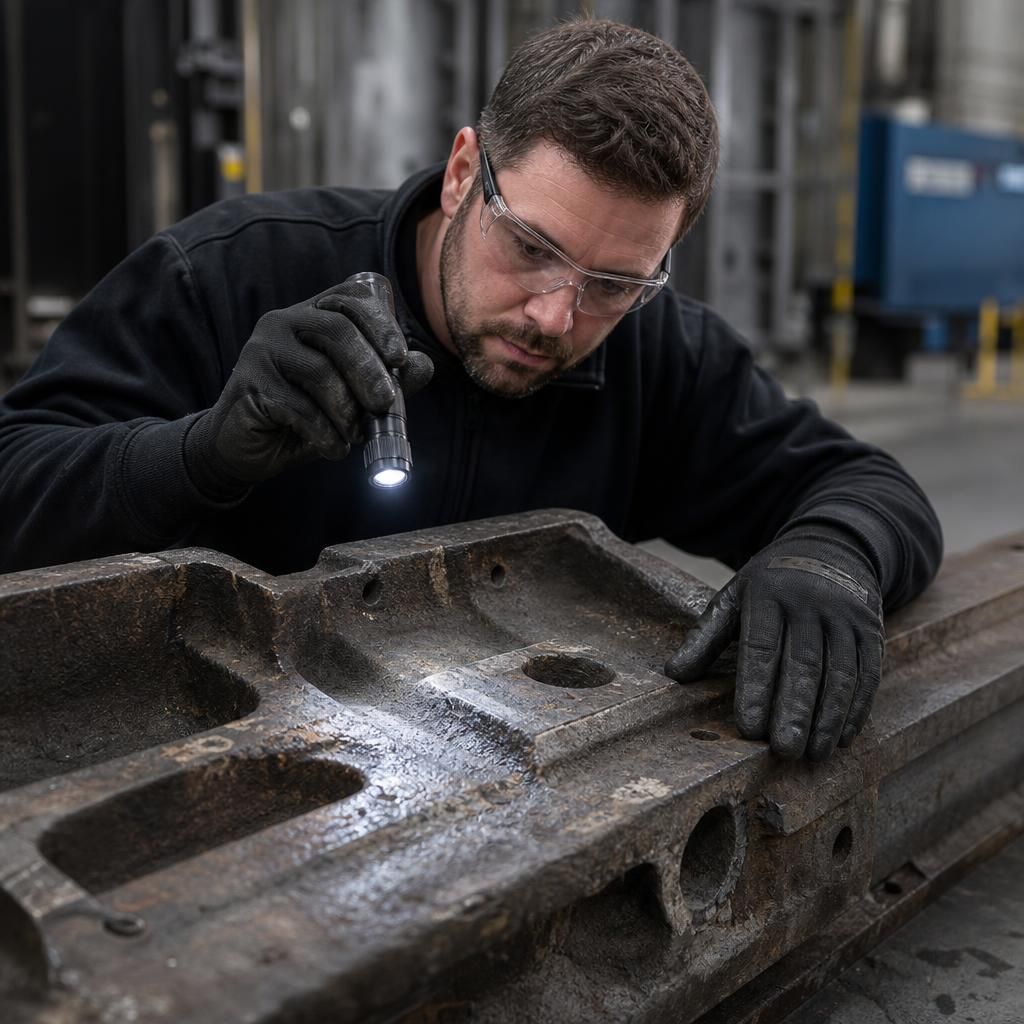
Before selecting a shot blasting technique, separate removable contamination from defects in the metal itself. Blasting can remove loose corrosion, scale and residues, but it will not correct deep pitting, weld undercut, burrs, casting porosity or surface distortion. Increasing the blast intensity to disguise these conditions may enlarge damaged areas or create an uneven profile.
Inspect the unprepared component first and identify any areas that need repair, fettling or rejection before blasting. This is particularly important for visible panels, sealing faces and parts with close dimensional requirements. Once the underlying surface is suitable, the blasting process can be chosen to clean and texture it without being used as a substitute for remedial metalwork.