

What types of metal surfaces are most suitable for sandblasting and powder coating?
Steel, mild steel, cast iron and aluminium are generally well suited to sandblasting and powder coating because they can be mechanically cleaned, profiled and coated for a durable finish. Galvanised and other zinc-coated metals can also be treated, but they require suitable preparation to manage the existing coating and prevent adhesion or surface defects.
The most suitable metal surfaces for sandblasting and powder coating are clean, sound substrates that can withstand abrasive preparation and the heat of the curing process. In practice, suitability depends not only on the metal itself, but also on its thickness, condition, geometry, previous finish and intended use.
Stainless steel can be powder coated where a coloured, textured or additional protective finish is required. Preparation must avoid embedding ordinary steel particles into the surface, as this can introduce contamination and cause staining or corrosion beneath the coating. A suitable non-contaminating abrasive and careful handling are therefore important. The surface also needs to be free from oils, polishing compounds and passivation residues.
Wrought iron and fabricated ironwork are generally appropriate, particularly for frames, brackets, gates, guards and structural components. Sandblasting can remove rust, mill scale and older coatings from accessible areas before powder is applied. Deep corrosion, laminations and sharp edges should be dealt with first; blasting will clean a defect but will not restore metal that has already been lost.
Copper, brass and other non-ferrous alloys may be coated, but they need a more controlled process than robust ferrous parts. Aggressive blasting can distort softer surfaces or leave an excessively coarse profile. Their natural oxidation, heat sensitivity and possible outgassing must be considered, especially where the component is thin, decorative or dimensionally critical. Test preparation may be appropriate before processing a production batch.
Zinc die-castings and porous castings can present a different set of challenges. Entrapped air, oil or moisture may escape during curing and create pinholes, blisters or surface imperfections. Components with this risk may require a suitable pre-treatment, controlled heating or an alternative coating specification. Blind cavities and rough casting features also need inspection because abrasive material and contaminants can collect in them.
What makes a metal surface suitable? A suitable component normally has the following characteristics:
- It is free from excessive oil, grease, moisture and other contaminants that would interfere with adhesion.
- It has enough sound material for blasting to clean and profile the surface without causing distortion.
- It can tolerate the curing temperature without warping, releasing contaminants or losing dimensional accuracy.
- Its design allows the abrasive and powder to reach the required faces, recesses and edges.
- It has suitable hanging or contact points for blasting, coating and electrical grounding.
- It does not contain unprotected seals, bearings, plastics, electronics or other heat-sensitive components that should remain in place.
Component design affects the result. Narrow gaps, deep recesses and enclosed sections can trap abrasive, moisture or cleaning chemicals. Drainage and vent holes may be needed on hollow fabrications, both to assist preparation and to prevent pressure or trapped vapour problems during curing. Weld spatter, sharp burrs and abrupt edges should be removed or blended because powder tends to thin at sharp edges and can highlight fabrication defects.
Existing finishes need assessment. Sound powder coating, wet paint, plating, heavy oxidation and other treatments may respond differently to blasting. Removing an old coating completely is often preferable where its adhesion or chemical composition is unknown. In other cases, the existing layer may require a specified removal method rather than simply being roughened. Lead-based or otherwise hazardous legacy coatings also require controlled handling and must not be treated as ordinary surface contamination.
Thin sheet and precision parts require restraint. Excessive blasting pressure or an unsuitable abrasive can alter a thin panel, close a tolerance or leave an uneven profile. Softer alloys are particularly vulnerable to peening and distortion. Preparation should therefore be matched to the substrate, with masking used for machined faces, threads, bearing seats and other areas that must remain within specification.
Not every metal item is a straightforward candidate. Magnesium, highly porous castings, heavily oil-soaked parts and assemblies containing heat-sensitive materials may need specialist assessment or partial disassembly. Powder coating is also unsuitable where the finished component cannot tolerate the curing cycle or where coating would obstruct a critical electrical, mechanical or mating surface.
Before specifying the process, provide the coater with the base-metal type, component dimensions, previous finish, service environment, required appearance and any areas that must remain uncoated. Drawings or photographs can identify masking, hanging and access issues in advance. For mixed-metal assemblies or unfamiliar alloys, a test piece can help confirm that the selected blast preparation and powder system produce the required adhesion and appearance.
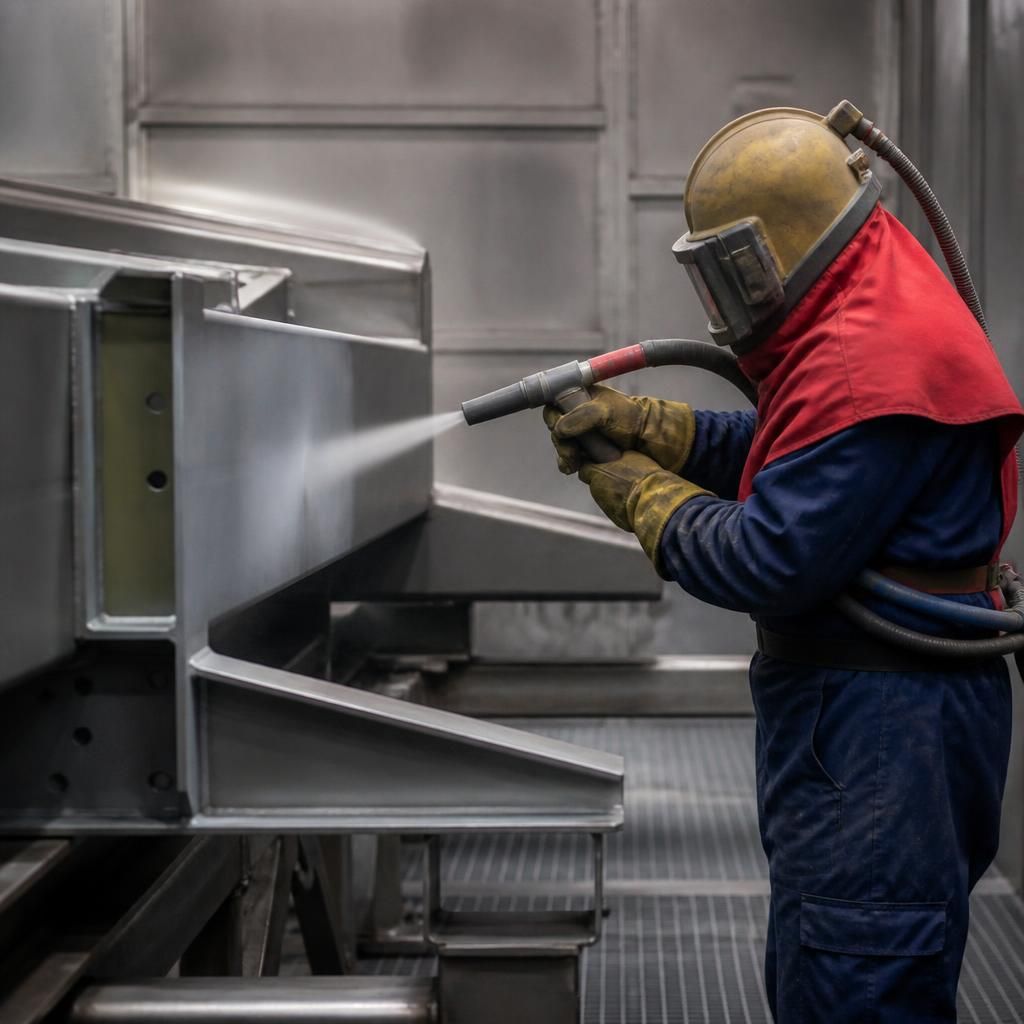
A metal surface may be suitable for sandblasting and powder coating, but the coating system must also match the component’s working environment. Parts exposed to weather, moisture, chemicals, abrasion or elevated temperatures may require a different powder formulation and preparation standard from items used indoors. The substrate, pre-treatment and powder should therefore be considered as one system rather than as separate choices.
This is particularly important for components made from different metals or used alongside dissimilar materials. Differences in thermal expansion, corrosion behaviour and electrical conductivity can affect the finished coating. Confirming the service conditions and required performance before processing helps determine whether the proposed metal surface and coating specification are compatible.
Ask us to assess your metal surface for sandblasting and powder coating
If you are unsure whether a component is suitable, send details of the metal, dimensions, existing finish and intended use for an assessment. Drawings or photographs can also help identify preparation, masking and access requirements before processing.