

What safety precautions should be taken during sandblasting and powder coating processes?
Sandblasting and powder coating require controlled work areas, suitable personal protective equipment (PPE), effective ventilation and safe handling of abrasive media, metal dust and coating powders. Operators should follow documented risk assessments, equipment instructions and relevant workplace safety procedures throughout preparation, application and clean-up.
Safety during sandblasting and powder coating depends on controlling separate hazards at each stage: abrasive impact, airborne dust, compressed air, electrical equipment, coating powder, heat and potential fire. A safe process therefore requires task-specific controls, trained operators, suitable equipment, and clear separation between preparation, coating and curing activities.
Before work begins
- Assess the component, coating specification, substrate and chosen blasting media before setting up the job. The assessment should identify dust, noise, vibration, pressure, manual-handling, chemical and fire risks, together with the controls required for the particular work.
- Restrict access to blasting and coating areas. Signage, physical barriers and suitable procedures should prevent unauthorised people from entering while equipment is operating or surfaces are contaminated.
- Check that operators are trained in the specific blast equipment, powder application system, curing oven and emergency arrangements. Training should cover start-up, shutdown, faults, cleaning and the limits of each control measure.
- Inspect hoses, couplings, blast pots, nozzles, extraction systems, spray guns, cables, earth connections and safety interlocks before use. Defective or damaged equipment should be isolated and repaired by a competent person rather than used temporarily.
- Keep current safety data sheets and handling instructions available for coating powders, cleaning products and any other substances used. Control measures should reflect the hazards identified in those documents and the applicable UK workplace requirements.
Precautions during sandblasting
- Use an enclosed blast room, cabinet or properly screened work area wherever practicable. The enclosure should prevent abrasive and substrate particles escaping into adjacent workspaces, while extraction should be designed to capture contaminants without disturbing the blasting process.
- Use a suitable abrasive for the substrate and application. Media should be stored in a dry, controlled manner and reused or disposed of according to its contamination and waste classification. Do not use a material simply because it is readily available; some media can create serious respiratory hazards when fractured or contaminated.
- Blast operators should use a properly maintained blast helmet or hood with the specified air supply, protective clothing, gloves, safety footwear and hearing protection. Respiratory protective equipment must be selected for the contaminant and used with an appropriate face-fit arrangement where applicable.
- Secure hoses and couplings and use whip checks or other suitable retention devices where required. Never point a pressurised nozzle at a person, and do not bypass dead-man controls or other automatic shut-off devices.
- Do not use compressed air to clean skin, clothing or work surfaces. Remove residue with suitable industrial vacuum equipment or another controlled method that does not disperse dust into the breathing zone.
- Control noise and vibration exposure through equipment selection, maintenance, work organisation and suitable hearing protection. Operators should also be monitored for symptoms associated with hand-arm vibration where the work creates that risk.
- Allow abrasive dust to settle or be extracted before entering an area for inspection or cleaning. Any entry into a confined or poorly ventilated space requires a separate assessment, as ordinary workshop controls may not be sufficient.
Precautions when preparing for powder coating
- Make sure blasted components are free from loose abrasive, dust, oil, moisture and other contamination before coating. Inspecting and cleaning parts in a controlled way reduces the need for rework and prevents contaminants being carried into the spray area.
- Use clean, dry compressed air only where the process permits it, and verify that the air supply cannot introduce oil or water onto the prepared metal. Components should be handled with clean gloves or suitable tools when fingerprints or residues could affect the finish.
- Store powder in sealed, correctly labelled containers away from incompatible materials, heat and sources of ignition. Avoid creating unnecessary dust when transferring or mixing powders, and use the supplier’s instructions for reclaiming or disposing of excess material.
- Keep the spray booth, ducts, filters and reclaim equipment in the condition specified by the equipment manufacturer. A blocked filter, damaged duct or failed airflow control can increase airborne powder and affect both operator protection and coating consistency.
- Bond and earth the workpiece, booth, gun and other relevant conductive equipment correctly. Earthing reduces static build-up and the risk of an electrostatic discharge, but it should not be treated as a substitute for suitable extraction, housekeeping and ignition control.
- Do not carry out hot work, smoking or other ignition-producing activities near powder handling or application areas. Assess nearby electrical equipment and processes for their suitability where combustible dust or powder could be present.
Controls during spraying and curing
- Use the spray gun only within its specified operating limits and maintain the required distance from the component. Avoid directing powder towards people, unprotected machinery or areas where deposits could accumulate.
- Keep the booth operating as intended while spraying, and use alarms, airflow indicators or interlocks where provided. If extraction fails, stop application and follow the equipment shutdown procedure rather than continuing with reduced ventilation.
- Prevent powder deposits from building up on floors, ledges, lights, motors, ducts and other surfaces. Cleaning schedules should account for hidden areas and should use methods that minimise dust clouds and static discharge.
- Check that the oven is suitable for the coating system and that temperature controls, ventilation, guarding and over-temperature protection are functioning. Keep combustible materials away from hot surfaces and do not enter or touch a curing oven or recently cured component until it has been isolated and confirmed safe.
- Where the oven uses gas or another fuel, follow the manufacturer’s ignition, purge and shutdown sequence. Any unusual smell, flame behaviour, temperature rise or control fault should result in immediate shutdown under the site emergency procedure.
- Use suitable gloves and handling equipment for hot or awkward components, and make sure racks, hooks and lifting points can support the load. Components should be positioned securely so they cannot fall, swing or contact live electrical parts during spraying or curing.
Cleaning, maintenance and emergencies
- Isolate, depressurise and, where necessary, lock out equipment before clearing blockages, changing filters, servicing guns or entering booths and ovens. Stored pressure, residual heat and electrical energy must all be considered before work starts.
- Separate contaminated abrasive, used filters, powder residues and cleaning materials into suitable containers. Waste should be labelled, kept closed where appropriate and handled through the correct disposal route.
- Provide accessible eyewash, first-aid equipment and suitable fire-fighting arrangements based on the identified risks. Staff should know how to raise an alarm, stop equipment, report exposure and summon assistance.
- Any respiratory difficulty, eye injury, skin reaction, burn, fire, electrical fault or loss of containment should be reported immediately. The area should be made safe and the incident investigated before work resumes.
These precautions should be incorporated into written procedures and reviewed whenever the abrasive, powder, equipment, layout or work method changes. The safest arrangement is one in which engineering controls, maintenance and operator training provide the primary protection, with personal protective equipment used as the final layer rather than the only safeguard.
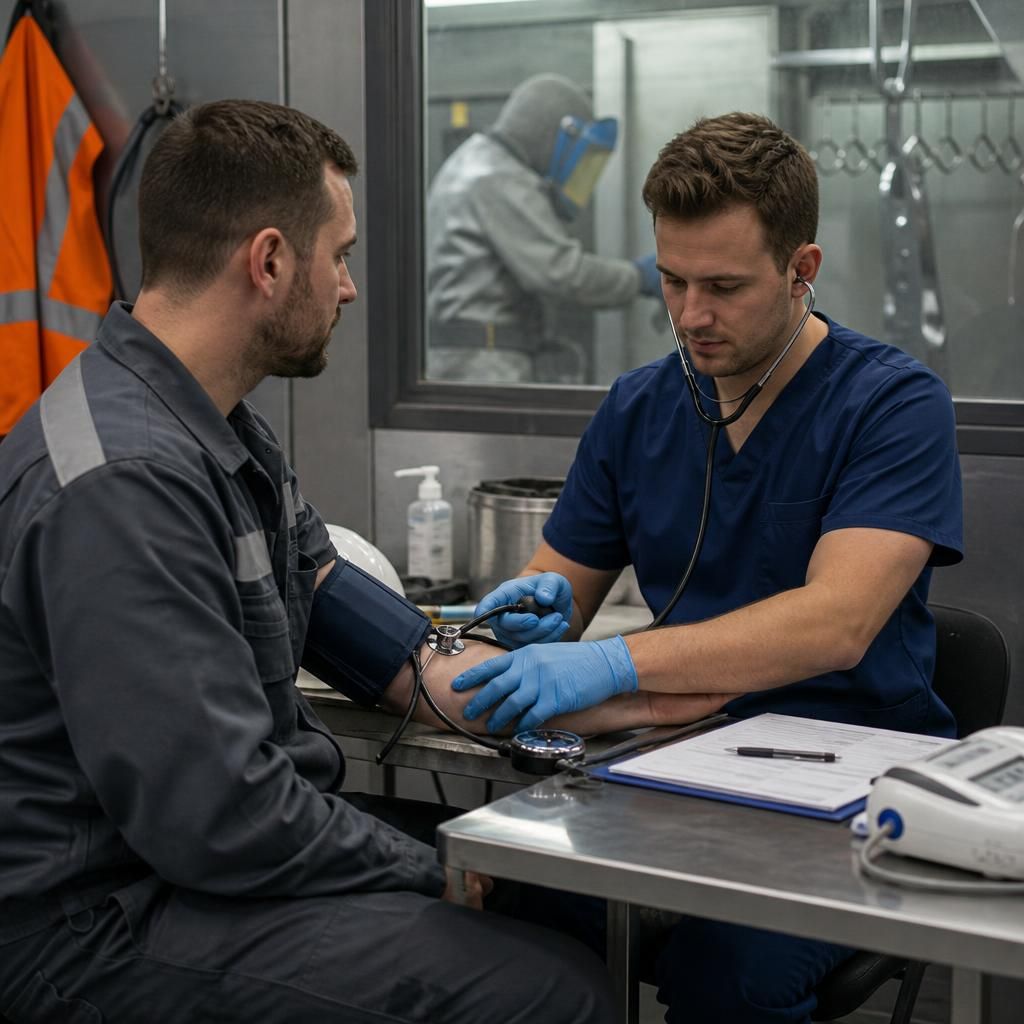
Health surveillance can provide an additional check where workers may have recurring exposure to abrasive dust, coating powder, noise, vibration or skin-irritating substances. Depending on the risks identified, this may include appropriate respiratory, hearing, skin or hand-arm vibration monitoring arranged through a competent occupational health provider.
Records of exposure, equipment checks, training and reported symptoms should be reviewed alongside the risk assessment. A pattern of coughing, skin irritation, hearing difficulty, numbness or tingling may indicate that controls, work methods or protective equipment need reassessment before the task continues.