

How do environmental and safety regulations impact the sandblasting and powder coating processes used for metal components?
Environmental and safety regulations influence every stage of sandblasting and powder coating, from selecting blasting media and controlling dust to managing powder emissions, curing temperatures, waste and contaminated materials. They also require suitable ventilation, personal protective equipment, equipment controls, staff procedures and documented risk management to protect workers, the public and the environment.
Environmental and safety regulations affect the materials, equipment, operating methods and records used throughout sandblasting and powder coating. For metal components, compliance is not a separate final check: it influences how the existing coating is assessed, how abrasive blasting is contained, how powder is applied and recovered, how the finish is cured, and how waste is classified and transferred.
Assessing the component before preparation
Before blasting begins, the coating already on a component should be considered. Older paint systems may contain substances such as lead or other hazardous pigments, while residues from industrial use may introduce oils, chemicals or other contaminants. A suitable assessment determines whether the coating can be disturbed safely, what controls are required and whether the removed material must be treated as hazardous waste. This can affect the choice of abrasive, the degree of enclosure and the need for sampling or specialist advice.
The condition and construction of the metal also matter. A process should remove corrosion, mill scale or an existing coating without unnecessarily damaging the substrate or creating a profile that is unsuitable for the specified powder system. Regulations therefore support controlled, documented preparation rather than an unrestricted increase in blasting pressure or abrasive use.
Controls during abrasive blasting
Sandblasting is normally treated as abrasive blasting in regulatory and occupational safety terms. The important control is to prevent workers and nearby people from inhaling dust or being struck by rebounding abrasive. Depending on the component and production method, this may require an enclosed blast cabinet, a contained blast room, local exhaust ventilation, suitable respiratory protective equipment and restricted access.
Dust extraction must be designed for the equipment and abrasive being used, maintained correctly and checked so that it continues to capture contaminants at source. Dry sweeping or using compressed air to disperse settled dust can defeat the control measures and create a secondary exposure. Cleaning methods, filter maintenance and inspection routines should therefore form part of the operating procedure.
Under the Control of Substances Hazardous to Health framework, the risk assessment should consider the abrasive, the removed coating and any dust generated by the work. It should identify exposure routes, control measures, employee training, health surveillance where appropriate and the information needed for safe use. Noise from blast equipment, extraction systems and compressed air is also relevant under workplace noise requirements, so hearing protection and noise-reduction measures may be necessary.
Powder handling and application
Powder coating avoids many solvent emissions associated with liquid paint, but it is not automatically risk-free. Powder ingredients must be assessed using the relevant safety data information. Fine airborne powder can irritate the respiratory system, contaminate surrounding areas and, under particular conditions, contribute to a combustible dust risk.
Application equipment should be operated with effective booth extraction, appropriate filtration and reliable earthing. The assessment may also need to address static discharge, ignition sources and the accumulation of powder deposits. Where combustible atmospheres or dust hazards are foreseeable, requirements associated with the Dangerous Substances and Explosive Atmospheres Regulations may apply. Equipment selection, zoning, inspection and housekeeping should reflect that assessment rather than relying solely on personal protective equipment.
Powder recovery systems can reduce material waste, but recovered powder must be managed so that contamination, colour mixing and unsuitable reuse do not compromise either the finish or safe handling. Powder that cannot be reused should be collected in a controlled manner and managed according to its composition and the applicable waste requirements.
Ovens, curing and process equipment
Curing introduces heat, moving equipment and, in some installations, gas or other fuel systems. Guards, interlocks and emergency stops help prevent access to hazardous moving or heated parts. The Provision and Use of Work Equipment Regulations require work equipment to be suitable, maintained and used by people with appropriate information and training.
Where gas is used, the installation must be designed, commissioned and maintained in accordance with applicable gas safety requirements. Ventilation and combustion controls are important because incomplete combustion, overheating or poor airflow can create separate risks. Oven temperature controls should be verified so that the coating reaches its specified cure without damaging the metal component or creating avoidable energy use.
Compressed-air systems, lifting equipment and loading arrangements also fall within the wider equipment assessment. Components should be supported and moved using methods that account for their weight, dimensions and sharp edges. Where lifting accessories or lifting equipment are used, the relevant inspection and examination duties must be addressed.
Environmental duties and waste
Environmental regulation affects emissions, waste, drainage, storage and transport. A business may need to establish whether its blasting or coating installation requires an environmental permit or local authority approval, depending on the process, scale, materials and location. The precise requirements are site-specific and should be checked with the relevant regulator rather than assumed from the name of the process.
Used abrasive, removed paint, spent filters, contaminated wipes, powder residues and damaged packaging should be segregated where their contents differ. Waste producers have a duty to describe waste accurately, store it securely, use authorised carriers and retain the required transfer documentation. Discharging blasting residues, wash water or coating waste to surface water or an unapproved drain can cause pollution and may breach environmental controls.
Good environmental practice also affects process design. Abrasive recovery, powder reclaim, enclosed preparation and careful application can reduce waste, while efficient loading and correctly controlled curing can reduce unnecessary energy consumption. These measures do not replace legal compliance, but they can help a facility demonstrate that it has considered resource use and pollution prevention.
Documentation, competence and traceability
Regulated work depends on evidence that controls are suitable and remain effective. A responsible process normally includes written risk assessments, method statements, equipment maintenance records, extraction checks, inspection results, training records, waste documentation and incident procedures. The records should identify the abrasive and coating materials used, relevant safety data, the component preparation method and any deviations from the agreed specification.
Staff need practical instruction in equipment operation, contamination control, emergency arrangements, PPE limitations and the handling of waste. Contractors and visiting drivers may also need site-specific information where they enter blasting, coating, storage or loading areas. Competence is especially important when a component has an unknown previous coating or when the process changes to a different abrasive, powder formulation or curing method.
What this means for a metal-component specification
When commissioning sandblasting and powder coating, the customer should provide information about the substrate, previous coatings, service conditions and any required finish standard. It is sensible to ask how the provider controls hazardous dust, manages powder and abrasive waste, verifies equipment and records the preparation and curing stages. The answer should relate to the actual component and installation, because a process suitable for a small batch of clean steel may not be suitable for large, contaminated or previously painted parts.
For businesses across the Midlands, a coating provider offering collection and delivery should also be able to explain how components, packaging and waste are managed during transfer. The central issue is that environmental and safety regulations shape the whole route from incoming metal to finished component: they determine what can be used, how it is contained, who may operate the equipment, how waste is controlled and what evidence supports the completed work.
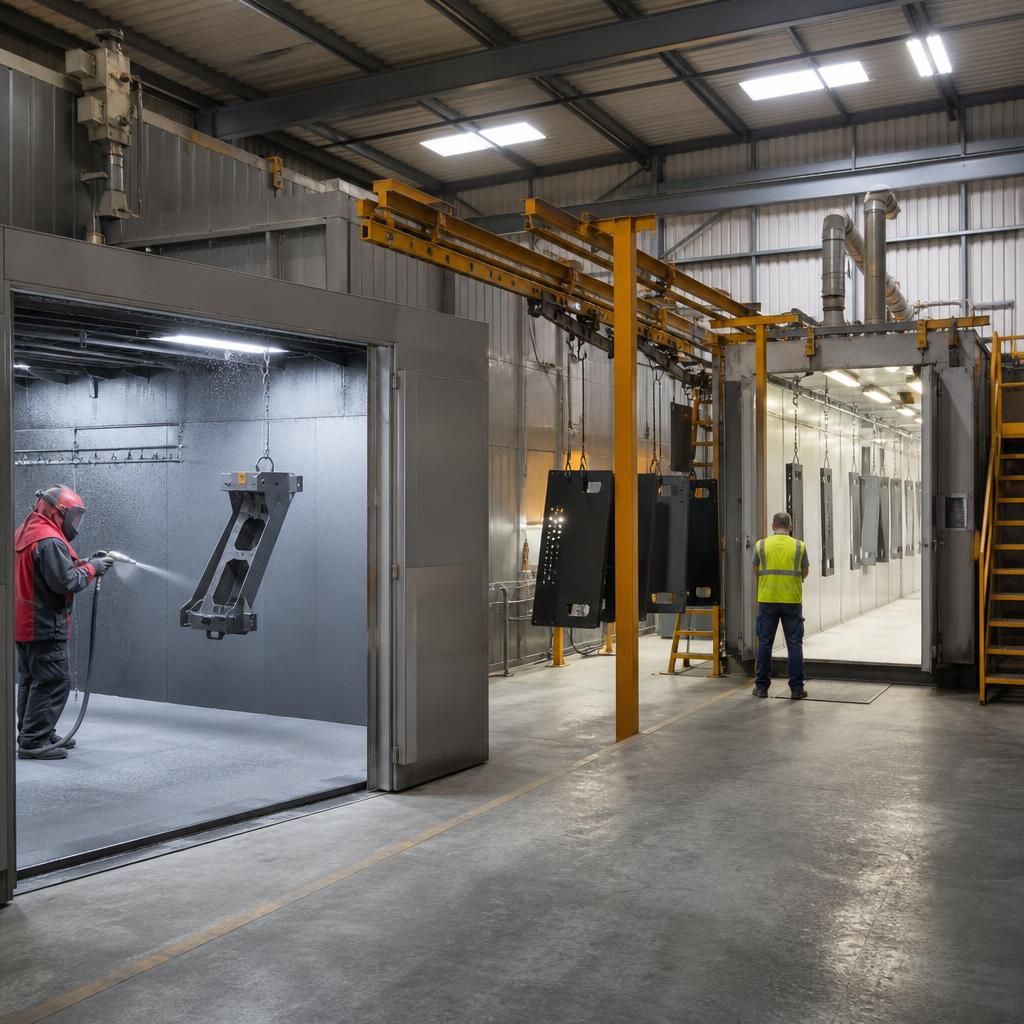
Regulation can influence how the process area is arranged. Blasting, powder application and curing should be planned as controlled stages rather than treated as one open workspace. Separating preparation from coating helps prevent abrasive dust and residues migrating into the application area, where they could affect air quality, contaminate powder or become embedded in the finish.
This separation may involve enclosed equipment, controlled access, suitable airflow and defined routes for components, personnel and waste. The arrangement should also allow contaminated items and clean parts to be identified and handled appropriately. In practice, a compliant layout supports both worker protection and consistent coating quality by reducing cross-contamination between process stages.