

What materials can be effectively powder coated?
Powder coating is most effective on electrically conductive, heat-resistant metals such as steel, mild steel, stainless steel, aluminium and iron. Other substrates may require specialist powder formulations and careful preparation, while the component must tolerate the curing temperature without distortion or damage.
Powder coating is most effective on clean, electrically conductive metal components that can withstand the heat of the curing oven. The process is particularly suitable for fabricated parts, panels, frames, brackets, enclosures, machine components and architectural metalwork, provided the substrate is properly prepared and compatible with the selected powder system.
Commonly suitable metal substrates
- Ferrous metals: Carbon steel, mild steel, stainless steel and cast iron can generally accept powder coating. Their preparation may include degreasing, abrasive blasting, chemical cleaning or phosphate treatment, depending on the existing surface and the required level of corrosion protection.
- Aluminium alloys: Aluminium is widely powder coated, but its oxide layer must be removed or chemically treated so that the coating can bond consistently. Alloy composition, previous anodising and surface contamination can all affect the preparation method.
- Zinc-coated steel: Galvanised and zinc-plated components can be coated, although they need careful cleaning and suitable pre-treatment. Trapped moisture, surface salts and gases released from the zinc layer can cause pinholes, blistering or other defects if they are not addressed.
- Copper and brass: These metals can be coated in suitable applications, but they conduct heat differently from steel and may require powder and curing conditions selected for the particular component. Any tarnish, oil or oxidation must be removed before coating.
- Other specialist alloys: Some nickel, titanium and other engineering alloys are technically coat-able. Their suitability depends on the alloy, surface condition, component geometry and the temperature it can safely tolerate during curing.
Materials that need additional assessment
Castings and porous metals require particular attention because they can retain oil, moisture or air in their pores. During heating, these contaminants may escape through the uncured film and create bubbling or craters. Preheating, outgassing, sealing or an adapted preparation process may be considered, but the correct approach depends on the casting and its intended use.
Previously painted, powder-coated or corroded parts are not automatically unsuitable. The existing finish normally needs to be removed or shown to be firmly bonded and compatible with the new system. Rust, mill scale, weld residues, sharp edges and fabrication oils can all reduce adhesion or leave weak points in the finished film. Welded assemblies should also be checked for spatter, closed cavities and drainage, since these features can affect both preparation and curing.
Non-metal materials and mixed assemblies
Standard electrostatic powder coating is not normally suitable for untreated wood, MDF, rubber, glass or ordinary plastics. These materials are usually non-conductive, may not hold the charged powder effectively and can deform, release gases or degrade at curing temperature. Specialist low-temperature powders and alternative application methods exist for some heat-sensitive substrates, but they require confirmation from the coater and powder supplier rather than being assumed suitable.
Mixed-material assemblies also need reviewing before work begins. A metal component with plastic inserts, seals, bearings, adhesives or electronic parts may not be able to pass through the curing process as assembled. Components may need to be dismantled, masked or supplied as separate parts. Threaded holes, contact points, earth points and close-fitting mating surfaces may also need masking because even a durable coating can interfere with assembly tolerances or electrical contact.
How suitability is assessed
- Identify the base material and any alloy, plating, anodising or previous coating.
- Inspect for corrosion, porosity, contamination, weld scale, sharp edges and concealed cavities.
- Confirm that the part can tolerate the powder system’s curing conditions without distortion or loss of function.
- Check whether the component requires masking, racking, drainage or disassembly.
- Select pre-treatment and powder chemistry according to the intended environment, such as indoor use, external exposure, chemical contact or abrasion.
- Assess a sample or representative component where the substrate, geometry or existing finish creates uncertainty.
In practice, the material name alone does not determine whether powder coating will be successful. Surface condition, component design, preparation, powder selection and curing control are equally important. Providing details of the substrate, dimensions, previous finish, service environment and any areas that must remain uncoated allows the coating process to be specified accurately before batch work begins.
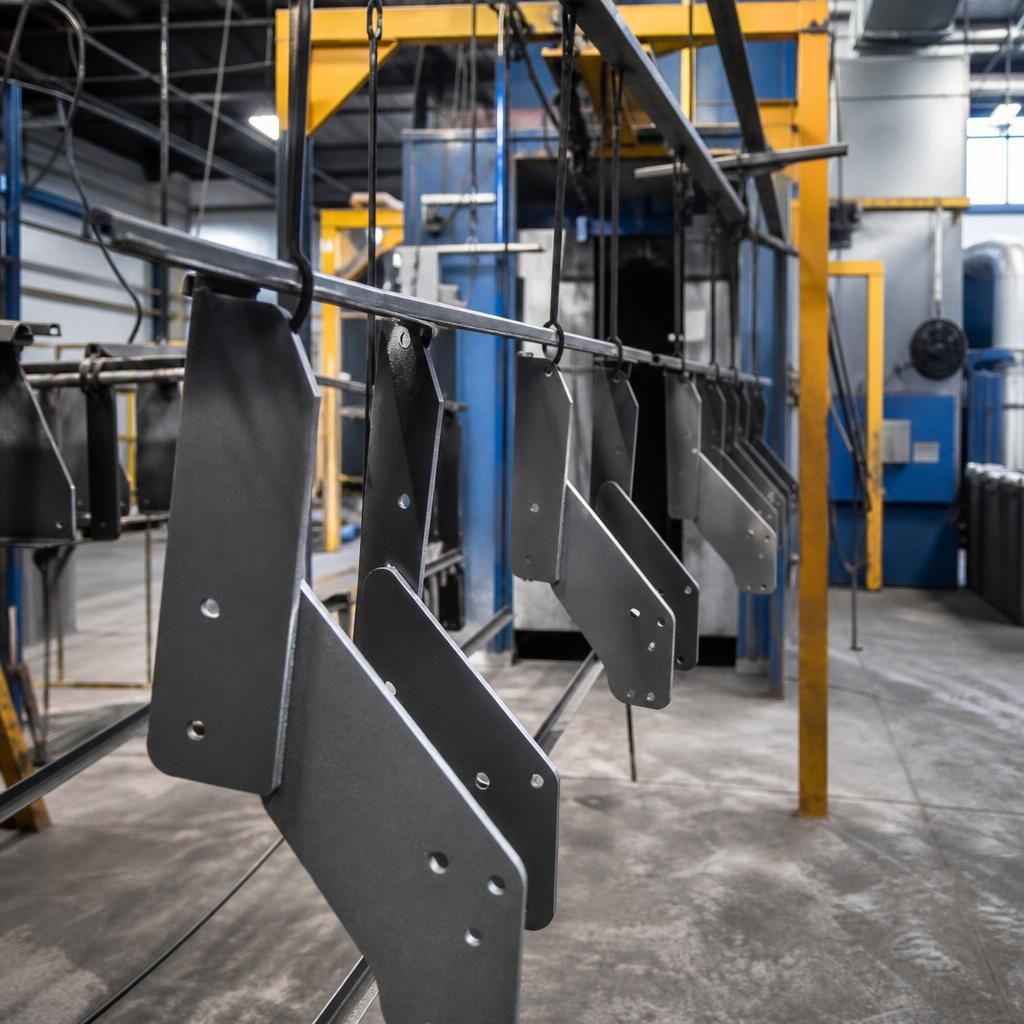
Effective powder coating depends not only on the substrate being conductive, but also on maintaining a reliable electrical path during application. Parts must be supported so that the coating equipment can charge the powder and attract it evenly to the surface. Heavy contamination, poor contact at the rack or insulating residues can reduce transfer and leave areas with lighter coverage.
This is particularly relevant for assemblies with multiple sections or components that are connected by hinges, fasteners or joints. The coating plan may need dedicated contact points and a suitable racking arrangement so that every exposed surface receives a consistent film without compromising areas that must remain electrically or mechanically functional.