

What criteria should I use to evaluate the quality and reliability of a sandblasting and powder coating service?
Evaluate a sandblasting and powder coating service by checking its surface-preparation methods, coating specification and curing controls, inspection procedures, experience with comparable components, and ability to manage batch consistency and collection or delivery requirements. A reliable provider should also explain how it records quality checks, handles defects or rework, and confirms that the finished coating meets your technical and environmental requirements.
A quality and reliable sandblasting and powder coating service can be evaluated by examining how clearly it defines the work, controls risk, manages materials and components, communicates throughout the order, and protects the finished parts during handling and transport. The assessment should cover both the technical result and the provider’s ability to deliver the same controlled service across the full project.
Start with a precise scope of work
A quotation should identify what is included rather than provide only a general price for coating. Check whether it refers to:
- the type, size, weight and quantity of components;
- the existing condition of the metal, including previous coatings, corrosion or contamination;
- any areas that must remain uncoated, such as threads, bearing seats, earth points or mating faces;
- the required colour, finish, texture and acceptable appearance;
- packing, collection, delivery and any preparation or handling charges; and
- the assumptions or exclusions that could alter the quoted work.
This level of detail reduces the risk of misunderstandings and makes competing quotations easier to compare. It also reveals whether the provider has considered the practical features of the components rather than pricing the job on surface area alone.
Assess how the provider manages component-specific risks
Reliable work depends on recognising that different parts create different coating risks. Ask how the service deals with sharp edges, recesses, welded areas, folded sections, drain holes and enclosed spaces. Parts should be suitable for the process and safely supported during preparation, spraying, curing and movement through the facility.
Masking and plugging arrangements deserve particular attention. Poorly protected functional surfaces can make an otherwise attractive finish unusable, while unsuitable hanging points may leave marks or create areas that are difficult to coat. A capable provider should be able to discuss these issues before work begins and identify any design features that need clarification.
Check the consistency of the powder and colour supply
Colour matching is not limited to selecting a colour name. Ask how the provider controls powder identification, finish type and material compatibility when a project involves repeat orders or several production batches. Confirm whether the same specification can be referenced for future work and how changes in colour, gloss or texture would be authorised.
For visible or assembled products, agree how much variation is acceptable between adjacent components. This is especially important where parts are manufactured at different times or will be installed together. A written reference, approved sample or clearly defined acceptance description can prevent disputes based on different interpretations of terms such as satin, textured or semi-gloss.
Examine capacity and process resilience
Reliability includes the ability to manage the required component sizes, weights, quantities and handling demands without introducing avoidable risk. Ask whether the provider has suitable plant, lifting arrangements, storage space and oven capacity for the intended work. Large or awkward items may require different loading and hanging arrangements from smaller batch components.
It is also sensible to understand how the provider manages interruptions such as equipment maintenance, powder supply problems, damaged parts or unexpected substrate conditions. The important point is not that disruption can be eliminated, but that responsibilities, decisions and communication routes are clear when the original plan changes.
Look for traceability from receipt to return
Parts should be identifiable throughout the service, particularly when several similar components or separate purchase orders are involved. Check how the provider distinguishes customer parts, records quantities received and returned, and prevents different colours, specifications or batches from becoming mixed.
Traceability is also useful if a component later requires investigation. A suitable system should allow the relevant job, material specification and agreed requirements to be identified without relying solely on memory or informal messages. This is a separate consideration from the final visual inspection: it concerns the history and control of the work.
Review handling, packaging and transport controls
A coating can be technically sound when it leaves the curing process but still arrive damaged through poor stacking, unsuitable packing or careless loading. Ask how finished components are separated, supported and protected against rubbing, impact, moisture and contamination. Components with exposed edges, delicate profiles or cosmetic faces may require different protection from robust structural parts.
Where the service includes collection or delivery for businesses across the Midlands and surrounding areas, establish how parts are identified at handover and how quantities and condition are recorded. Agree who is responsible for loading, unloading and reporting visible damage. These details are particularly important for large-scale or multi-stage projects.
Evaluate communication and accountability
A reliable provider should make it straightforward to resolve technical questions before processing starts. Assess whether enquiries receive specific answers, whether changes are confirmed in writing and whether the person managing the order understands the practical requirements of the components.
Useful questions include:
- Who approves changes to colour, finish or masking requirements?
- How will an unexpected issue with the substrate be referred back to the customer?
- What information must accompany repeat orders?
- How are damaged, incomplete or incorrectly supplied components recorded?
- What information will be supplied with the completed order?
Clear accountability is a stronger indicator of reliability than general assurances, because it shows how decisions will be made when the job does not follow the original assumptions.
Compare quotations on total project value
The lowest initial price may not represent the lowest overall cost if it excludes masking, handling, packing, transport, additional preparation or the treatment of parts that arrive in unsuitable condition. Compare quotations line by line and ask for clarification where an item is described as optional, provisional or excluded.
Consider the operational cost of an unsuitable service as well. Rejected components, interrupted assembly, repeated transport and remedial work can have greater consequences than a difference in coating price. A useful comparison therefore considers specification control, component protection, communication and traceability alongside the quoted charge.
Use a proportionate evaluation before committing a large batch
For a new or technically demanding project, agree the acceptance requirements before sending the full order. Depending on the application, this may involve reviewing a representative sample, confirming masking arrangements, checking the fit of coated interfaces or approving the appearance before production continues.
The sample should reflect the real components and not be treated as proof that every future part will be identical without suitable process control. Its value is to expose misunderstandings about appearance, coverage, fit, packaging or handling at a manageable stage.
Recognise warning signs
Exercise caution if a provider gives a vague quotation, avoids questions about component design, cannot explain how similar parts will be handled, changes requirements informally, or is unwilling to define what constitutes an acceptable result. Other warning signs include unclear responsibility for transport damage, no distinction between cosmetic and functional surfaces, and an inability to explain how repeat orders will be identified.
For a Midlands manufacturer, fabricator, construction company or automotive business, the strongest choice is not necessarily the provider with the broadest claims. It is the service that can translate the component requirements into a clear scope, manage the associated risks, communicate decisions and return the parts in a condition suitable for their intended use.
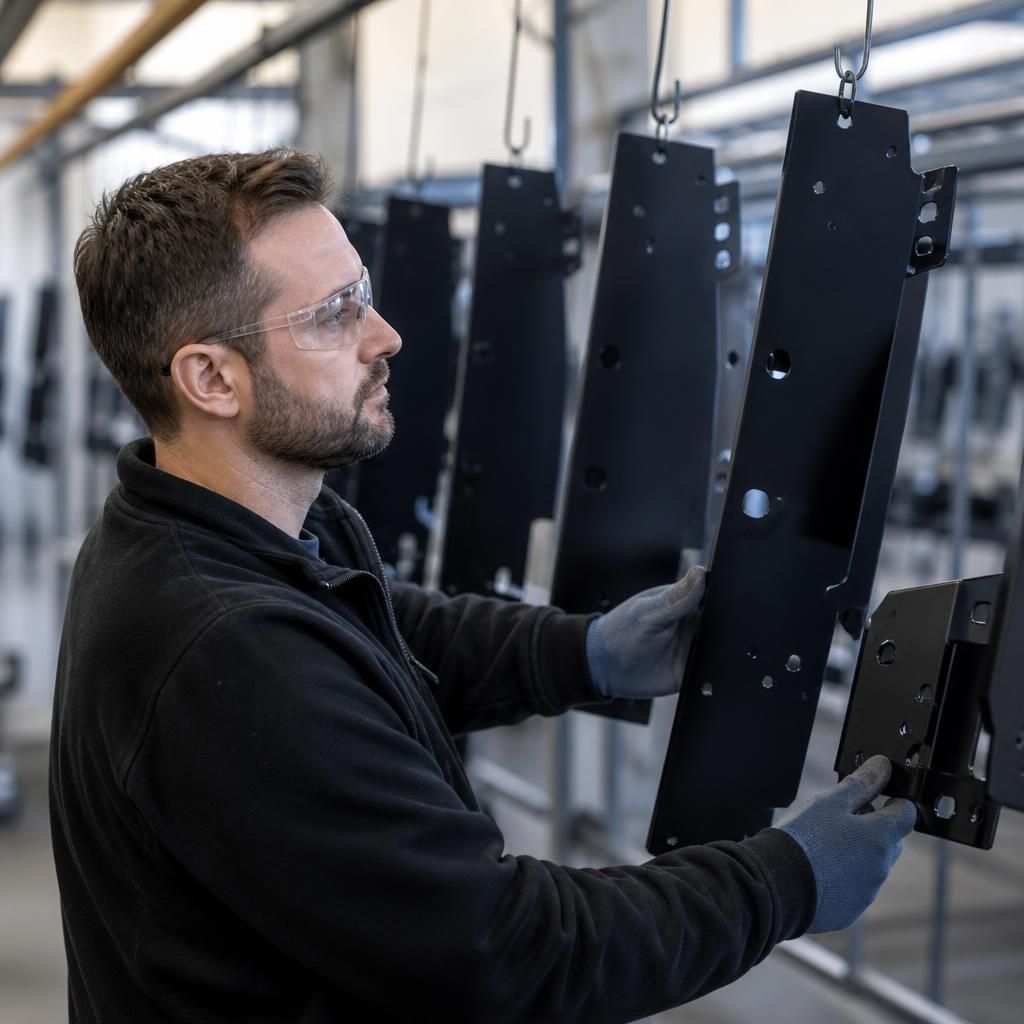
Assess whether the proposed coating system is suitable for the component’s actual service environment, not just whether it looks acceptable after curing. Ask the provider to relate the specification to factors such as outdoor exposure, moisture, chemicals, abrasion, temperature changes and contact with other materials. The recommendation should also distinguish between cosmetic requirements and functional protection, since a finish intended for sheltered equipment may not be appropriate for exposed or heavily handled parts. This shows that the service is evaluating long-term suitability rather than applying a generic coating specification.
Discuss Your Sandblasting and Powder Coating Requirements
Contact Powder-coatings.co.uk to discuss your component requirements and clarify any technical questions before committing to a coating project. The team can help you identify the information needed for an accurate quotation and suitable process assessment.