

What safety measures are essential during the sandblasting process to protect workers and maintain environmental standards?
Essential sandblasting safety measures include isolating the blasting area, using suitable respiratory and personal protective equipment, controlling dust with effective extraction and filtration, and training operators in safe equipment use. Environmental standards are supported by containing abrasive materials, preventing contaminated dust from escaping, and collecting and disposing of spent media and coating residues responsibly.
Essential sandblasting safety measures combine a documented risk assessment, controlled equipment operation, protection from noise and flying debris, safe handling of coatings and abrasives, and verified waste controls. The process should be planned around the substrate, existing coating, abrasive, equipment and work environment rather than treated as a single generic task.
Assess the specific hazards before work begins. The assessment should identify risks from the metal or coating being removed, abrasive impact, compressed air, noise, vibration, sharp edges, awkward components and any confined or restricted areas. Existing finishes may contain hazardous substances, so the coating should be identified where possible before disturbance. Control measures should be recorded in a method statement, with operators briefed on the sequence of work, exclusion arrangements, emergency procedures and responsibilities.
Use suitable abrasive media for the material and coating. Media selection affects both worker exposure and the final condition of the component. A suitable, lower-hazard medium can reduce unnecessary dust and prevent excessive damage to the substrate. Materials that may introduce harmful contaminants or become hazardous when fractured should not be selected without appropriate assessment and control. The abrasive supplier’s safety information should be reviewed, and spent media should be treated according to what it has picked up from the coating and component.
Inspect the blasting system before each operation. Hoses, couplings, nozzles, valves, pressure vessels and seals should be checked for wear, damage, leaks and secure connections. Air lines need to be routed so they cannot be crushed, snagged or exposed to avoidable impact. The operator should confirm that pressure settings are suitable for the component and abrasive, while guards and protective features remain in place. A remote shut-off or deadman control should stop abrasive flow when the operator releases the control, and it should be tested rather than assumed to work.
Control access and communication around the task. Warning notices, physical boundaries and a clearly defined exclusion zone help prevent other workers from entering the area unexpectedly. Only authorised personnel should approach the equipment while blasting is under way. Where visibility or background noise affects communication, agreed hand signals, radios or other reliable methods should be used. Components should also be secured against movement, tipping or rolling before they are treated.
Manage noise, impact and physical strain. Abrasive blasting can produce harmful noise levels even when dust is well controlled. Noise exposure should be assessed, with suitable hearing protection, restricted access and equipment maintenance used as part of the control strategy. Operators should use lifting equipment or mechanical aids for heavy components and position work to limit awkward reaches and prolonged vibration. Sharp edges created by coating removal should be identified before parts are handled or moved.
Make the equipment safe before adjustment or maintenance. Abrasive supply and compressed air must be isolated and pressure released before clearing blockages, changing a nozzle, opening a vessel or carrying out repairs. Lock-off arrangements are appropriate where another person could restart the system. Nozzle inspection, cleaning or replacement should never be attempted while pressure remains in the line.
Protect nearby processes and drainage systems. The work area should be arranged so abrasive residues and coating fragments cannot enter surface-water drains, soil, production equipment or clean storage areas. Temporary screens, sealed floors, collection points and controlled transfer routes may be needed, depending on the location. Any spill or accidental release should be stopped, contained and reported through the site’s environmental procedure rather than washed away.
Classify and document the resulting waste. Spent abrasive can contain removed paint, rust, metal particles and other contaminants, so it should not automatically be treated as ordinary waste. The waste stream should be kept appropriately contained, labelled and transferred through an authorised route in line with its classification. Records of the material removed, waste produced and disposal route provide evidence that environmental controls have been followed.
Maintain operator competence and supervision. Training should cover the particular blast system, abrasive, component hazards, inspection checks, emergency isolation, manual handling and waste arrangements. New or unfamiliar tasks should be supervised until competence has been demonstrated. Refresher instruction is also appropriate after equipment changes, incidents, near misses or a change in the coating being removed.
Use health monitoring where the assessment indicates a need. Regular review may be necessary for workers exposed to noise, vibration, respiratory hazards or other occupational risks. The control measures should be revisited if symptoms, equipment defects, dust deposits, unusual waste or near misses indicate that the original assessment is no longer sufficient. These checks complement, rather than replace, engineering and procedural controls.
For industrial work, the safest approach is therefore a documented chain of control: identify the hazards, select an appropriate medium, verify the equipment, restrict access, protect workers from noise and impact, isolate equipment before intervention, and manage residues as potentially contaminated waste. Applying these steps consistently supports worker safety while helping the blasting operation meet its environmental responsibilities.
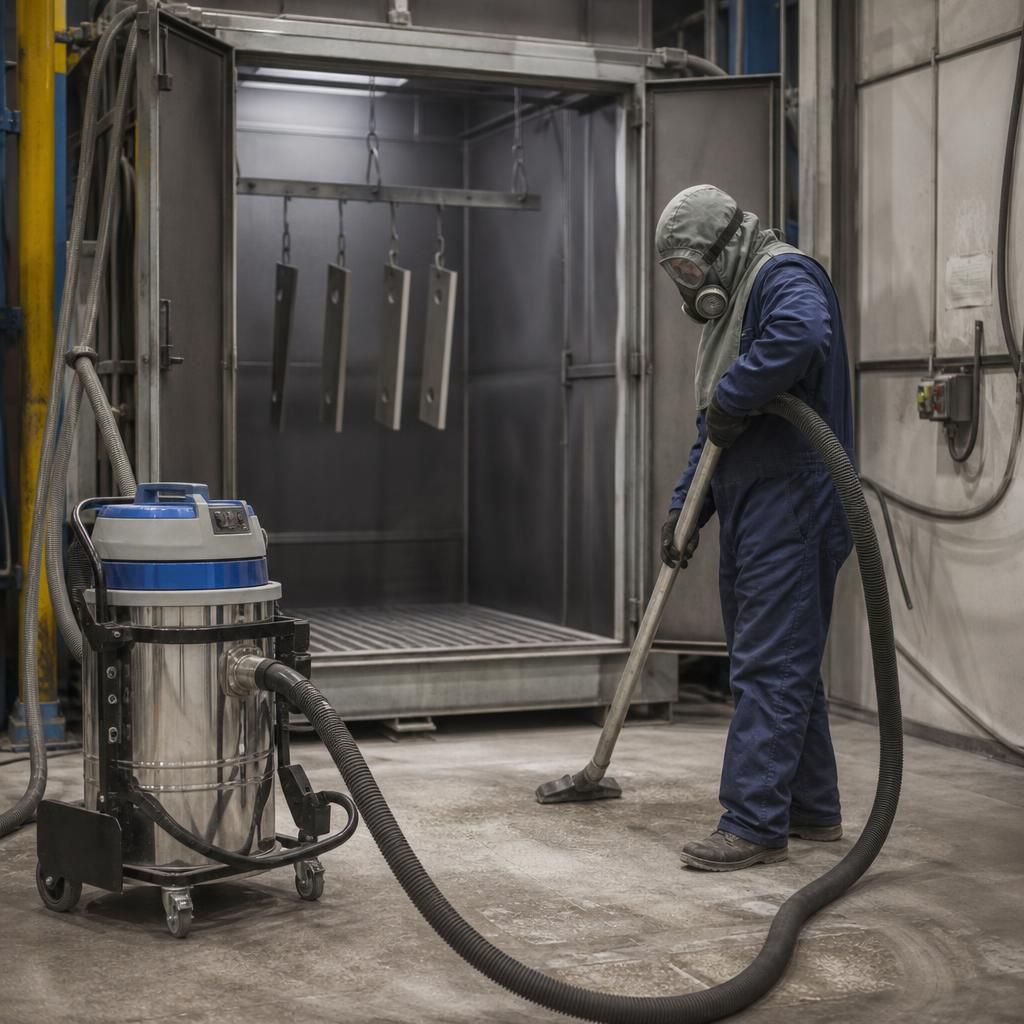
Safe re-entry after blasting is an essential control, because residual dust and abrasive fragments may remain in the enclosure after the equipment has stopped. The area should not be released for general access until airborne dust has cleared, visibility is adequate and the component, floor and surrounding surfaces have been inspected.
Cleaning should use suitable industrial vacuum equipment or other controlled methods rather than dry sweeping or blowing residues into the air with compressed air. Operators should follow the site’s decontamination procedure when removing protective clothing and respiratory equipment, preventing settled material from being carried into clean areas. A documented final inspection can confirm that access controls have been removed only after the work area is safe and residues have been directed into the correct waste stream.
Discuss Your Sandblasting Safety Requirements
Discuss your component materials, existing coating and site requirements with the powder-coating.co.uk team to establish suitable sandblasting controls before work begins. This helps define the appropriate preparation method and environmental arrangements for your project.