

What specific surface preparation techniques do you use at your powder coating facilities to ensure optimal adhesion and durability?
Our surface preparation process combines thorough degreasing and cleaning with controlled abrasive blasting to remove oil, rust, mill scale and existing coatings while creating a suitable profile for powder adhesion. Components are then inspected, cleaned of residual abrasive and fully dried before coating, helping the finished layer bond consistently and provide durable protection.
Surface preparation at a powder coating facility is a controlled sequence that conditions the metal, manages vulnerable areas such as welds and edges, and prevents contamination from affecting the finished coating. The exact preparation route is selected according to the substrate, its condition, the component’s geometry and the level of protection required.
Before processing, each component is assessed for issues that could affect adhesion or appearance. These may include corrosion, mill scale, weld spatter, sharp edges, manufacturing residues, old coatings, deep scratches and areas where moisture or contamination could be trapped. Identifying these points at the preparation stage helps determine whether additional treatment, masking or mechanical work is needed before the part can be coated.
- Substrate-specific preparation: Steel, galvanised steel and aluminium can require different preparation methods. The process is therefore adjusted to avoid damaging softer metals, disturbing existing protective layers or creating an unsuitable surface for the powder system.
- Weld and fabrication treatment: Weld spatter, sharp projections and rough weld transitions can interfere with coating coverage and may create weak points. These areas are checked and, where appropriate, smoothed or otherwise prepared so the powder can form a more continuous film.
- Edge management: Very sharp edges can result in a thinner coating film at the corner. Edge condition is considered during preparation because rounded or suitably dressed edges allow more consistent coverage and reduce exposed points in service.
- Cavity and joint checks: Box sections, folded returns, seams and drain points are examined for trapped liquids, abrasive residue or fabrication debris. Components may need suitable drainage, access or handling arrangements to prevent contamination remaining in enclosed areas.
- Chemical pre-treatment: Where appropriate for the metal and coating specification, a chemical conversion or pre-treatment stage can improve the surface’s suitability for powder coating and support corrosion resistance. The treatment must be compatible with the substrate and followed by effective rinsing and drying.
- Masking and plugging: Threads, bearing seats, machined faces, electrical contact points and other areas that must remain free of powder are protected before coating. The masking method is selected to maintain dimensional accuracy without introducing fibres, adhesive residue or other contaminants.
Porous castings and some fabricated components may also release gases when heated. This can lead to pinholes, bubbling or small surface defects in the cured film. Where the component presents an outgassing risk, the preparation and coating approach is reviewed in advance; this can include appropriate preheating or the use of a coating specification intended to reduce the visual effect.
Handling between preparation stages is controlled to avoid recontamination. Prepared surfaces should not be touched unnecessarily, exposed to dirty contact surfaces or allowed to collect moisture before powder application. Clean supports and suitable handling methods help preserve the prepared condition of the metal.
Preparation is also checked against the requirements of the component rather than judged solely by appearance. Checks can include confirming that protected areas are correctly masked, that residues have been removed from recesses, that surfaces are dry and that welds, edges and cavities do not present obvious coating risks. For batch work, consistent preparation across the parts is particularly important because variation at this stage can produce differences in finish and protection later.
For a specialist coating requirement, the preparation route should be agreed from the component drawings, substrate, service environment and intended finish. Providing details of threaded areas, close-tolerance faces, welded sections and any existing treatment enables the facility to select suitable preparation and masking techniques before production begins.
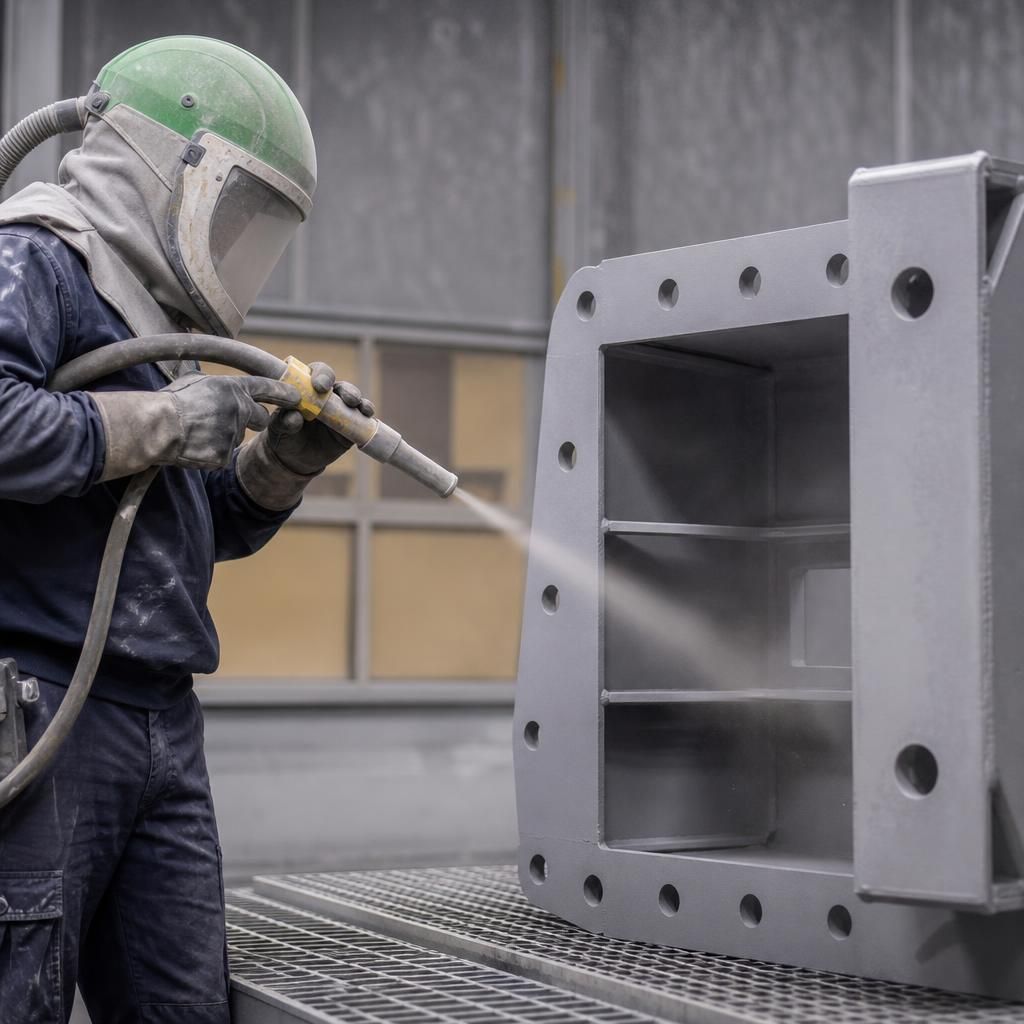
Abrasive blasting must create enough surface profile for the powder coating to key into without unnecessarily removing metal or leaving an overly coarse texture. The blast pressure, media selection, working distance and exposure are therefore matched to the component and coating specification rather than applied as a fixed setting to every part.
This balance is important because an uneven or excessive profile can affect film coverage, appearance and the amount of coating needed to reach the required protection. After blasting, the prepared surface is assessed for consistency across accessible faces, edges and recesses, allowing any areas needing further treatment to be addressed before powder application.