

What factors should I consider when choosing a powder coating blasting facility?
When choosing a powder coating blasting facility, assess its surface-preparation controls, experience with your metal components, finish requirements, batch capacity, quality checks, pricing, and ability to manage collection and delivery across the Midlands. Confirm that the facility can handle your component sizes and geometry, use suitable blasting media, and provide a clear process for achieving consistent adhesion and a durable finish.
The right powder coating blasting facility is one that can translate your component drawings, specification and handling requirements into a controlled, traceable process. In addition to checking whether it can carry out the required preparation, assess how it manages part identification, masking, approvals, documentation, packaging, scheduling and any issues that arise during production.
- Ability to work from your technical information. Provide drawings, coating specifications, photographs and details of any critical surfaces before requesting a quotation. A suitable facility should be able to identify areas that must remain free from coating, dimensions that must be preserved and surfaces where blasting or coating could affect assembly. This is particularly important for components with machined faces, threaded holes, bearing seats, electrical contact points or close-fitting interfaces.
- Clear arrangements for masking and contact points. Ask how the facility will protect holes, threads, machined areas and other no-coat zones. The method used for hanging or supporting a part can also leave small contact marks or affect access to a particular face. These points should be agreed before processing, rather than discovered when the finished parts are returned.
- Part identification and traceability. For repeat work or mixed orders, the facility should have a reliable way to keep batches, drawings and instructions linked to the correct components. Find out how parts are labelled, how different variants are separated and how any special instructions are recorded. Traceability is valuable when a component forms part of a larger assembly or when several visually similar parts have different requirements.
- Defined acceptance criteria. Your enquiry should establish what will be checked and how the finished work will be assessed. Depending on the application, this may include visual appearance, coverage of specified areas, coating thickness, masking effectiveness, cleanliness, edge treatment or the condition of assembly surfaces. Agreeing these criteria in advance reduces the risk of a technically acceptable result being judged against an informal or different expectation.
- Evidence and documentation. Ask what records can accompany the work, such as job sheets, inspection notes, photographs or details of the process used. The level of documentation should match the risk and importance of the component. A straightforward fabricated bracket may need different records from a part used in a safety-critical assembly or a product supplied into a controlled manufacturing process.
- Control of the interval between blasting and coating. Prepared metal can be affected by handling, storage and exposure before the next stage. Establish how blasted components are protected, identified and moved through the process. If blasting and powder coating are carried out as separate operations, clarify who is responsible for the condition of the parts between them and what happens if contamination or surface change is found.
- Handling, packaging and return condition. The finish can be damaged after processing if parts are stacked incorrectly, allowed to rub together or packed before they are ready for handling. Ask whether the proposed packaging suits the component’s weight, shape and finished surfaces. For delicate or high-value items, agree the use of separators, protective wrapping, pallets or dedicated containers before work begins.
- Quotations that define the complete scope. Compare like with like. A useful quotation should state which preparation and coating stages are included, how masking is treated, whether packaging or additional handling is charged separately and how non-standard work will be authorised. Clarify what happens if existing coating, contamination, repairs or unexpected damage requires extra preparation. This makes the initial price more meaningful than comparing a single headline figure.
- Planning and communication. Discuss order quantities, required delivery dates, repeat-order arrangements and the information needed to release a job into production. A facility is easier to work with when changes to drawings, quantities or instructions can be recorded and confirmed clearly. For ongoing supply, consider whether it can retain an agreed specification and apply it consistently to future orders without relying on verbal instructions.
- Environmental and workplace responsibilities. Blasting produces dust, spent media and removed coating residues, so ask how these materials are contained, separated and disposed of. The facility should also be able to explain how it protects employees and prevents contamination of other work. These considerations are relevant to your own procurement, environmental and supplier-assurance requirements, not only to the appearance of the finished component.
- Suitability for a trial or approval part. Where the component is new, unusually valuable or governed by a detailed specification, consider approving a representative part before releasing the full order. A trial can confirm masking locations, handling points, appearance and fit at an early stage. It also gives both parties an opportunity to resolve ambiguous requirements before production quantities are processed.
Before appointing a facility, send the same information to each shortlisted provider and compare their technical questions as well as their quotations. The most useful response will show that the provider understands the component, identifies practical risks before work starts and sets out how those risks will be controlled and recorded. Powder-coatings.co.uk supports industrial customers across the Midlands and surrounding areas, with collection and delivery options that can be discussed as part of the overall arrangement.
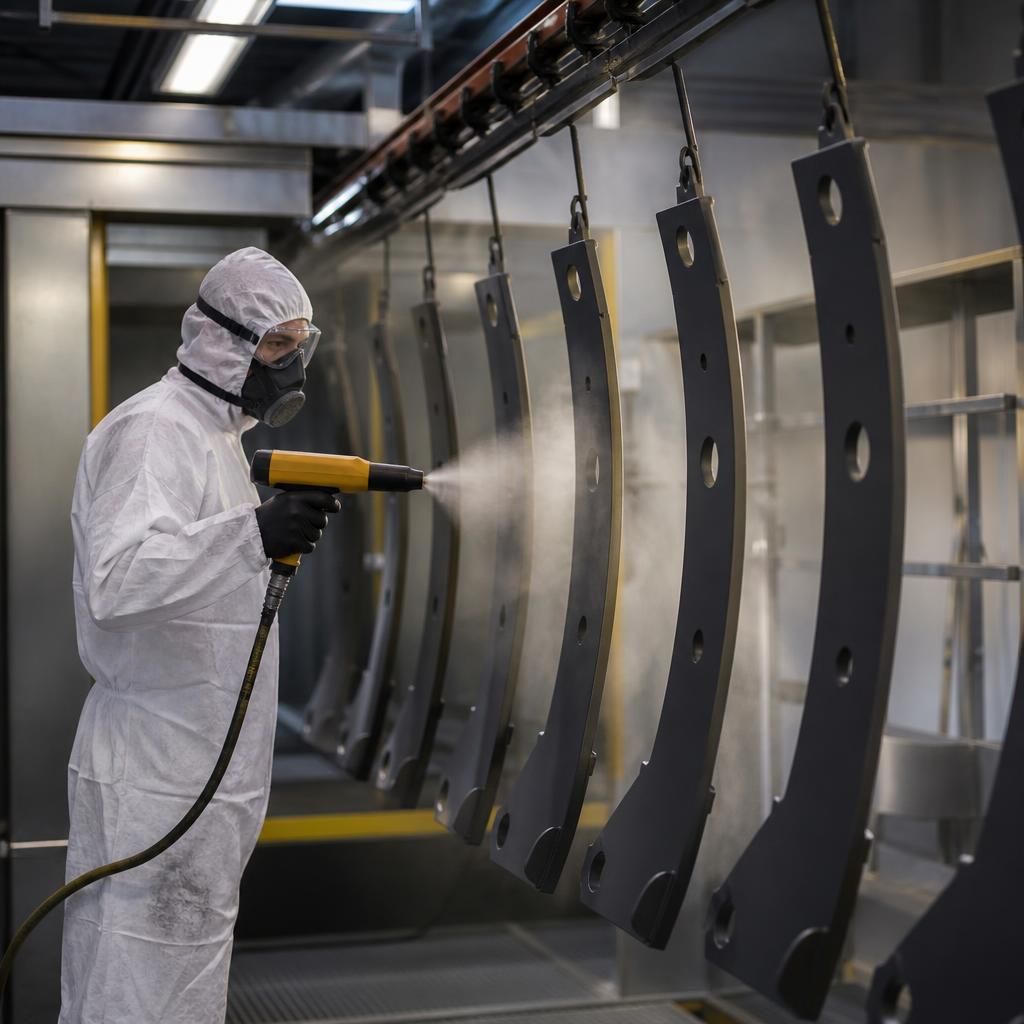
A key factor when choosing a powder coating blasting facility is whether it can match surface preparation and coating selection to the component’s working environment. Colour and gloss are only part of the specification; exposure to moisture, chemicals, abrasion, ultraviolet light, heat and handling can determine whether a particular finish is suitable.
Discuss the component’s substrate, intended use and expected exposure before comparing quotations. Ask the facility to confirm whether the proposed preparation and powder coating system are appropriate for:
- Indoor or outdoor service, including possible moisture or weather exposure
- Contact with oils, cleaning products, chemicals or industrial contaminants
- Repeated handling, impact, abrasion or friction
- Operating temperatures and any thermal cycling
- Steel, aluminium or other compatible metal substrates
A technically suitable facility should distinguish between a finish chosen mainly for appearance and one selected for a defined service requirement. This helps ensure that blasting and coating decisions support the component’s intended use, rather than relying on colour or price as the main comparison.