

What are the safety and environmental considerations of using powder coating blasting facilities?
Powder coating blasting facilities must control abrasive dust, noise, airborne contaminants and stored energy while protecting operators with suitable PPE, guarding and safe operating procedures. Environmental management also involves containing and filtering dust, selecting blasting media responsibly, preventing contamination and segregating spent media and metal waste for appropriate reuse, recycling or disposal.
Using a powder coating blasting facility safely and responsibly depends on controlling the risks associated with compressed air, abrasive equipment, metal components and any residues on the workpiece, while limiting resource use and managing waste correctly. A suitable facility should apply documented risk assessments, trained operators, maintained equipment and traceable waste procedures rather than relying on protective equipment alone.
Risk assessment and material information
The correct controls depend on the component, coating being removed and blasting method selected. Before work begins, the facility should establish whether parts contain oil, grease, paint residues, corrosion products or legacy coatings that may introduce additional hazards. Customers should identify any known substances on the component, particularly coatings that could contain heavy metals or other hazardous materials. This information affects the choice of abrasive, containment arrangements, cleaning process and waste classification.
Risk assessments should also account for the component’s weight, shape, condition and intended handling route. Large or awkward items can create risks during loading, turning, inspection and unloading even when the blasting operation itself is enclosed. Clear handling instructions, suitable lifting equipment and defined exclusion areas help prevent crush injuries and damage to prepared surfaces.
Equipment integrity and operator protection
Blasting relies on compressed air and pressurised equipment, so routine inspection is essential. Hoses, couplings, nozzles, seals, cabinets, blast rooms and pressure-related components should be checked for wear, leaks and damage. Controls should be arranged so that equipment cannot operate unintentionally, and maintenance should include isolation of electrical and pneumatic energy before access is permitted.
Operators should be trained in the particular machinery and abrasive being used, including correct start-up, shutdown, fault reporting and emergency procedures. Training should cover what to do if a hose fails, a component shifts, visibility is reduced or an enclosure’s controls do not operate correctly. Visitors and other workers should not enter controlled areas unless they have been authorised and briefed.
Facilities should also consider exposure routes that may not be obvious during blasting. Residues can be transferred from gloves, footwear, tools or handling surfaces to clean areas. A defined separation between preparation, blasting, inspection and finished-part handling reduces cross-contamination. Hand-washing arrangements, clean storage for personal items and suitable housekeeping procedures support this separation.
Contamination and finish quality
Safety and environmental controls have a direct effect on the subsequent powder coating finish. Abrasive equipment should be managed so that incompatible media, old coating residues and foreign particles are not introduced onto the component. Dedicated or suitably cleaned equipment may be needed where different substrates or coating systems are processed.
After blasting, parts should be inspected for embedded abrasive, remaining residues, sharp edges and areas that have not been prepared evenly. Components should be protected from moisture, handling contamination and contact with dirty surfaces before powder is applied. This is particularly important for parts with recesses, holes, welds or complex geometry, where residues can remain concealed.
Environmental controls beyond waste collection
Environmental management begins with selecting a process that uses materials efficiently. Where technically appropriate, reusable abrasive can reduce the quantity of new media required. Its condition still needs monitoring: media that has broken down, become contaminated or no longer provides the required profile should not be retained simply to avoid disposal.
Waste should be identified according to its actual contents rather than assumed to be harmless because it is dry or granular. Spent abrasive may contain removed paint, oils, corrosion products or metal particles. The facility should keep different waste streams separate where their composition affects handling or disposal, use suitable labelled containers and retain transfer or disposal records where required. This creates a clear chain of responsibility and helps prevent unsuitable material entering general waste.
Wet processes, wash-down activities and accidental spills require additional controls because contaminated water must not be allowed to enter surface drains or the ground. Where water is used, the facility should define how it is contained, treated, tested or removed. Dry handling areas should likewise have procedures for dealing with spills without spreading residues into clean workspaces.
Energy consumption is another consideration. Compressors, extraction equipment, lighting and handling systems should be maintained and operated efficiently, since leaks and poorly adjusted equipment can increase energy use without improving preparation. Preventive maintenance can also reduce unplanned releases, premature component replacement and unnecessary consumption of abrasive.
Questions to ask when comparing facilities
- How are the existing coatings and contaminants on incoming parts identified?
- How are abrasive media, removed coatings and metal residues separated and classified?
- What inspection and maintenance records are kept for blasting and compressed-air equipment?
- How are components protected between blasting and powder coating?
- What arrangements apply if a part is contaminated, unusually heavy or found to contain a potentially hazardous coating?
- How are spills, damaged equipment and other incidents recorded and investigated?
For manufacturers, fabricators, construction firms and automotive businesses using a Midlands powder coating facility, providing accurate information about the parts and their previous coatings is an important part of safe and environmentally responsible preparation. It allows the facility to select appropriate controls, prevent avoidable contamination and route the resulting waste through the correct management process.
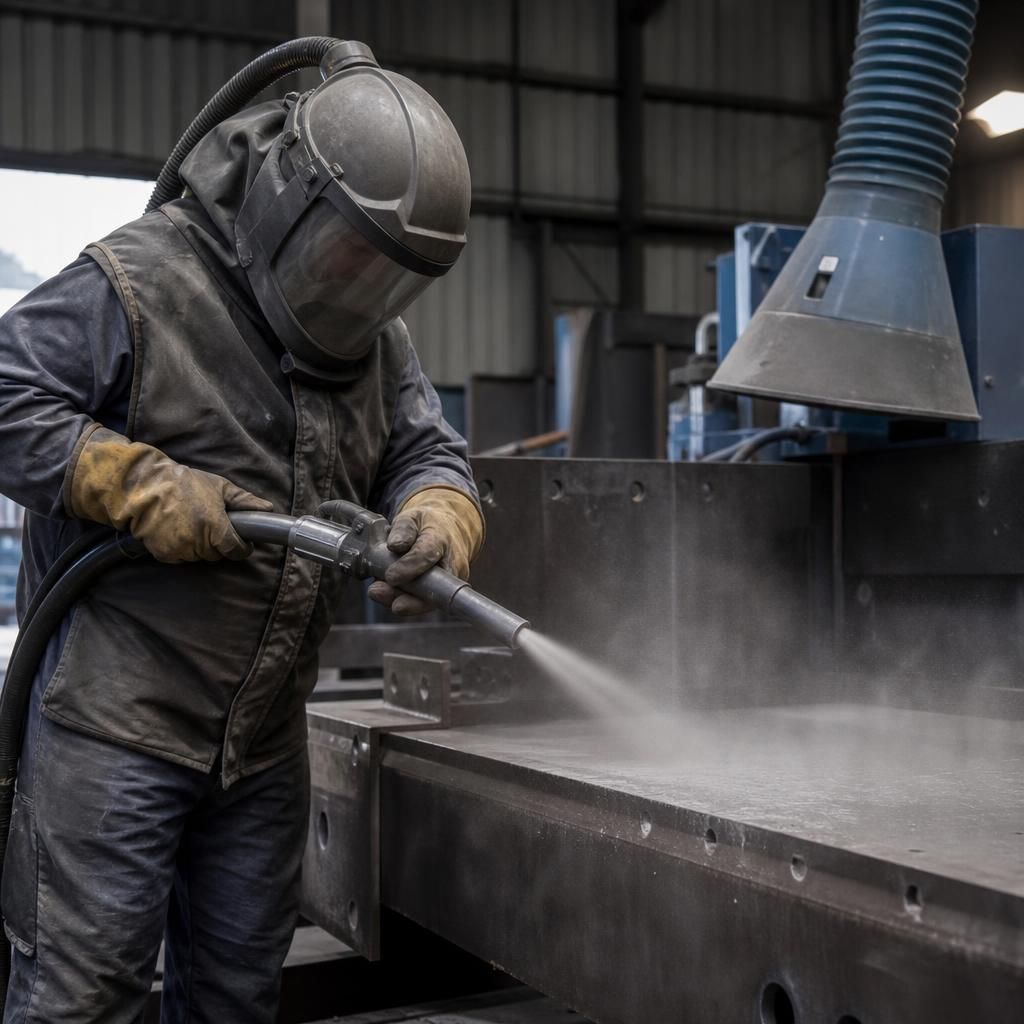
Fire and explosion risk should also be assessed when blasting produces fine dust from removed coatings, corrosion or metal substrates. The risk depends on the materials being processed and the composition of the residues, so a facility should identify potentially combustible dusts rather than treating all blasting waste as identical.
Suitable controls may include keeping ignition sources away from dust-producing areas, maintaining extraction and filtration equipment, and using cleaning methods that do not disperse settled dust into the air. Electrical equipment, housekeeping procedures and emergency arrangements should be appropriate to the identified risk. If an incident occurs, the facility should be able to isolate the equipment, protect nearby workers and manage contaminated residues without spreading them to other areas.
Discuss your powder coating blasting safety and environmental requirements
Discuss your component materials, previous coatings, handling requirements and any specific safety or environmental considerations with the powder coating team before preparation begins. This information helps establish suitable blasting controls and waste-management arrangements for your project.