

How do your powder coating facilities ensure quality control throughout the blasting process?
Quality control throughout blasting relies on checking the metal before and after treatment, controlling the blasting parameters, and confirming that the required surface condition has been achieved. These checks help identify contamination, uneven preparation or surface damage before the component moves on to powder coating.
Quality control throughout the blasting process is managed through defined inspection points, controlled equipment, trained operators and documented job requirements. The aim is not simply to remove visible contamination, but to produce a consistent surface condition that is suitable for the specified powder coating system and does not introduce new defects.
Job requirements are established before blasting begins. Each component is considered in relation to its metal type, existing coating or corrosion, geometry, required finish and intended use. This helps determine the appropriate preparation method, areas that need protection and the level of surface preparation required. Particular attention is given to welds, edges, recesses, holes and joints, where contamination or residual abrasive can be more difficult to identify.
Parts are also reviewed for conditions that could affect the result, such as oil, grease, moisture, mill scale, weld spatter or previous coating failures. If the condition of a component could prevent a consistent result, this can be identified before it proceeds through the full preparation cycle rather than being treated as a blasting defect later.
Equipment condition is part of the quality process. Blast cabinets, hoses, nozzles, extraction systems and associated controls need to remain in suitable working order. Wear in a nozzle or hose can alter the delivery of abrasive, while inadequate extraction can affect visibility and allow dust to interfere with the work area. Routine checks help identify worn components, blocked systems, pressure irregularities and other issues that could lead to inconsistent preparation.
Blasting media is kept free from unsuitable contamination and managed so that debris removed from one job does not compromise another. The working area and equipment are maintained to reduce the risk of cross-contamination, particularly when components have different existing coatings, oils or corrosion products. Where a job has specific media or cleanliness requirements, these are followed as part of the job instructions.
Operators use consistent working methods rather than relying on appearance alone. The distance and angle of the blast, the movement across the component and the time spent on difficult areas all influence the resulting surface. Operators therefore work methodically around the component, giving attention to edges, internal corners and sheltered sections as well as broad faces. This reduces the risk of a surface appearing acceptable overall while retaining contamination or an uneven texture in less accessible areas.
Inspection is carried out at appropriate stages of the process. Depending on the component and specification, this can include visual examination under suitable lighting, checking for remaining rust, scale, old coating, embedded contamination or excessive roughness, and assessing whether the surface has been prepared consistently. The inspection also looks for blast-related damage, including sharp burrs, distortion, unwanted rounding of edges or an uneven profile that could affect coating coverage.
Inspection results are compared with the job requirement, not a generic visual standard. A structural component, a fabricated enclosure and a machined part may require different decisions about masking, edge treatment and acceptable surface texture. Where a specified surface profile or preparation grade applies, the relevant method of verification is used. If the result does not meet the requirement, the part is held back for assessment and further preparation or another corrective action is considered before coating.
Traceability supports this process. Job instructions, preparation requirements, inspection observations and any corrective work can be linked to the relevant batch or component. This provides a record of what was required and helps ensure that repeat batches are approached consistently. It is especially useful when a project includes multiple sizes, materials or component designs that need to receive the same coating system.
Quality control also continues between blasting and powder application. Prepared metal should be protected from handling damage, moisture and renewed contamination while it moves to the next stage. Components are handled using suitable contact points and inspected again if there is a risk that storage, transport within the facility or additional fabrication work has affected the surface.
These controls create several opportunities to stop a problem before powder coating begins: during the initial review, while the equipment and media are checked, during operator inspection and at the handover to coating. The result is a controlled blasting process in which surface preparation is assessed for consistency, suitability and traceability rather than accepted solely because the metal looks visually clean.
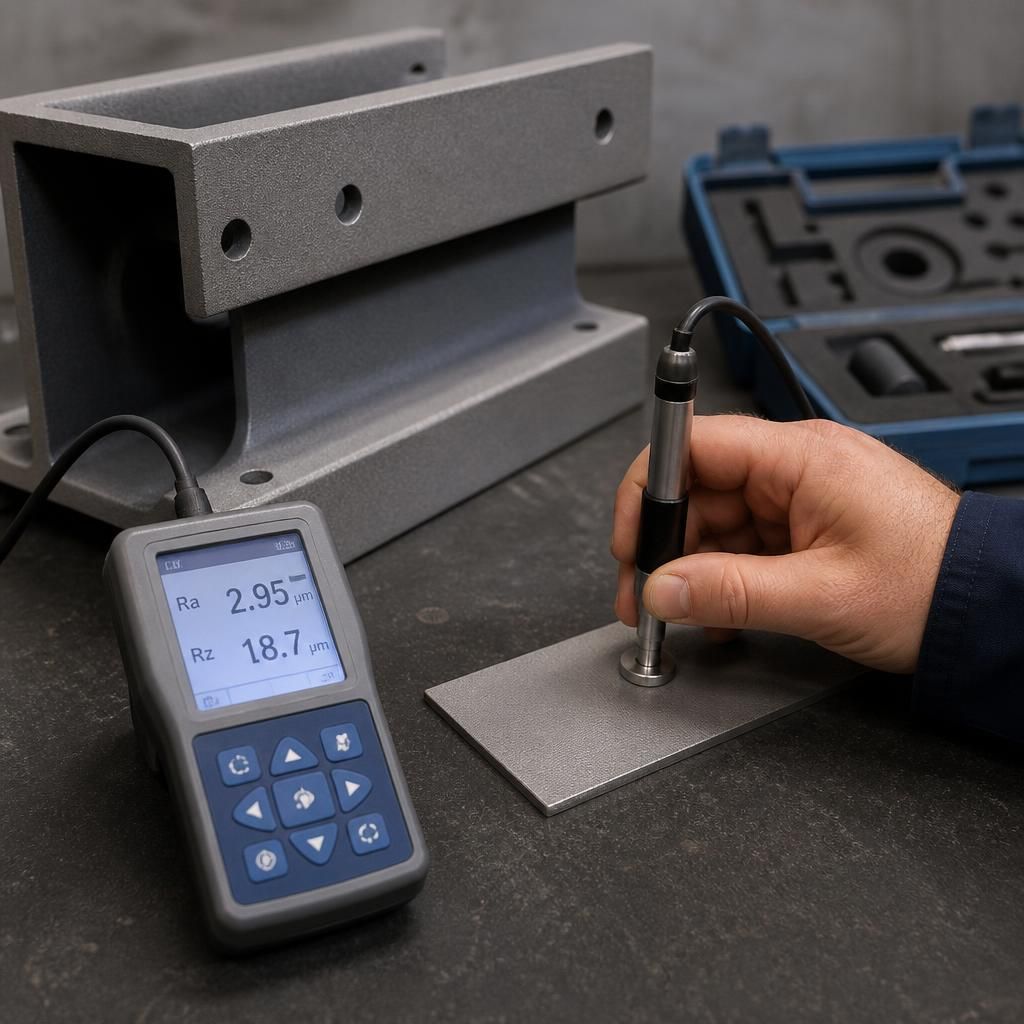
Blasting quality control must assess both surface cleanliness and surface profile, because a component can appear clean while still having a texture that is unsuitable for the specified powder coating system. The profile is the pattern of peaks and valleys created by the abrasive; it needs to provide a suitable key without creating excessive roughness that could affect coverage or the finished appearance.
For this reason, profile checks are carried out where the job specification requires them, using the appropriate comparison or measurement method for the component. Results are considered alongside the metal type, coating requirements and component function rather than judged against one universal standard. If the profile is outside the required range, the part can be referred for assessment before coating, preventing an unsuitable surface from progressing to the next stage.