

How does sandblasting improve the durability of powder-coated surfaces?
Sandblasting improves powder-coated surface durability by removing rust, mill scale, old coatings and other contaminants while creating a controlled surface profile for the powder to grip. This stronger mechanical bond helps reduce peeling, flaking and premature coating failure on prepared metal components.
Sandblasting improves powder-coated surface durability by making the prepared metal more uniform, stable and suitable for the complete coating system. Its effect is not limited to the initial bond: well-controlled preparation helps the finish perform consistently across exposed faces, edges, recesses and areas affected by previous fabrication or service.
It reduces points of early coating failure. Metal components can contain weld discolouration, heat-affected areas, embedded scale, handling residue and small surface irregularities. If these remain beneath a powder coating, they can create local weaknesses. Moisture and contaminants may then contribute to under-film corrosion or lifting in isolated areas. Abrasive preparation gives the applicator a more consistent substrate on which to assess and apply the coating.
It supports uniform coating behaviour. A powder coating needs to melt and cure evenly across the component. Variations in surface condition can affect how the powder deposits, flows and forms a continuous film. Consistent preparation helps avoid marked differences between heavily worked sections, clean sheet, welded joints and previously coated areas. This is particularly important for batch work, where parts need to have a repeatable finish from one component to the next.
It helps reveal defects before coating. Blasting can expose pits, laminations, weld spatter, sharp burrs and other defects that may be difficult to identify beneath grime or an existing finish. These issues can then be assessed and, where appropriate, corrected before powder application. Coating cannot reliably compensate for deep corrosion pits, poor weld finishing or sharp edges, so identifying them at the preparation stage supports a more durable result.
Surface preparation must be controlled rather than aggressive. Excessive blasting can roughen the substrate unnecessarily, alter delicate profiles, damage thin sections or distort components. Insufficient preparation may leave contamination or an unsuitable surface condition. The appropriate approach depends on the metal, its thickness, its previous coating, the component geometry and the performance required from the finished part.
Important controls include:
- Abrasive selection: the medium must be suitable for the substrate and the required finish. A process appropriate for robust carbon steel may be unsuitable for softer metals, thin sheet or components with detailed features.
- Grit size and blasting pressure: these influence the rate of cleaning and the texture produced. They should be selected to prepare the surface effectively without causing unnecessary substrate damage.
- Blasting angle and access: consistent coverage is needed around corners, joints, holes and recessed sections. Incomplete access can leave local areas with a different condition from the rest of the component.
- Contamination control: abrasive, compressed air and handling equipment must not introduce oil, moisture or other residues. Contamination after blasting can undermine the preparation even when the initial work was effective.
- Timing before coating: prepared metal should not be left exposed to conditions that allow contamination or oxidation to develop before the powder is applied. The prepared condition should be checked again if there is a delay or if the part has been handled.
Inspection is part of durability control. After blasting, the surface should be checked for remaining contamination, uneven preparation, visible defects and areas that were not adequately reached. Depending on the project, checks may also consider the surface profile, cleanliness and the condition of welds and edges. These checks help determine whether the component is ready for powder coating or needs further preparation.
The coating specification still matters. Sandblasting cannot correct unsuitable powder selection, incorrect film thickness, poor curing or design features that trap water. Durability depends on the whole system: appropriate metal preparation, a compatible powder, correct application, adequate curing and a component design suited to its environment. For parts exposed to moisture, chemicals, abrasion or outdoor conditions, the preparation method should be considered alongside the required protective coating system.
For this reason, sandblasting is best treated as a controlled engineering stage rather than a cosmetic cleaning operation. When the abrasive process, substrate condition and powder-coating requirements are considered together, it can reduce local weaknesses and provide a more consistent foundation for long-term service performance. Powder-coatings.co.uk provides industrial preparation and powder coating for metal components, including batch and specialist coating work, with collection and delivery options for businesses across the Midlands and surrounding areas.
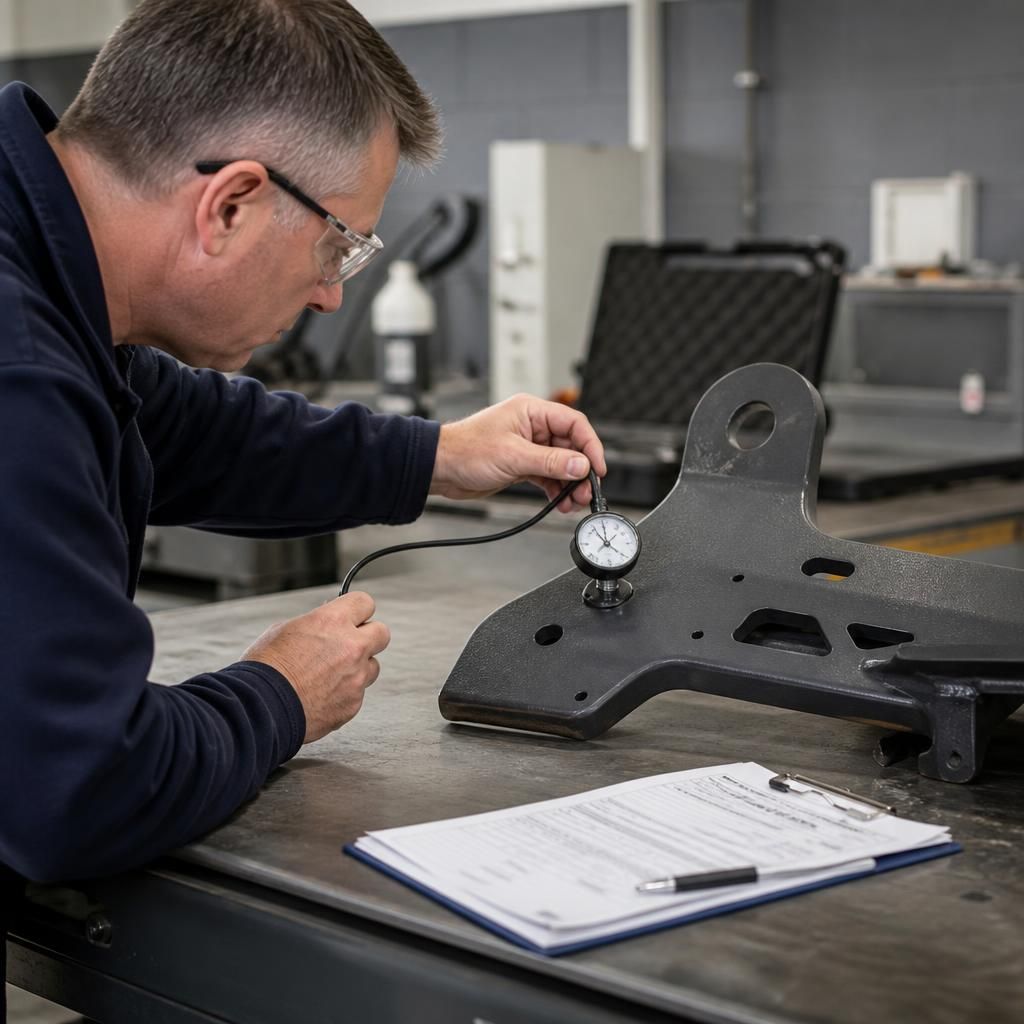
Sandblasting improves powder-coated surface durability by preparing a mechanically suitable interface that can be checked before the coating system is accepted. The quality of this interface should be verified rather than judged solely by the component’s appearance.
For specified or critical work, inspection may include assessing the blasted surface and carrying out an adhesion test after curing. These checks can identify a weak bond, inconsistent preparation or coating problems that are not obvious from a visual examination alone. They are particularly useful where components will experience repeated handling, vibration or movement in service.
Testing does not replace suitable preparation, correct powder application or proper curing. It provides evidence that the complete coating process has produced the required level of adhesion, helping distinguish a genuinely durable finish from one that only appears sound immediately after application.
Discuss Your Sandblasting and Powder Coating Requirements
Discuss your component material, dimensions, existing surface condition and required service environment with Powder-coatings.co.uk to assess the appropriate sandblasting and powder-coating approach. This helps establish the preparation and finish requirements before work begins.