

What types of metal substrates are best suited for nylon powder coating preparation?
Steel and aluminium are generally the best-suited metal substrates for nylon powder coating, provided they can be thoroughly cleaned, suitably abraded and prepared for strong adhesion. Galvanised steel and cast components may also be coated, but their surface condition, existing treatments and porosity require additional assessment before preparation.
The most suitable substrates for nylon powder coating are sound metal components that can tolerate the coating process and provide a clean, mechanically receptive surface. Carbon and mild steel are usually the most straightforward to prepare, while aluminium, stainless steel, galvanised metals and castings can also be suitable when their particular surface characteristics are addressed correctly.
Carbon and mild steel offer a relatively consistent base for nylon coatings. Preparation normally focuses on removing mill scale, rust, oil, grease, weld residues and handling contamination before creating an even surface profile. Welded fabrications need particular attention around joints, corners and heat-affected areas, where spatter, sharp edges or oxide residues can interfere with coating coverage. Hollow sections should also be checked for trapped moisture or contamination that could be released during heating.
Aluminium and aluminium alloys are widely used where low weight and corrosion resistance are important. Their naturally occurring oxide layer reforms quickly after cleaning, so preparation and coating should be coordinated to avoid leaving the surface exposed to further contamination. Abrasion must be sufficient to support adhesion without damaging thin sections or soft cast surfaces. Different alloys may also contain silicon, magnesium or other constituents that influence cleaning, oxide formation and the consistency of the prepared finish.
Stainless steel can provide a stable base, but its passive surface is less receptive to coating than freshly prepared carbon steel. Degreasing alone is not normally enough. A controlled treatment is required to remove contamination and produce a suitable key, while avoiding embedded particles or cross-contamination from tools and abrasives previously used on ordinary steel. The grade, surface finish and previous fabrication history should be considered before selecting the preparation method.
Galvanised steel and zinc-coated components require a more controlled approach because the zinc layer is part of the corrosion protection system. The preparer must remove oils, chromate or other passivation residues where present without unnecessarily stripping the coating. Zinc surfaces can also retain moisture or release gases during heating, which may lead to pinholes, blistering or other defects if the component has not been conditioned properly. The condition and age of the galvanised layer are therefore relevant when deciding whether it is suitable for nylon coating.
Cast iron and cast steel may be coated, although their suitability depends heavily on porosity, surface density and the presence of moulding materials, graphite, machining coolant or embedded debris. Open pores can retain contaminants and moisture, and gases released during the coating cycle may affect the finished film. Cast parts should be examined for porosity and thoroughly cleaned before preparation; heavily contaminated or porous castings may need a process trial or further conditioning.
Other non-ferrous metals, including copper-based alloys and zinc die-castings, should be assessed individually rather than treated as interchangeable with aluminium. Their thermal behaviour, surface chemistry, softness and risk of outgassing can vary considerably. Thin sheet, heavily machined parts and mixed-metal assemblies also need consideration because uneven heating or inaccessible interfaces can affect the coating result.
Before nylon powder coating preparation begins, the substrate should be checked for:
- Existing paint, plating, conversion coatings or corrosion that may need removal or compatible treatment.
- Oil, grease, release agents, cutting fluids, fingerprints and other residues that could prevent adhesion.
- Sharp edges, weld spatter, burrs, deep scratches and crevices that may produce uneven coverage.
- Porosity, trapped moisture, threaded holes and hollow sections that could cause contamination or outgassing.
- Previous abrasive contamination, particularly on stainless steel and other non-ferrous surfaces.
- Whether the component can withstand the required cleaning, abrasion and heating without distortion.
In practice, the best substrate is not simply the metal with the most favourable chemical composition. It is a component whose surface condition, geometry and thermal tolerance allow the preparation stages to be controlled consistently. For production work, identifying the exact alloy, previous treatment and intended service conditions helps determine whether standard preparation is appropriate or whether a trial panel and tailored process are needed.
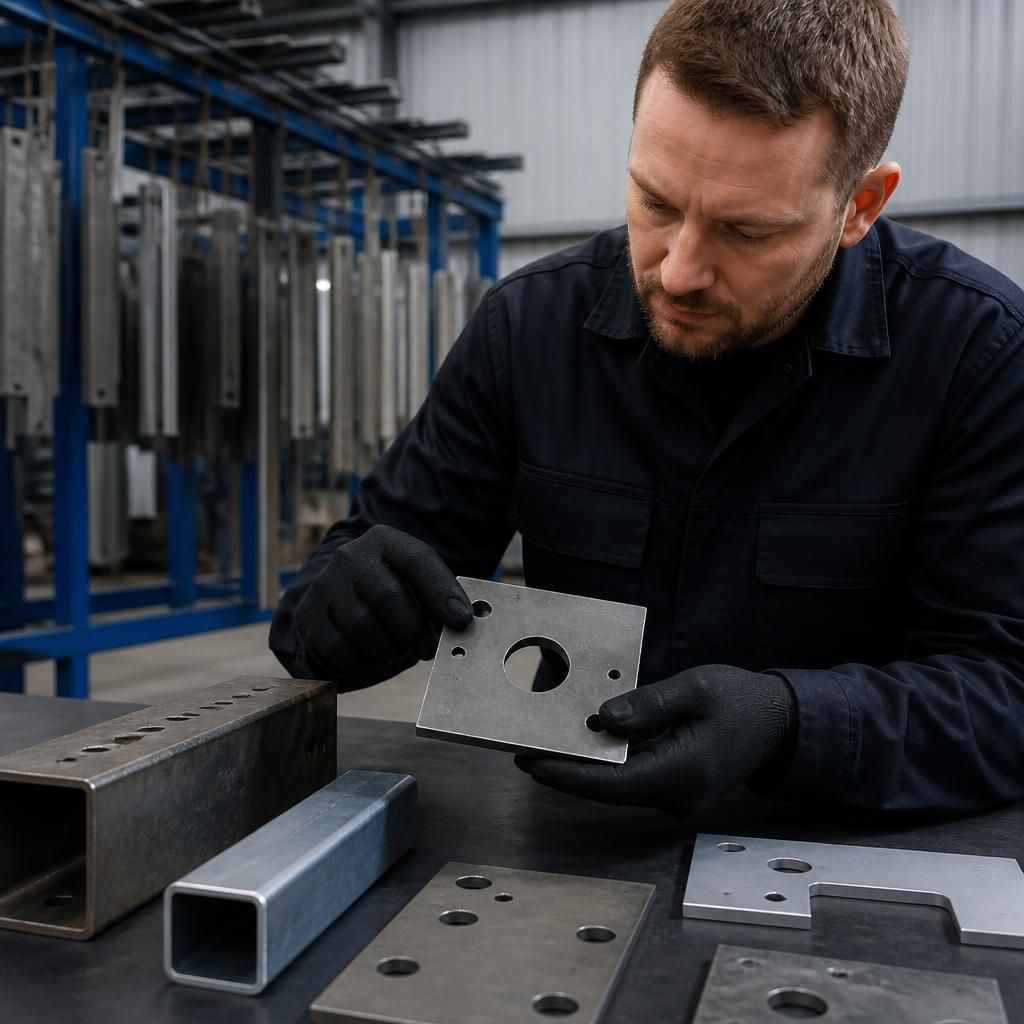
Correctly identifying the base metal is an essential part of deciding whether it is suitable for nylon powder coating preparation. Zinc-coated steel, aluminium and stainless steel can appear similar after fabrication, but their surface chemistry and existing protective layers require different preparation controls. Material certificates, fabrication records or a verified substrate assessment should be used where the metal grade or treatment is uncertain.
This is particularly important for components assembled from more than one material or supplied after previous use. Confirming the substrate before cleaning and abrasion helps prevent an unsuitable preparation method being applied to the wrong surface, reducing the risk of inconsistent adhesion across the finished component.
Discuss Your Metal Substrate for Nylon Powder Coating
If you are unsure whether a component is suitable for nylon powder coating, discuss its substrate, geometry, existing finish and intended use with our Midlands coating specialists. This allows the preparation route to be considered before coating work begins.