

What specific surface contaminants are most critical to remove before applying nylon powder coating?
The most critical contaminants to remove before nylon powder coating are oil, grease, cutting fluids, dirt, dust, moisture, rust, mill scale and remnants of old coatings. These residues can prevent proper adhesion, cause pinholes or blistering, and undermine the durability of the finished coating.
The most critical contaminants beyond the obvious visible residue are soluble salts, silicone and wax deposits, release agents, detergent residues, marking materials, adhesive traces and abrasive or chemical residues from earlier preparation. These substances can remain as an extremely thin film, yet still interfere with nylon powder coating by reducing surface energy, creating local adhesion failures or causing defects during heating.
Soluble salts are particularly important. Chlorides, sulphates and other salts may be left by handling, industrial atmospheres, water-based cleaning or previous chemical treatments. They are not always visible on the metal. When the component is heated, salts can attract or retain moisture at the coating interface, increasing the risk of blistering, under-film corrosion and edge lifting. A surface that looks clean can therefore still require a suitable rinse and verification process where salt contamination is possible.
Silicone, wax and mould-release residues are high-risk contaminants. Silicone-based products can come from polishing compounds, lubricants, sealants, anti-spatter products and release agents used during forming or casting. Waxes may be present after polishing or protective treatment. These materials spread easily and can create small areas where the nylon coating pulls back, forms craters or refuses to wet the metal properly. They are difficult to remove by simply wiping the surface, because wiping can distribute the residue rather than eliminate it.
Cleaning-agent residues also need attention. Alkaline cleaners, surfactants, phosphates and other treatment chemicals must be removed thoroughly after use. If they dry on the component, they can leave a film that changes the surface chemistry and affects adhesion. Inadequate rinsing may be more damaging than the original contamination because the residue can be distributed across the entire part. The cleaning process should therefore be matched with an appropriate rinse and drying stage, rather than relying on evaporation alone.
Marking and packaging materials can be overlooked. Permanent marker ink, layout dye, crayon, adhesive labels, tape residue, cardboard fibres and plastic packaging deposits may remain on areas that appear ready for coating. Some inks and adhesives soften or decompose during the coating cycle, while plastic packaging can transfer plasticisers to the metal. These areas should be identified before preparation and treated as contamination, not assumed to be covered safely by the powder.
Residues from fabrication can be chemically active. Weld-cleaning products, pickling residues, anti-spatter compounds and remnants of temporary protective treatments may react differently from the bare substrate during heating. Weld areas, folded joints, drilled holes and recesses deserve particular attention because residues can collect there and later migrate towards the coating surface. The geometry of the component should determine how it is cleaned, rinsed and inspected.
Abrasive and preparation residues must be controlled. Loose blast media, spent abrasive, metallic fines and dust trapped in holes or seams can interfere mechanically with the coating and may introduce unwanted particles into the finish. Abrasive selection should be compatible with the substrate and the required surface profile. After blasting or mechanical preparation, components need effective removal of loose particles without reintroducing contamination through dirty equipment, cloths or compressed air.
Contamination is normally assessed in three ways:
- Visual inspection: look for discolouration, smeared films, water breaks, transferred packaging material, marker lines and residues around welds, joints and recesses.
- Process checks: confirm that cleaning, rinsing, preparation and drying stages are suitable for the substrate and the type of contamination encountered.
- Surface verification: where salt or chemical contamination is suspected, use an appropriate test method rather than relying solely on appearance.
A useful practical distinction is between contamination that is visible, contamination that is chemically active and contamination that becomes problematic only during heating. Nylon powder coating preparation must address all three. Heating can expose residues that were not apparent at room temperature, while trapped substances in porous castings, seams or joints may produce local defects after the powder has been applied.
Contaminated handling after preparation can undo otherwise effective cleaning. Components should be protected from direct contact with unclean gloves, oily benches, untreated packaging and workshop surfaces. Masking materials, lifting equipment and storage supports should also be checked, particularly where they touch areas that will receive the coating.
The correct response depends on the contaminant. Mechanical preparation may be appropriate for firmly bonded material, chemical cleaning may be needed for soluble or organic films, and rinsing is essential where water-soluble residues are present. No single cleaning stage removes every contaminant. Where the source or composition of a residue is uncertain, it is safer to identify it before coating than to rely on the nylon powder to conceal it.
For industrial components, the preparation specification should record the contamination risks associated with fabrication, handling, storage and any previous treatment. This gives the coating process a defined basis for deciding whether a part needs additional cleaning, rinsing, inspection or preparation before nylon powder is applied.
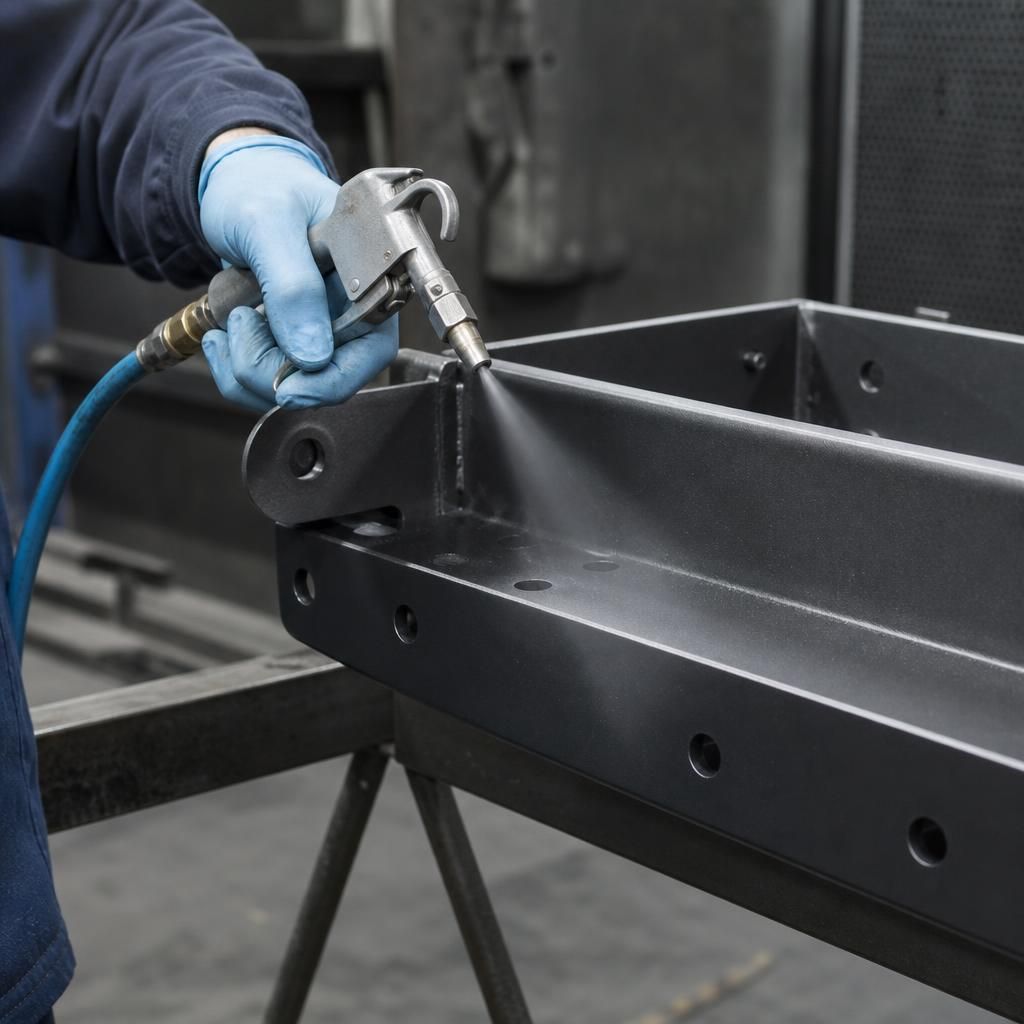
Compressed air can re-contaminate a prepared metal surface if the line carries oil, water or compressor condensate. This is easily overlooked because the deposit may be too thin to see, yet it can create local adhesion defects in the nylon coating. Air used for final cleaning should therefore be suitable for surface preparation, with the equipment and hoses checked for contamination before they contact coating-ready components. Where there is any doubt, use a clean alternative rather than assuming airflow has left the surface uncontaminated.