

What safety precautions should I take when setting up the powder coating gun for aluminium surfaces?
Before setting up a powder coating gun for aluminium surfaces, isolate the equipment, check that the gun and workpiece are correctly earthed, and wear suitable PPE, including eye protection, gloves and respiratory protection. Ensure effective ventilation, remove ignition sources, inspect hoses and electrical connections, and follow the equipment manufacturer’s instructions for safe powder handling and cleaning.
Safe setup of a powder coating gun for aluminium surfaces depends on controlling stored energy, airborne powder, moving equipment and the condition of the component before spraying. In addition to the precautions applied to any powder coating system, aluminium workpieces require careful handling because they can be lightweight, easily marked and prone to retaining moisture or pretreatment residues in joints and recesses.
Complete a task-specific risk assessment before connecting the gun. Confirm that the operator understands the gun, powder feed unit, booth controls and emergency procedures, and restrict access to trained personnel. Identify pinch points around hanging equipment, conveyors, lifting aids and booth doors. Aluminium components should be supported securely so that they cannot swing, fall or contact the operator while the gun is being adjusted.
- Check that the spray booth, extraction system and associated interlocks are operating correctly before introducing powder.
- Keep booth doors, inspection panels and access points in their intended operating position during spraying.
- Do not bypass alarms, door switches, extraction controls or emergency-stop functions.
- Keep floors and ledges free from powder deposits, since accumulated coating dust can increase both slip and combustible-dust risks.
- Use cleaning equipment suitable for fine powder; do not disperse deposits with uncontrolled compressed air.
Handle compressed air cautiously when connecting the gun feed system. Close the air supply before fitting or removing hoses, release trapped pressure through the approved procedure, and make sure couplings are locked in place. Never point the gun at a person, test spray towards a hand or body, or place fingers near the nozzle while the system is pressurised. Set adjustments with the gun directed into the booth or another designated safe area, not towards an open walkway.
Before loading aluminium components, check the surface for sharp edges, loose swarf, oil, water and chemical residue. Sharp edges can cut gloves or damage hoses, while moisture and contamination may cause unexpected powder discharge, poor adhesion or unsafe vapour release during curing. Use the specified pretreatment and drying process, and do not coat parts that are still wet or carrying unapproved residues.
Control powder exposure during filling and colour changes. Open containers carefully to avoid creating a cloud, keep lids and transfer containers closed when they are not in use, and use suitable local extraction at powder-loading points where provided. Avoid eating, drinking or storing personal items in the coating area. Wash hands after handling powder and before leaving the work area, even when visible dust is not present.
Aluminium components can be relatively thin and may heat or distort more readily than heavier steel parts. Confirm that the selected curing profile is suitable for the component, powder system and any assembled inserts, seals or masking materials. Remove combustible packaging, solvents and unnecessary tools from the curing-equipment area, and allow coated parts and fixtures to cool in a controlled location before handling them.
Before starting production, carry out a controlled test of the complete setup. Confirm that the gun trigger, powder feed, air controls and booth controls respond as expected, and stop immediately if there is arcing, unusual noise, damaged insulation, unstable powder delivery or a smell indicating overheating. Do not continue operating equipment that has developed a fault; make it safe, report it and have it assessed by a competent person.
At the end of setup or before a change of powder, follow a defined shutdown sequence: stop spraying, close the material supply, depressurise the feed system, and clean the gun and surrounding area using approved methods. Ensure that no powder remains where heat, sparks or electrical equipment could disturb it. Record defects, cleaning requirements and any changes to settings so the next operator does not have to make assumptions.
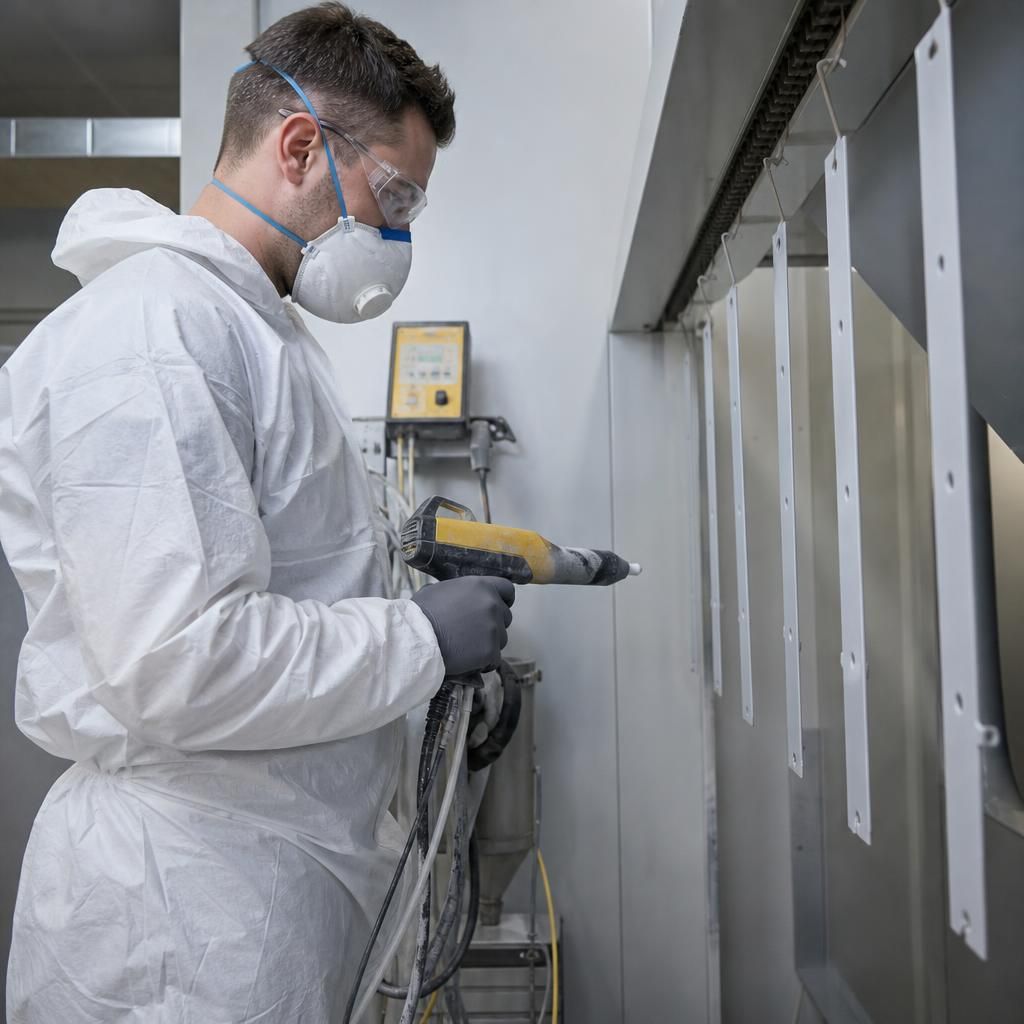
Read the powder manufacturer’s safety data sheet before setting up the gun, because handling precautions can vary between coating formulations. Check the stated hazards, required protective equipment, storage conditions, first-aid measures and spill procedures. Pay particular attention to any sensitising ingredients, as repeated skin or inhalation exposure may cause harm even when the powder appears harmless.
- Keep the safety data sheet accessible to the operator.
- Use only approved containers and transfer methods for the selected powder.
- Keep contaminated clothing separate and clean it according to the stated procedure.
- For powder in the eyes or on the skin, follow the product’s first-aid instructions rather than relying on guesswork.
- Report exposure, illness or a spill through the site’s established procedure.
Ask About Safe Powder Coating for Aluminium Components
If you need to confirm the safest coating approach for aluminium components, speak to our team before setting up your equipment. Share the component details and powder requirements so the preparation and application process can be reviewed appropriately.