

What specific cleaning processes are used to ensure scaffold tubes are free from contaminants before powder coating?
Scaffold tubes are typically cleaned by degreasing to remove oil and grease, followed by an alkaline wash, thorough rinsing and drying to eliminate residues, dirt and soluble contaminants. Where rust, mill scale or firmly bonded contamination is present, abrasive blasting may be used as a combined cleaning and surface-preparation step before powder coating.
Scaffold tubes are cleaned through a controlled sequence that removes different types of contamination in turn: loose dirt is removed first, oily films are dissolved or emulsified, embedded corrosion and mill scale are treated mechanically or chemically, and the surface is then rinsed, dried and inspected. The correct method depends on the tube’s condition, the previous coating or service environment, and the powder-coating system being applied.
Initial assessment and dry removal
Before wet cleaning begins, each batch should be checked for cement dust, soil, swarf, loose rust, paint flakes, adhesive residues and other visible debris. Brushing, scraping or controlled air removal can clear loose material without spreading it across the steel. This stage is important because heavy deposits can shield the metal from later cleaning solutions and may remain trapped in joints, end sections or around fittings.
Particular attention is needed at tube ends, welds, drilled holes, clamps and areas where tubes have been stacked together. These locations can retain grit, moisture, grease and construction residues. Any heavy deposit that cannot be removed without damaging the steel should be identified so that the cleaning process can be adjusted rather than relying on a superficial wash.
Removal of oils and grease
Oil, grease, cutting fluids and handling residues are usually treated with a suitable solvent-based or aqueous degreasing process. Solvent cleaning can be useful for localised contamination, while aqueous cleaners are more appropriate for processing larger quantities of tubing. Alkaline cleaners work by breaking down or emulsifying organic contamination so it can be carried away from the metal surface.
Cleaner concentration, temperature, contact time and agitation all affect the result. If the solution is too weak or the contact time is too short, an invisible film can remain even when the tube looks clean. If the solution becomes overloaded with oil, it can redeposit contamination rather than remove it. For this reason, the cleaning bath or wash stage needs to be monitored and renewed or maintained when its performance declines.
Water-based washing and rinsing
After an alkaline treatment, the tubes need a thorough water wash to remove cleaner residues and suspended contamination. Rinsing is not simply a cosmetic step: alkaline carryover can interfere with subsequent pretreatment and may contribute to powder-coating defects such as poor adhesion, blistering or surface discolouration.
Where practical, staged rinsing is more effective than a single brief rinse. Fresh water at the final stage helps reduce the transfer of salts and cleaning chemicals back onto the steel. The condition of the rinse water should also be considered, because water containing excessive dissolved minerals can leave deposits as it dries. A clean, even surface with no slippery feel, visible residue or patchy drying is a useful indication that washing has been effective, although visual inspection alone is not sufficient for every application.
Treatment of rust, scale and firmly attached deposits
Rust and mill scale may require a separate preparation stage because ordinary degreasing does not remove tightly bonded oxide. Abrasive blasting can expose clean steel by breaking up corrosion and scale, while mechanical tools may be suitable for isolated areas or light deposits. Chemical derusting or pickling can also be used in appropriate controlled systems, but the process must be compatible with the substrate and followed by effective rinsing and neutralisation where required.
Over-aggressive treatment can alter the profile of the steel, round edges or leave abrasive trapped inside the tube. Under-treatment can leave corrosion pockets that continue beneath the coating. The objective is a consistent, sound surface rather than simply making the tube appear brighter.
Control of residues and recontamination
Cleaning is only effective if the prepared tubes are protected from contamination afterwards. Operators should use clean handling equipment and avoid placing treated tubes on oily racks, dirty floors or surfaces carrying blasting media. Contact with bare hands can transfer salts and oils, particularly after final cleaning, so suitable gloves and controlled handling are important.
Water trapped inside hollow scaffold tubes is another source of contamination. Tubes should be positioned so that wash water can drain from the bore, and end areas should be checked for retained liquid. If moisture remains when coating starts, it can contribute to flash rust, pinholes, blistering or reduced adhesion.
Drying and final inspection
Drying may use filtered air, heated air or a controlled drying stage, depending on the process and tube configuration. The aim is to remove water from both the outside and internal surfaces without introducing oil vapour, dust or other contamination. Drying equipment and compressed-air supplies therefore need to be clean and suitable for surface preparation.
The final inspection normally looks for visible oil, water marks, cleaner residue, loose corrosion, dust and uneven treatment. A clean lint-free wipe, water-break observation or other agreed surface check may help identify remaining organic contamination. If the surface shows discontinuous water sheeting, greasy patches or residue after rinsing, it should be reprocessed rather than sent forward.
Once cleaning has passed inspection, the interval before powder coating should be kept under control because freshly prepared steel can collect dust or develop light surface oxidation. Cleaning records can also identify recurring problems, such as excessive oil on incoming tubes or residue concentrated around welds, allowing the preparation sequence to be refined for future batches.
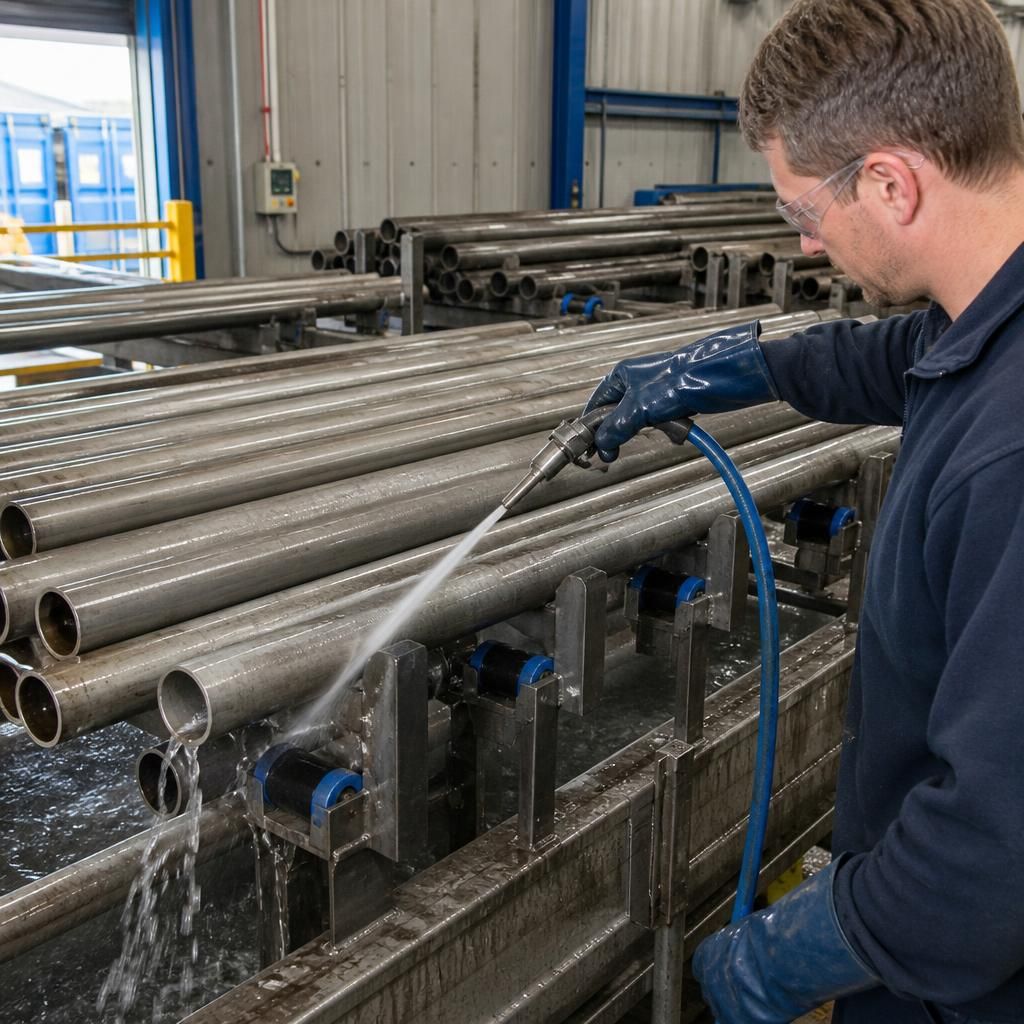
Hollow scaffold tubes need cleaning on the internal bore as well as the outside surface. Internal contamination can include cutting oil, abrasive dust, rust particles and retained wash chemicals, so the cleaning process must allow treatment fluid to pass through the tube rather than only contacting its exterior.
Depending on the equipment and tube condition, the bore may be cleaned by flushing, immersion with controlled agitation, or directed spray through suitable nozzles or lances. Brushes can help dislodge deposits around the inside wall and near tube ends, while repeated draining prevents loosened material from settling elsewhere in the tube. The process should also confirm that cleaning fluid and rinse water can exit fully before the tubes move to drying.
This internal cleaning step is particularly important where tubes are stored or handled horizontally, as residues can collect in low points and remain hidden during an external visual check. Inspecting the ends and, where necessary, using a suitable light or borescope helps identify deposits that would otherwise be carried into the powder-coating stage.