

What primer types and applications are best suited for ensuring optimal adhesion on scaffold tubes before powder coating?
For scaffold tubes, a compatible epoxy or epoxy-polyester powder primer is generally best suited to promoting adhesion beneath the topcoat, provided the steel has been thoroughly cleaned and suitably keyed. Zinc-rich primers may be appropriate where additional corrosion protection is required, but the primer must be compatible with the powder system and applied to the specified film thickness to avoid adhesion or curing problems.
The most suitable primer for scaffold tubes is normally a powder-compatible epoxy, epoxy-polyester hybrid or zinc-rich system selected according to the tube material, service environment and required corrosion protection. The primer is only effective when it forms part of a tested coating system: substrate preparation, primer application, topcoat selection and curing must all be compatible.
Epoxy powder primers are commonly used where strong adhesion and corrosion resistance are the main requirements. They bond well to correctly prepared carbon steel and provide a stable base for a compatible powder topcoat. They are particularly suitable for scaffold tubes used in general construction, storage, fabrication and other applications where the coated steel may experience handling, moisture and intermittent contamination. Because epoxy coatings can lose colour or gloss under prolonged ultraviolet exposure, they are usually covered with a suitable weather-resistant topcoat where the tubes will remain outdoors.
Epoxy-polyester hybrid primers can be appropriate where adhesion and general durability need to be balanced with a powder system designed for routine industrial use. Their suitability depends on the complete system rather than the primer name alone. The technical data should confirm that the primer can be overcoated with the chosen finish, that both layers use compatible cure requirements and that the proposed film build is acceptable for tubular sections.
Zinc-rich powder primers are considered when sacrificial corrosion protection is important, particularly on steel exposed to damp conditions or damage during handling. The zinc content can provide additional protection around minor coating defects, but these products require careful control. Excessive film thickness, poor grounding, contamination or an unsuitable topcoat can cause pinholing, cratering, blistering or intercoat adhesion failure. The primer manufacturer’s requirements for application, curing and overcoating should therefore be followed precisely.
A liquid wash primer or conventional solvent-based metal primer should not be substituted automatically for a powder primer. Some liquid products contain binders or solvents that interfere with powder adhesion, curing or appearance. They may also require a separate drying or flash-off stage. A liquid primer is suitable only where the coating supplier has confirmed that it is designed for use beneath the specified powder system and that the complete process has been validated.
Primer selection should begin with an assessment of the scaffold tube itself:
- For clean, uncoated carbon steel, an epoxy-based powder primer is often a practical starting point after suitable degreasing and mechanical or chemical preparation.
- For tubes requiring stronger corrosion protection, a zinc-rich or zinc-modified powder primer may be more appropriate, subject to system compatibility.
- For galvanised or previously coated tubes, the primer must be approved for that substrate; a primer intended only for bare steel may not wet or bond reliably.
- For tubes exposed to sunlight, the topcoat should provide the required ultraviolet resistance because the primer is normally protected beneath the finish coat.
- For tubes subject to frequent impact, sliding contact or abrasion, the whole coating system should be assessed rather than relying on primer adhesion alone.
Application begins only after contaminants, corrosion products, moisture and loose material have been removed. The prepared surface should have a consistent profile without polished areas, embedded abrasive or visible residues. Scaffold tubes also need attention around welds, ends, holes, seams and other geometry where oils or moisture can remain. If these areas are not properly prepared, the primer may appear sound on the exposed faces while failure begins at an edge or concealed recess.
The primer is generally applied as a controlled powder layer using electrostatic equipment. Correct grounding of the tube is important because poor electrical contact can produce uneven deposition, thin patches and inconsistent edge coverage. Operators should also control powder recovery, gun settings, line speed and part temperature so that the applied layer remains within the product specification. The primer should not be treated as a means of hiding heavy pitting, sharp burrs or preparation defects.
Curing is equally important. The specified schedule normally relates to the metal temperature, not simply the temperature of the oven atmosphere. Tubular sections can heat differently from solid or flat components, so the process should be checked on representative tubes. Under-curing may leave weak intercoat adhesion and reduced chemical resistance, while excessive heat can affect appearance or damage the intended coating properties. Where the primer is designed to be overcoated before full cure, the permitted interval and surface condition must be confirmed from the system instructions.
Before production coating, a trial section or representative sample is useful for checking adhesion, coverage, colour, surface appearance and the interaction between primer and topcoat. Inspection should include difficult areas such as tube ends and weld zones, not just the broad cylindrical surface. If adhesion testing is required, the method should be appropriate to the coating thickness and specified by the quality procedure. Any flaking, pinholing, blistering, bubbling or visible contamination indicates that the preparation, primer, application or cure needs investigation before further tubes are processed.
In practice, the best choice is not the primer with the most aggressive specification in isolation. It is the product that matches the tube substrate, anticipated exposure, handling demands and powder topcoat, with a documented preparation and curing process behind it. For batch coating of scaffold tubes, confirming the full system with the coating supplier before production helps avoid incompatibility between primer and finish and supports a consistent, durable result.
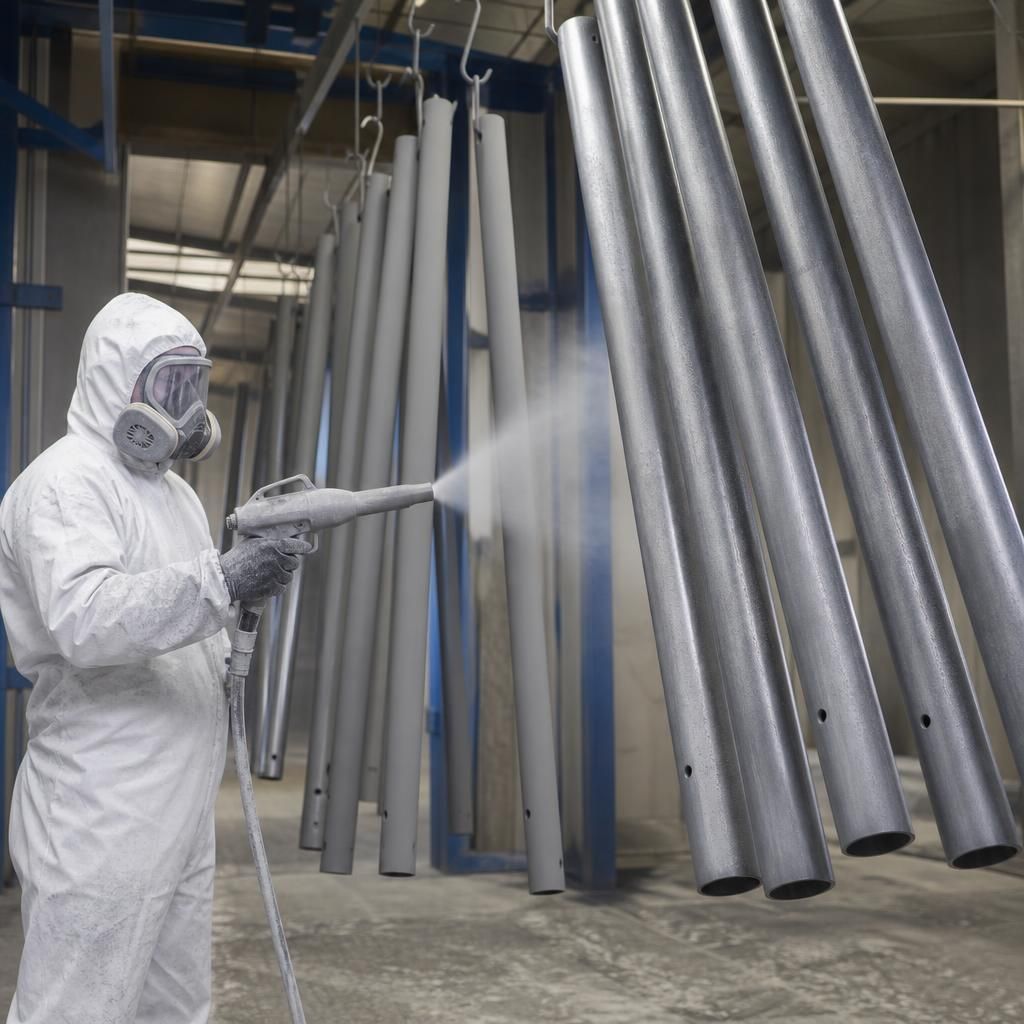
A conversion coating can support primer adhesion on scaffold tubes, but it is not a substitute for the primer itself. Iron phosphate or zirconium-based pre-treatment can create a thin, chemically receptive surface on suitably prepared steel, helping the powder primer form a more consistent bond than it would on untreated metal.
The pre-treatment must match the tube substrate and the coating line. Its effectiveness depends on correct chemical concentration, contact time, rinsing and complete drying before powder application. Residual rinse water, salts or treatment chemicals can cause blistering, pinholing or loss of adhesion beneath the primer. For this reason, the pre-treatment specification should be confirmed alongside the chosen primer and checked on a representative tube before batch processing.