

What are the best practices for ensuring scaffold tubes are free from moisture before the powder coating process?
Keep scaffold tubes dry by draining trapped water, removing surface moisture, and allowing them to dry fully before coating. Store prepared tubes under cover on supports that allow air circulation, then check for condensation or dampness immediately before powder application.
Scaffold tubes should be treated as moisture-sensitive components throughout preparation, handling and coating, not merely dried immediately before powder application. The most reliable approach is to control how water enters the process, provide drainage paths for hollow sections, use a defined drying stage, and verify that the steel and internal surfaces are dry before powder is applied.
Control moisture during pre-treatment
Water-based degreasing, rinsing and chemical pre-treatment can leave moisture inside tube bores, around joints, in drilled holes and beneath overlapping fittings. The tube-loading arrangement should therefore allow these areas to drain during every wet-process stage. Avoid positioning tubes in a way that creates closed pockets or horizontal sections where rinse water can collect.
- Use suitable racks or hangers that support the tube without blocking openings.
- Arrange hollow sections so that water can move towards an outlet rather than pooling internally.
- Separate components that could trap liquid against one another.
- Inspect end faces, holes, weld areas and recessed features, as these commonly retain moisture.
Where the tube design has sealed sections or restricted openings, the coating contractor should assess whether additional drainage or venting is needed before processing. This is particularly important for fabricated scaffold components, because trapped water may not be visible from the outside and can emerge later during heating.
Use a controlled dry-off stage
After wet pre-treatment, scaffold tubes should pass through a controlled drying stage appropriate to the metal thickness, tube arrangement and coating system. The purpose is to evaporate retained process water from both accessible external surfaces and less exposed areas before the powder is deposited. Drying conditions should be consistent across the load rather than relying on the position of one tube in the equipment.
The dry-off process should be checked for loading density, air movement and heat distribution. Overcrowded racks can shield surfaces from heated air, while tightly packed tubes may prevent moisture from leaving internal spaces. The steel should be allowed to reach a stable, dry condition; simply raising the temperature during powder curing is not a dependable substitute for proper pre-coating drying.
Any compressed air used to assist drying should be clean and free from oil or other contaminants. Contaminated air can replace a moisture problem with a surface-contamination problem, potentially causing craters, fisheyes or poor adhesion in the finished coating.
Manage condensation risk
Condensation can form even when a tube appears visually dry. It occurs when the steel temperature falls to the surrounding air’s dew point, particularly after cold storage, transport or contact with a cooler rack. Before coating, compare the substrate temperature with the surrounding temperature and humidity. Coating should not proceed while the steel is at risk of collecting atmospheric moisture.
Temperature changes should be managed gradually where practical. Moving cold tubes into a warmer, humid area can create condensation on the metal before the surface feels damp. Likewise, taking dry, warm tubes into a cooler environment can create a new moisture risk after inspection. Keep the route from drying to coating as controlled and short as the process allows, while avoiding any suggestion that a warm surface is necessarily dry throughout its bore.
Protect dry tubes during handling
Moisture control can be undone by unsuitable handling. Operators should use clean supports and avoid placing prepared tubes on wet floors, unprotected outdoor surfaces or racks carrying rinse water. Tubes should be handled in a way that does not allow water from adjacent components, gloves or equipment to transfer onto the prepared steel.
Loads should be identified by process stage so that fully prepared tubes are not mixed with parts awaiting washing, rinsing or rework. If a tube is exposed to rain, wash water, visible condensation or an uncontrolled environment after drying, it should be returned for assessment rather than assumed to remain suitable for coating.
Inspect internal and external areas
Inspection should cover more than the main visible surface. Check tube ends, internal bores where accessible, welds, overlaps, holes, slots and areas beneath temporary handling fixtures. Bright lighting can help reveal droplets or damp patches, but visual inspection alone may not identify a thin moisture film or water hidden inside a hollow section.
A documented process check can record the pre-treatment route, drying stage, rack arrangement, environmental conditions and inspection result for each production load. This helps identify recurring problems, such as moisture appearing only on particular tube lengths or in a specific rack position.
Recognise moisture-related coating defects
Residual moisture may produce pinholes, bubbling, blistering, surface roughness, local loss of adhesion or corrosion beneath the coating. Water escaping from a hollow tube during heating can also disturb nearby powder and create defects that are difficult to correct after curing. If such symptoms appear, the cause should be investigated before the load is recoated. Checking drainage, dry-off performance, dew-point conditions, rack density and handling practices is more effective than simply applying another layer of powder.
For large or complex batches, a defined moisture-control procedure gives the most repeatable result. It should specify how tubes are loaded, dried, handled, assessed and released for powder application. This process-based approach is especially valuable where scaffold tubes have hollow sections, fabricated details or a pre-treatment route involving several wet stages.
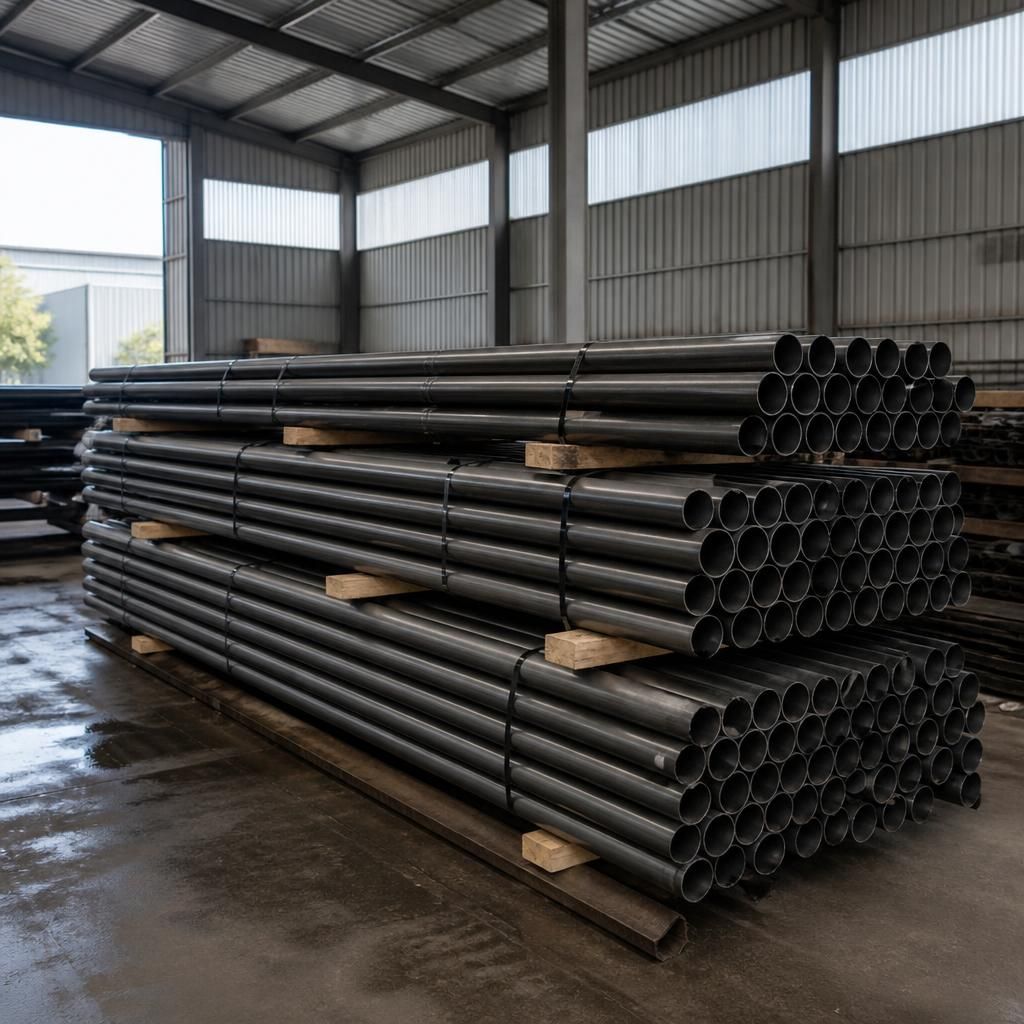
Protective covering must keep prepared scaffold tubes dry without trapping humid air against the steel. A sealed plastic sheet placed directly over cold tubes can create condensation as temperatures change, even when rain is excluded. Use a covered, ventilated storage area, keep tubes raised from the floor, and allow air to circulate around the load. If temporary wrapping is necessary, avoid tight contact with the metal and remove it in a controlled area before the final moisture inspection.