

How does priming enhance the performance of powder coated scaffold tubes?
Priming enhances powder coated scaffold tubes by creating an intermediate layer that improves adhesion between the prepared steel and the powder coating. A suitable primer can also provide additional corrosion resistance, helping the finished tubes withstand demanding site and storage conditions for longer.
Priming enhances powder coated scaffold tubes by adding a controlled intermediate film that improves the consistency, coverage and service performance of the finished coating system. It is particularly useful where tubes will face outdoor exposure, repeated handling, impact, abrasion or difficult-to-coat features such as welds, cut ends and edges.
Once the steel has been correctly prepared, the primer helps create a more uniform foundation for the powder topcoat. This can reduce variations in the final finish caused by differences in substrate condition, surface profile or localised porosity. A consistent foundation supports a more even appearance along the tube and helps the topcoat perform as part of a designed coating system rather than as an isolated layer.
Primer can also improve the protection of vulnerable areas. Scaffold tubes commonly include welded joints, formed sections, end faces, drilled features and sharp transitions. These areas may receive a thinner or less even topcoat than broad, accessible surfaces. A compatible primer can add material to those locations before the finishing coat is applied, helping reduce weak spots in the overall film.
The performance benefit depends on choosing a primer that matches both the steel and the powder topcoat. Common systems include epoxy-based primers for demanding general protection and zinc-containing primers where additional sacrificial or barrier protection is required. The correct choice depends on the intended exposure, the condition of the steel, the required finish and the chemistry and curing requirements of the powder coating. A primer should not be selected in isolation, because incompatibility can cause poor appearance, blistering, loss of flexibility or failure between coating layers.
Application control is as important as primer selection. The coating provider needs to consider:
- Whether the prepared steel is clean and free from oil, moisture, dust and loose scale.
- Whether the primer film is sufficiently continuous without runs, pinholes, excessive thickness or missed areas.
- Whether edges, welds, tube ends and recessed features have received appropriate coverage.
- Whether the primer has reached the specified cure state before the powder topcoat is applied.
- Whether the combined primer and topcoat thickness is suitable for the tube’s intended use.
Correct curing is essential because a primer that is under-cured may interfere with the topcoat, while excessive heat or an unsuitable cure schedule can affect the appearance and flexibility of the system. The coating process therefore needs to account for the steel thickness, the primer’s technical requirements and the powder topcoat’s curing conditions. Components should also be protected from contamination between stages, as dust, handling marks or moisture can become trapped beneath the finish.
A primed system can be especially valuable where scaffold tubes are moved, stacked or assembled repeatedly. The additional coating layer can help the finished system tolerate minor knocks and surface wear more effectively than a single-layer finish, provided the coating specification and application method are suitable for that level of use. It does not make the tubes immune to impact damage: deep scratches or exposed steel should still be assessed and repaired using an appropriate method.
Priming is therefore best viewed as part of a complete coating specification rather than a universal solution. Effective results require sound steel preparation, a compatible primer, controlled application, correct curing and a suitable powder topcoat. For batch work, keeping these variables consistent is important because differences between tubes can otherwise lead to uneven finish quality and variable protection across the same project.
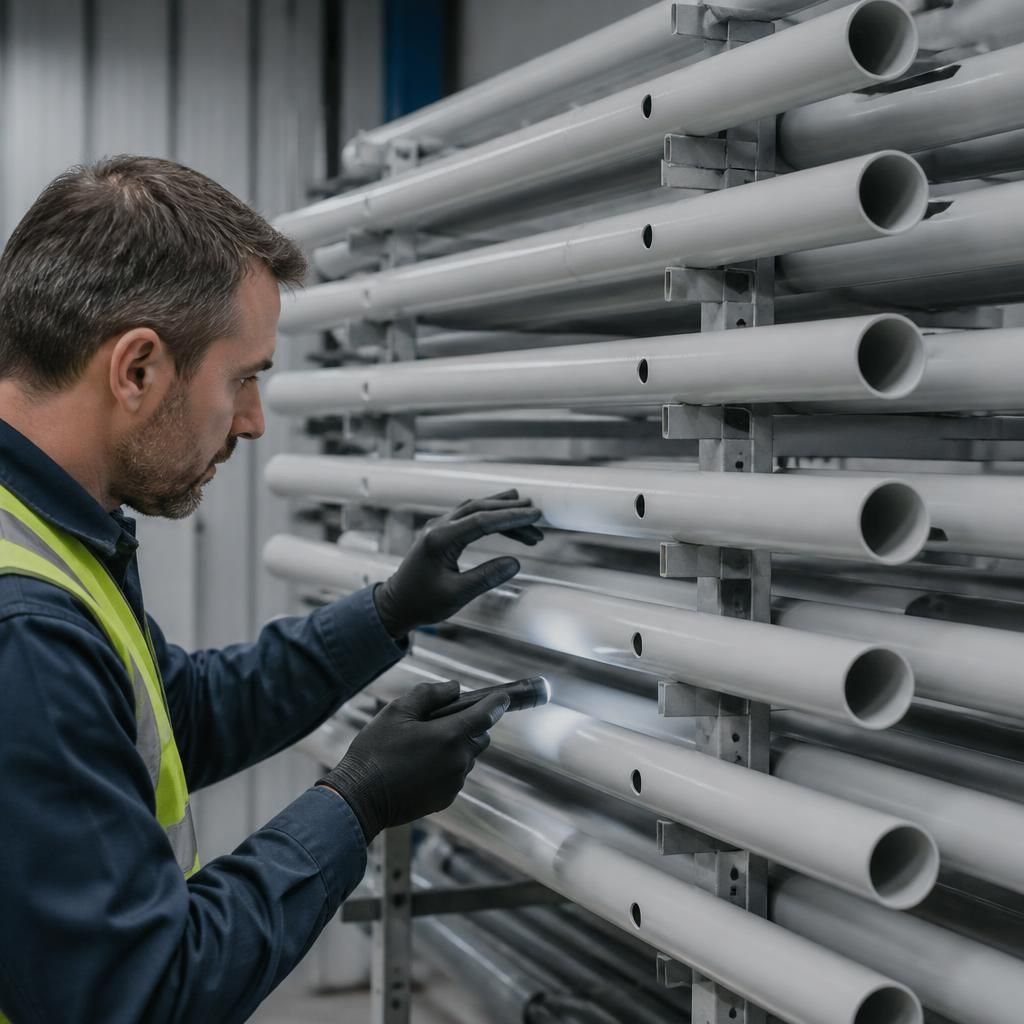
A primer enhances powder coated scaffold tubes by creating a separate, inspectable stage in the coating system. Before the powder topcoat is applied, the primered surface can be checked for missed areas, pinholes, contamination and uneven coverage. Any defects can then be addressed before they are enclosed beneath the final finish.
This staged approach helps maintain consistent coating quality across batches of tubes. It also makes it easier to identify whether a problem originates from steel preparation, primer application or the topcoat, supporting more accurate quality control and reducing the risk of hidden defects within the completed coating system.
Discuss the Right Primer for Your Scaffold Tubes
Discuss your scaffold tube requirements with the powder-coating team to identify a compatible primer and coating specification. Provide details of the steel, intended exposure and required finish so the preparation and application process can be assessed accurately.