

How do abrasion techniques vary for powder coated scaffold tube preparation?
Abrasion techniques vary from controlled hand or power-tool abrasion for localised areas to abrasive blasting for larger scaffold tubes or complete coating removal. The chosen method depends on the existing coating, tube geometry and required surface profile, with care needed to avoid damaging the metal or leaving abrasive residue before recoating.
Abrasion techniques for preparing powder coated scaffold tubes range from light hand abrasion to controlled mechanical preparation and abrasive blasting. The appropriate approach depends on whether the existing coating is sound, damaged or being removed completely, as well as the tube’s shape, access points and the surface profile required by the new coating system.
Hand abrasion is suited to small areas, local repairs and sections where precision matters more than production speed. Abrasive paper, pads or hand blocks can be used to dull a glossy powder coating, remove loose material and feather the boundary between intact coating and exposed metal. Feathering creates a gradual transition rather than a sharp step, reducing the risk of a visible edge after recoating.
Manual preparation is useful around tube ends, drilled holes, threaded features, welds and fittings because the operator can work around edges without removing more material than necessary. It also provides close control on thin sections or areas where aggressive abrasion could distort the component. However, hand abrasion can produce an inconsistent profile if pressure, abrasive condition or working direction varies. The prepared surface therefore needs careful visual inspection before cleaning.
Power-tool abrasion increases productivity on larger damaged areas while retaining more control than full blasting. Rotary tools, orbital sanders and abrasive wheels may be selected according to the condition of the coating and the accessibility of the tube. Broad, flat sections can generally be treated more evenly with a powered sander, while smaller tools are better for welds, corners and localised corrosion.
Power tools must be used with care. Excessive pressure or an unsuitable abrasive can generate heat, smear softened coating or cut into the steel. A hard wheel can also round edges and remove sound coating beyond the repair area. Operators should keep the tool moving, avoid concentrating on one point and use a controlled sequence so that the finish is uniform. Any exposed metal should be blended into the surrounding coating rather than left with a sharp boundary.
Abrasive blasting is normally chosen when a larger area requires consistent preparation, when the existing coating is poorly bonded, or when complete removal is specified. The abrasive stream strips coating and contamination while creating a surface texture that gives the subsequent coating more opportunity to form a mechanical key. Blasting can be particularly effective on long tube runs, multiple components and surfaces with widespread corrosion or heavy build-up.
Blasting is not simply a stronger version of sanding. Media type, particle shape, air pressure, nozzle distance, angle and travel speed all affect the result. Angular media tends to cut into the surface more actively, whereas less aggressive media may be selected where coating removal is required without an unnecessarily deep profile. The settings should be matched to the steel condition and the requirements of the intended coating system.
Tube geometry creates specific challenges during blasting. The operator must reach around the circumference, deal with shadowed areas and avoid overworking ends, edges and weld toes. A single direction of travel can leave partially treated strips or produce uneven texture. Rotating the tube or changing the blasting angle helps expose the full surface, but the process still requires attention to recesses and areas near attachments.
The existing coating determines how aggressively to abrade. A sound, firmly bonded powder coating may only need its gloss removed and its surface keyed, provided the new system is compatible and the preparation specification allows overcoating. A peeling, blistered or contaminated coating should not be relied upon as a foundation; unstable material must be removed until a firm boundary is reached. Where corrosion has penetrated beneath the coating, preparation needs to extend beyond the visibly damaged spot if necessary to establish a sound substrate.
- Light hand abrasion: suitable for dulling sound coating, treating edges and preparing small repair zones.
- Mechanical abrasion: suitable for larger areas where a consistent finish is needed but selective removal remains important.
- Abrasive blasting: suitable for extensive removal, widespread deterioration or projects requiring a more uniformly prepared steel surface.
After abrasion, all loose dust, spent abrasive and detached coating must be removed. Blown air should be clean and dry, and brushing or vacuuming may be needed in tube ends, holes and weld details. Abrasive residue left on the surface can interfere with coating adhesion, while trapped dust can create rough inclusions or visible defects. Cleaning should be followed by inspection rather than treating abrasion as the final stage.
Inspection should confirm that loose coating has gone, glossy areas requiring further keying are not overlooked and the prepared surface is consistent. Particular attention is needed at edges, welds, tube ends and areas where the abrasive stream or tool had restricted access. If the preparation exposes bare steel, the time between preparation and subsequent coating should be controlled to limit flash rusting or renewed contamination.
The main difference between the techniques is therefore the balance between selectivity, consistency and removal power. Hand methods provide the greatest local control, power tools cover broader areas efficiently, and blasting offers comprehensive treatment when the coating or substrate condition demands it. In every case, the aim is a clean, stable and suitably textured surface without damaging the scaffold tube or leaving residues that could compromise the recoating process.
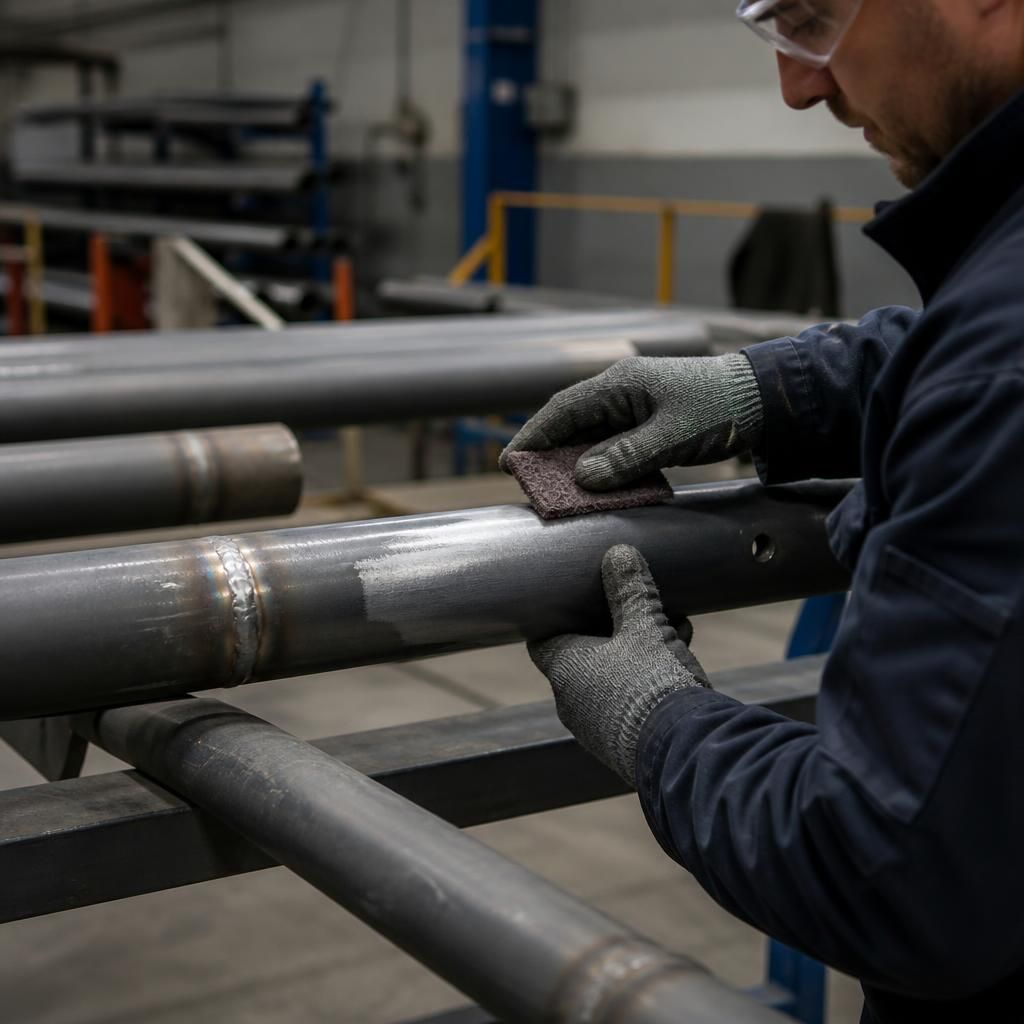
Abrasive preparation should be proven on a representative section of scaffold tube before the full batch is treated. A trial area allows the operator to check how the existing powder coating responds, whether the selected method reaches sound material, and whether the resulting surface is suitable for the intended recoating system.
The trial should include typical features such as a weld, tube end or damaged section rather than relying only on an easily accessible straight length. The preparation method can then be adjusted before production work begins, reducing the risk of removing sound coating unnecessarily or leaving an unsuitable transition between treated and untreated areas. Once the endpoint is accepted, the same tool settings, abrasive grade and working technique should be applied consistently across comparable components.