

What specific cleaning and degreasing agents are recommended for optimal adhesion in nylon powder coating preparation?
Use a compatible alkaline aqueous cleaner to remove oils, grease and workshop residues, with a suitable solvent degreaser for localised or stubborn contamination. Select low-residue, non-silicone products, then rinse thoroughly and dry the metal completely so no cleaner or moisture remains before nylon powder coating.
The most suitable agents for nylon powder coating preparation are low-residue, water-based alkaline cleaners containing surfactants and emulsifying or chelating additives, supported where necessary by a compatible solvent degreaser. The correct choice depends on the metal substrate, the type of contamination and whether a chemical conversion treatment will follow. The aim is to remove organic contamination without etching the surface unpredictably or leaving substances that interfere with nylon adhesion.
Alkaline aqueous cleaners
Alkaline cleaners are generally the first choice for fabricated steel and many other industrial metal components. Their blend of builders, wetting agents and emulsifiers breaks down cutting oils, forming lubricants, handling grease and workshop soils, allowing the contamination to be carried away rather than redistributed across the part. A moderately alkaline formulation is usually preferable to an extremely caustic product when the material includes mixed metals, thin sections or finely machined areas.
Useful ingredients may include carbonate or phosphate builders, non-ionic surfactants and chelating agents. Surfactants improve wetting, while chelating agents help keep metallic soils and hard-water deposits dispersed. For parts with complex geometry, a cleaner with strong wetting and emulsifying performance is more useful than a highly aggressive product that can attack the substrate.
Substrate-specific considerations
Cleaner selection must account for the metal being coated:
- Steel: alkaline cleaning is commonly suitable for oils, grease and general fabrication residues. A formulation may also be selected to work as part of a subsequent iron-phosphate or other approved conversion-treatment sequence.
- Stainless steel: use a cleaner intended for stainless surfaces and avoid products that introduce chloride contamination or cause staining. The cleaner should remove shop soil without compromising the existing surface condition.
- Aluminium: avoid assuming that a heavy-duty caustic cleaner is suitable. Strong alkalinity can darken or etch aluminium, so a controlled aluminium-safe alkaline cleaner is normally more appropriate.
- Zinc-coated or galvanised steel: choose a product specifically compatible with zinc. Excessively aggressive chemistry can attack the coating and create an uneven base for the nylon powder.
Where more than one metal is processed through the same preparation system, confirm that the chemistry is compatible with every substrate rather than optimising it for steel alone.
Solvent degreasers for local contamination
A solvent degreaser can be useful for isolated fingerprints, adhesive traces, heavy oil spots or contamination that an aqueous wash has not removed. Common options include acetone and isopropyl alcohol, provided the product is suitable for the substrate and leaves no interfering film. Acetone is a stronger solvent for many oily residues, whereas isopropyl alcohol is often selected for lighter cleaning and final spot treatment.
Solvents should not be chosen solely because they evaporate quickly. A product can appear to disappear while dissolving contamination and spreading it over a wider area. Solvent purity, cloth condition, ventilation, ignition control and handling requirements must also be considered. Avoid oily wiping fluids, silicone-containing products, polishes and general-purpose lubricants, as even a thin residue can reduce wetting by the nylon powder.
When acidic cleaners are appropriate
Acidic cleaners are not normally the primary degreaser for oil and grease. They may have a role where the part also carries light oxide, scale or mineral contamination, but they should be selected as a controlled preparation stage rather than used indiscriminately. The product must be compatible with the substrate and any conversion coating that follows. Acid chemistry that removes oxide but leaves a chemically active or uneven surface can create a less consistent base for powder application.
Do not substitute a rust remover, descaler or brightener for a dedicated degreaser unless its technical documentation confirms that it is suitable for the complete preparation sequence. Acid and alkaline stages can also react with one another, so the process should be designed as a defined sequence rather than an assortment of cleaners.
How to select and verify the product
- Match the cleaner to the metal, the oils present and the intended application method, such as immersion, spray or manual wiping.
- Check the technical data sheet for residue, rinsing, concentration, temperature, bath life and substrate-compatibility requirements.
- Prefer formulations that do not contain silicone, wax, corrosion-inhibiting films or other additives intended to remain on the surface.
- Use a controlled trial on representative parts or test panels, particularly where aluminium, galvanised steel, castings or mixed-metal assemblies are involved.
- Inspect the prepared surface for staining, smut, powdery deposits, patchy wetting or visible film before proceeding with powder coating.
A suitable cleaning agent is therefore not simply the strongest available chemical. For nylon powder coating, the better choice is a controlled, residue-free formulation that removes the relevant contamination while preserving the metal surface and fitting the rest of the preparation system. Product instructions and the nylon powder supplier’s requirements should be checked together, especially where a conversion treatment, primer or specialist protective coating is part of the specification.
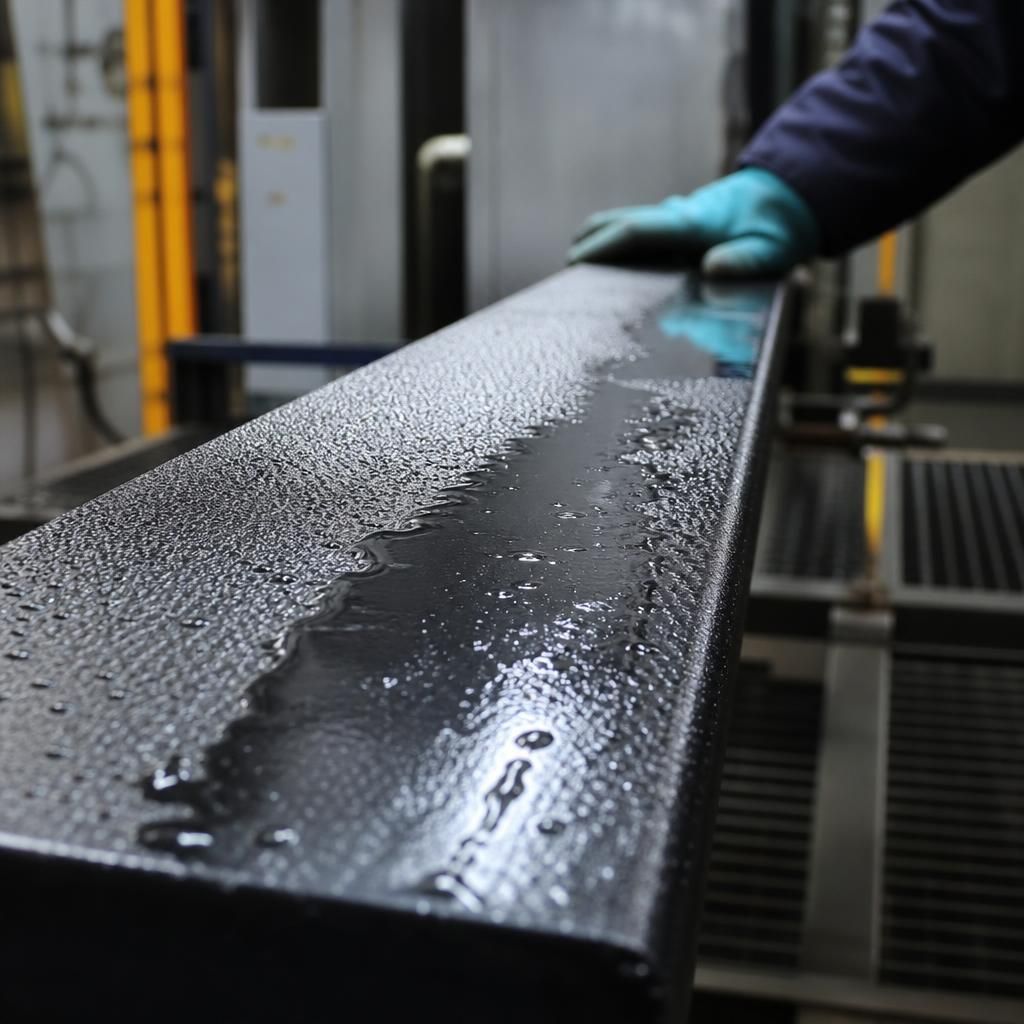
A water-break test provides a practical check that degreasing has removed oil and other wetting-resistant residues. After the final rinse, apply a clean film of water to a representative area. If the water forms a continuous sheet, the surface is generally free from substantial hydrophobic contamination; if it retracts into beads or separates into patches, further cleaning is required.
This test should be carried out after the complete cleaning and rinsing sequence, not immediately after applying solvent. It does not confirm that the metal is chemically suitable for nylon powder coating, nor does it replace checks for flash rust, smut or other deposits. Use it alongside the cleaner manufacturer’s instructions and the specified pretreatment requirements before coating.
Discuss the Right Cleaning Agents for Nylon Powder Coating
For advice on selecting a cleaning and degreasing sequence for your metal components, contact Powder-coatings.co.uk with details of the substrate, contamination and required nylon finish. The preparation process can then be considered alongside the coating specification and any subsequent pretreatment.