

What role does metal thickness play in determining the preparation process for nylon powder coating?
Metal thickness affects nylon powder coating preparation because it influences how the part responds to cleaning, abrasive treatment and heat. Thin sections need controlled handling to avoid distortion or excessive heat exposure, while thicker components may require more thorough preparation and heat management to achieve consistent coating adhesion and coverage.
Metal thickness affects nylon powder coating preparation by changing how the component tolerates mechanical treatment, how contamination is removed and how heat moves through the part. Preparation should therefore be planned around the thickest and thinnest sections, together with the component’s shape, welds, holes, edges and any changes in section, rather than treating the item as a uniform piece of metal.
Thin sections require controlled mechanical preparation. Sheet metal, narrow brackets and lightweight fabricated parts can be more vulnerable to distortion during abrasive cleaning. Excessive blast pressure, an unsuitable abrasive or prolonged treatment in one area may stretch, bow or mark the surface. Operators may need to use a less aggressive setting, maintain a consistent nozzle distance and avoid concentrating the blast on unsupported panels. Any distortion introduced at this stage can affect assembly tolerances and may remain visible beneath the nylon coating.
Thin metal also exposes defects that are easy to overlook before preparation. Sharp burrs, rolled edges, dents and light weld spatter can become more noticeable after coating. Removing these defects before blasting gives the coating a more consistent surface to cover and reduces the risk of thin coverage at edges. Edge condition is particularly important where the component needs continuous protection, since a sharp edge can make it difficult for powder to form an even film.
Heavier sections present a different preparation challenge. Thick plate, castings and substantial fabrications can contain contamination in weld toes, recesses, drilled holes and surface irregularities. These areas may need closer inspection and more deliberate cleaning before abrasive treatment. Oils, fabrication residues and trapped debris should not be assumed to have been removed simply because the broad faces appear clean. Welds and crevices may require particular attention, while blind holes and cavities should be checked for retained cleaning solution or abrasive material.
Thickness can also affect the consistency of the prepared profile. A blast treatment that is suitable for a robust plate may be unnecessarily aggressive for a thin return, folded flange or small attached bracket. Conversely, reducing the treatment for the thin section may leave the heavier area insufficiently prepared. Where one component combines different gauges, the process may need to balance the requirements of both areas, with inspection confirming that the surface is clean and suitable throughout.
Changes in thickness are often more significant than thickness alone. A component with a thin web and heavy welded bosses, for example, will not respond uniformly during preparation or subsequent heating. Welds and dense sections may retain heat differently from nearby sheet metal, while corners, folded sections and enclosed areas can affect airflow and access. These transitions should be identified when the preparation method is reviewed so that cleaning, blasting and handling can be adapted to the actual geometry.
Temperature control is another reason thickness matters. Thin metal reaches process temperature quickly and can lose heat readily, so unnecessary preheating or prolonged exposure may affect its shape or the condition of the surface. Thick metal takes longer to heat through and can hold heat after removal from the heating equipment. If the surface temperature is assessed without considering the core of the component, different areas may not behave consistently during nylon powder application. The required heating and cooling approach should follow the coating system’s technical data and be checked against the component’s mass and construction.
Mixed-metal assemblies and welded fabrications need particular care. Different metals, or sections with markedly different mass, may expand and cool at different rates. This can place stress around welds and joints or create variation in the coating’s flow and coverage. Where possible, the part should be assessed as a complete assembly, including the effect of attached fasteners, inserts, mesh, tubes and enclosed spaces. Components that cannot be prepared or heated uniformly may need a revised handling method or a discussion about whether the assembly is suitable for the intended nylon coating process.
A thickness-aware preparation plan normally includes:
- identifying thin panels, heavy sections and abrupt changes in gauge;
- checking welds, edges, recesses, holes and enclosed areas for residues or defects;
- selecting cleaning and abrasive-treatment settings that will not distort vulnerable sections;
- confirming that the prepared surface has a consistent, suitable condition across both light and heavy areas;
- planning supports and handling points so that thin components are not marked or bent;
- checking temperature at representative areas rather than relying only on the easiest surface to access; and
- reviewing masking, plugs and drainage arrangements where thickness creates cavities or difficult-to-reach features.
In practice, thickness is one part of a wider preparation specification. The correct method depends on the metal type, fabrication history, geometry, existing finish and requirements of the nylon powder system. A sound assessment prevents the process from being set solely for the largest flat area and helps ensure that thin sections, heavy areas and thickness transitions are all prepared to the same coating standard.
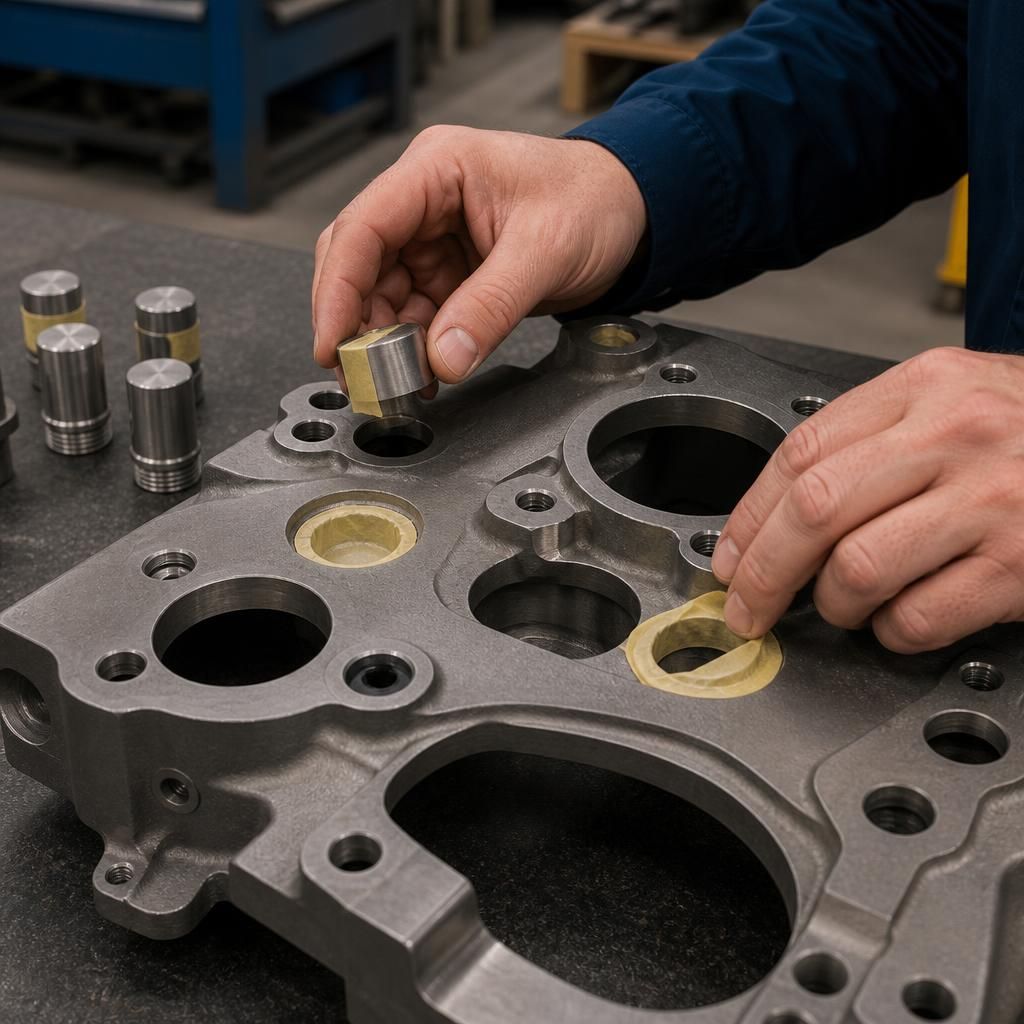
Metal thickness also affects dimensional control during nylon powder coating preparation. Where a component has close-fitting faces, threaded holes, bearing seats or sliding surfaces, the preparation plan must distinguish these areas from surfaces intended to receive the coating. The finished nylon layer adds material, so critical dimensions may need to be protected with suitable plugs, caps or masking before cleaning and coating.
This is particularly important on parts that combine a thin wall with machined bosses or precision interfaces. The drawing or component specification should identify surfaces that must remain free from coating, along with any permitted changes to fit. Checking these requirements before preparation prevents a general treatment intended for the main metal surface from affecting assembly-critical features.
Discuss Metal Thickness and Nylon Powder Coating Preparation
Share your component drawings, metal types and thickness variations with our powder coating team for advice on a suitable nylon powder coating preparation approach. This allows critical features, mixed sections and handling requirements to be considered before the work is specified.