

What is the role of masking in the nylon powder coating preparation process?
Masking protects areas of a metal component that must remain free from nylon powder coating, such as threads, bores, mating faces and electrical contact points. Applied after cleaning and before coating, it helps define coating boundaries and prevents overspray from affecting fit, function or subsequent assembly.
Masking is a controlled part of nylon powder coating preparation that establishes where the coating may and may not be applied. Its purpose is not simply to cover an area; it is to preserve the component’s design requirements while allowing the nylon coating to be applied consistently to the exposed metal.
Effective masking begins with reviewing the component drawing, coating specification and assembly requirements. This identifies surfaces that require a defined coating limit, a close dimensional fit or an uninterrupted contact area. It also helps determine whether a reusable plug, cap, shaped cover, high-temperature tape or a purpose-made masking fixture is the most suitable option.
The masking material must be compatible with the nylon coating process. It should tolerate the relevant heating conditions without shrinking, melting, releasing residue or becoming difficult to remove. The choice also depends on the component’s shape and the required edge definition. Flexible materials can follow relatively simple contours, while formed or reusable masks may provide better control on repeated batches or more complex parts.
Fit is particularly important. A mask that is loose, damaged or poorly aligned can allow powder to enter the protected zone or create an uneven boundary. Excessive overlap can also leave an unintended uncoated area. Masks should therefore be seated firmly against the intended limit without distorting thin sections or obstructing features that need to receive coating.
Cleanliness remains important during application. Masking components should be free from dust, oil and loose particles, and the operator should avoid touching prepared surfaces unnecessarily. Contamination trapped beneath a mask can affect the edge of the coating or transfer to the part when the mask is removed. For repeat work, reusable masking items need their condition checked and any accumulated coating removed in accordance with the applicable process instructions.
Masking can also support process control on batch-produced components. A consistent fixture or set of identified masks makes positioning repeatable, reduces variation between parts and simplifies inspection. Where several components are being processed together, clear identification helps ensure that the correct mask is used for each design and that no feature is missed during preparation.
Before coating, the preparation check should confirm that:
- the mask matches the approved drawing or job requirement;
- it is fully seated and cannot move during handling;
- there are no visible gaps, lifted edges or damaged sections;
- the exposed coating area is free from unwanted masking material or residue; and
- the masking arrangement will not interfere with racking, earthing or movement through the coating equipment.
After the nylon coating process, masks should be removed using a method that does not scratch the finish or deform the component. Removal is best carried out only when the part and masking materials are at a suitable handling condition, as forcing a mask can damage a newly formed coating edge. Any remaining adhesive, fragments or powder deposits should be dealt with using an approved method rather than an abrasive or solvent that could affect the nylon finish.
Inspection should then assess both the masked boundary and the protected feature. The check is not limited to whether powder is present: it should also look for coating creep, chipped edges, residue, mask marks and dimensional interference. For components with tight assembly requirements, the protected area may need to be checked against the relevant drawing or gauge.
In practice, masking is most effective when treated as part of the component-specific preparation plan rather than as an improvised step immediately before coating. Correct material selection, accurate positioning, secure handling and post-coating inspection together help maintain the intended geometry and make the nylon powder coating process more repeatable.
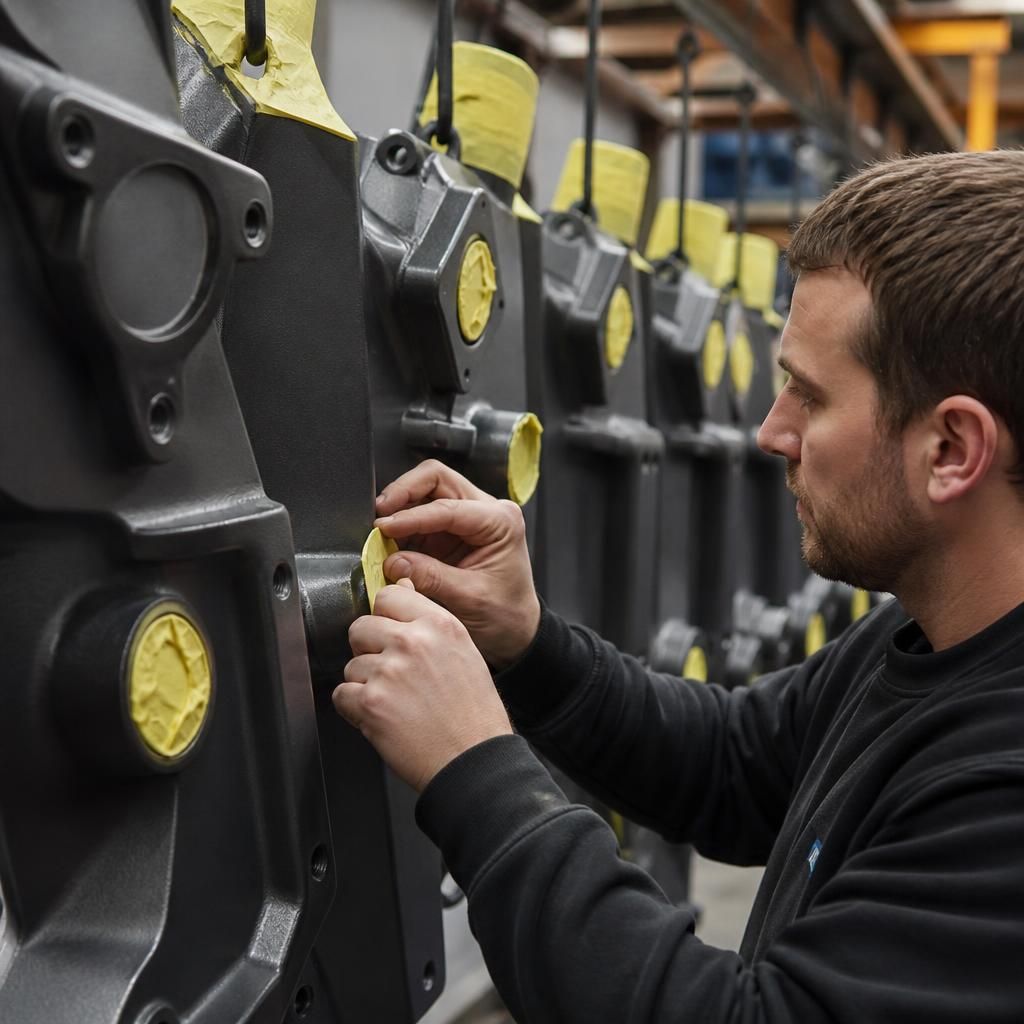
Masking provides dimensional control by keeping nylon powder away from surfaces whose original geometry must be retained. This is important where coating could reduce clearance, affect thread engagement, alter a seating position or interfere with a later operation such as welding, bonding or electrical connection.
The mask boundary should therefore be defined from the component drawing and the required finished condition, rather than from a convenient visual point. A controlled termination leaves the coating where protection is needed while preserving the reference surfaces used for assembly and inspection. This makes masking a functional part of nylon powder coating preparation, not simply a way of keeping selected areas clean.
Discuss Your Nylon Powder Coating Preparation Requirements
Discuss your component drawings, masking requirements and batch details with the nylon powder coating team to establish a suitable preparation plan. This can help identify protected features and any process considerations before coating begins.