

What environmental factors during the nylon powder coating preparation phase could affect the final coating quality?
Temperature, humidity, airborne dust and general cleanliness during nylon powder coating preparation can affect degreasing, drying, surface contamination and ultimately coating adhesion. Controlled conditions, clean handling and thorough drying help prevent moisture, debris or residue from compromising the finished coating.
Environmental conditions during nylon powder coating preparation influence the surface indirectly as well as directly. In addition to basic atmospheric conditions, static electricity, chemical vapours, water quality, compressed air, storage, handling and workspace layout can all affect whether the prepared metal accepts the coating consistently.
Static electricity
Dry powder and metal components can accumulate an electrostatic charge during handling, blasting, wiping or movement through the preparation area. This may attract fine particles to the surface, interfere with powder transfer or cause powder to collect unevenly around edges and recesses. Plastic packaging, synthetic clothing, conveyor components and non-conductive work surfaces can increase the risk.
Effective earthing of metalwork, racks and relevant equipment helps dissipate unwanted charge. Components should also be handled using clean methods that do not introduce fibres or residues. If unusual powder attraction or uneven coverage is observed, static control should be considered alongside the preparation process rather than treating the problem as a coating fault alone.
Chemical vapours and airborne process residues
Solvent vapours, paint-stripping chemicals, oils, silicone-based products and other materials used elsewhere in a workshop can settle on prepared metal or interfere with subsequent coating operations. Even when a component looks visually clean, vapour deposition can reduce surface energy and create adhesion defects, cratering or areas of poor wetting.
Preparation activities should be separated from processes that release oil mist, polishing compound, silicone or aggressive chemical vapour. Containers should remain closed when not in use, and freshly prepared parts should not be placed near sources of contamination. Ventilation should remove process vapours without drawing contaminated air across exposed components.
Water quality and rinsing conditions
Rinse water can leave dissolved salts, minerals or treatment residues on the metal if its quality is unsuitable or if the rinsing stage is poorly controlled. These deposits may become visible as staining, powdery marks or patchy wetting, and can contribute to corrosion beneath the coating. Water that remains in joints, folds, holes or threaded areas can also affect the result if it is not removed fully.
The rinse stage should be appropriate to the cleaning chemistry, with attention paid to carry-over between tanks or containers. Drainage, part orientation and access to recesses matter as much as the cleaning agent itself. Where the specification is demanding, the preparation process may require checks on rinse quality and on whether residues remain after drying.
Compressed-air quality
Compressed air is often used to clear holes, seams and difficult-to-reach areas, but an unfiltered supply can introduce oil, water or particles onto an otherwise prepared surface. This creates a contamination source that is easy to miss because the air itself is invisible.
Air used around prepared components should be clean and suitable for the task, with filtration and moisture separation maintained correctly. Hoses, nozzles and blow-off equipment should also be kept in a condition that does not transfer workshop residue. A practical check is to direct the air onto a clean, non-shedding test surface before using it on prepared metal; any visible or tactile residue indicates that the supply needs investigation.
Storage and handling between preparation stages
The interval between cleaning, abrasion, rinsing and coating should be managed so that the prepared surface is not exposed unnecessarily. Contact with bare hands can transfer skin oils and salts, while unsuitable gloves can leave plasticisers, powder or fibres. Racks, hooks and protective materials can create local contamination or prevent treatment reaching contact points.
Parts should be supported at points that allow drainage and access while minimising handling. Clean gloves and dedicated racks reduce the chance of recontamination. Prepared components should also be protected from contact with untreated, oily or freshly machined parts. If a part is touched, dropped or exposed to an uncontrolled area after preparation, it may need inspection or a further preparation step before coating.
Workspace zoning and movement
The layout of the preparation area affects how reliably parts move from one stage to the next. Routes should avoid crossing dirty operations, machining traffic, abrasive-media handling and chemical storage. Unnecessary movement increases the opportunity for contact damage, residue transfer and confusion between prepared and unprepared components.
Clear separation between incoming parts, work in progress and prepared parts makes process control easier. It also helps prevent a component from being returned accidentally to an earlier stage or placed on an unsuitable surface. Good lighting is useful for identifying water marks, handling marks, corrosion, incomplete abrasion and residues before coating, although visual inspection should not be the only quality check.
Weather exposure during handling and transport
Outdoor transfer, open loading areas and unprotected transport can expose prepared metal to rain, condensation, road spray or corrosive contaminants. This is particularly relevant for components that have already been cleaned or abraded but have not yet been coated. Exposure can alter the surface before the powder is applied, even if the part appears acceptable on arrival.
Prepared parts should therefore be moved in a way that protects them from external exposure and prevents contact with dirty packaging or vehicle surfaces. If the condition of a component changes during storage or transport, the preparation should be reassessed rather than assuming that the original cleaning remains sufficient.
In practice, reliable nylon powder coating preparation depends on controlling the complete route from incoming metal to the coating stage. Reviewing static control, vapour sources, rinse quality, compressed air, handling methods, zoning and exposure risks can identify defects that would not be explained by the cleaning or abrasion method alone.
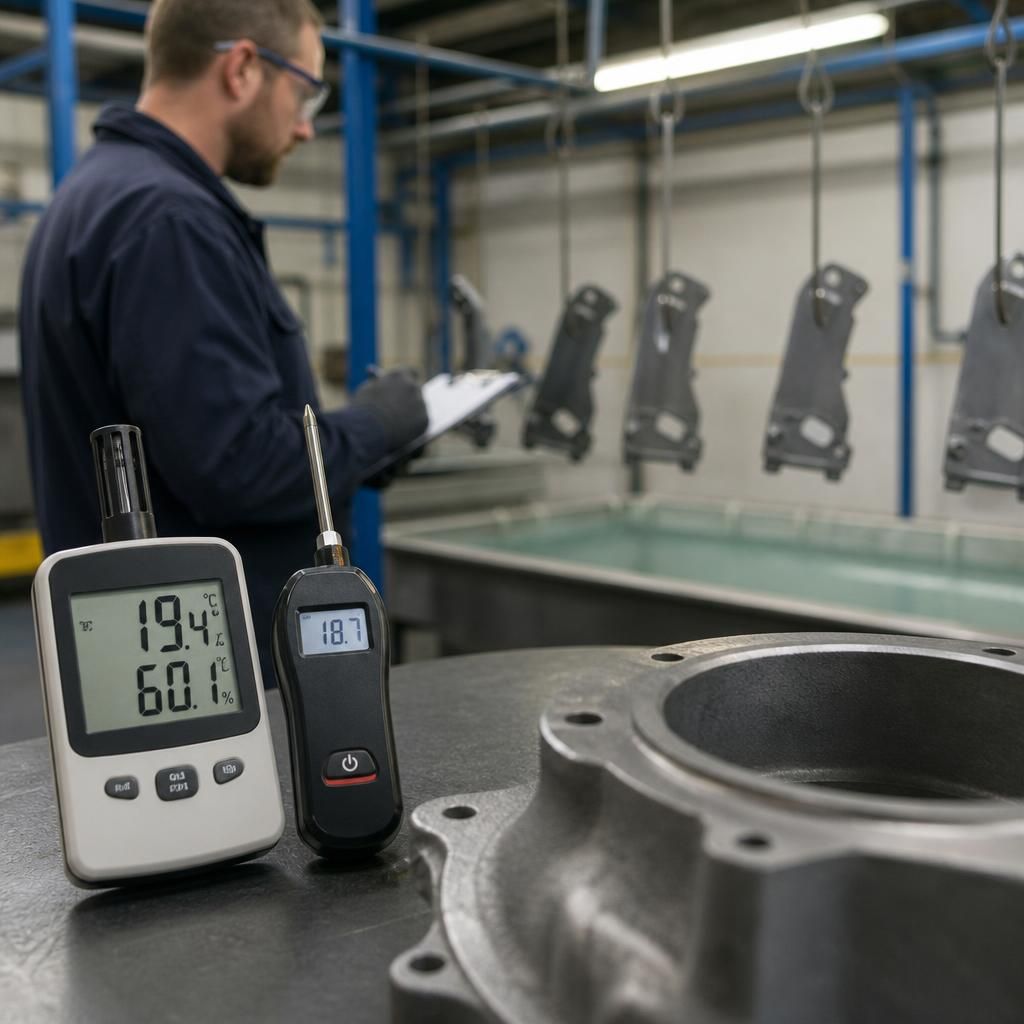
Environmental conditions should be measured at the preparation stages rather than judged by appearance alone. Air temperature and relative humidity may seem acceptable while the metal itself remains colder, particularly after storage or transport. Recording both the component and surrounding conditions helps identify when moisture or incomplete drying could affect the prepared surface.
For repeatable results, readings can be checked before cleaning, after rinsing and immediately before coating. The preparation team can then compare them with the limits established for the cleaning chemistry and substrate, isolate parts exposed to unsuitable conditions and investigate recurring defects using documented process records. This turns environmental control from a general precaution into a measurable part of nylon powder coating preparation.