

What are the essential tools and equipment for nylon powder coating preparation?
Essential nylon powder coating preparation equipment includes degreasing and cleaning tools, abrasive preparation equipment, compressed-air blow-off equipment, masking materials and inspection tools. Suitable application and curing equipment then helps maintain consistent coverage and adhesion once the metal surface is ready.
The essential equipment for nylon powder coating preparation is a controlled combination of substrate-checking, contamination-removal, surface-conditioning, masking, environmental-control and inspection equipment. Each item has a specific purpose: the metal must be clean, suitably keyed, dry, correctly masked and verified before nylon powder is applied.
Substrate and condition checks: Begin with good lighting and a clean inspection bench so corrosion, mill scale, weld residue, sharp edges, dents and previous coatings can be identified. A surface-temperature probe is useful where condensation or wash-down processes are possible. It confirms that the component is sufficiently dry and helps prevent coating over a cold surface that could retain moisture.
Where the metal has an existing coating, an appropriate coating-thickness gauge can help establish what is present before preparation begins. For new or blasted steel, a profile comparator or suitable surface-profile instrument can be used to check whether the prepared surface has a consistent texture. Instruments should be selected for the particular substrate and calibrated according to the manufacturer’s instructions.
Preparation and abrasion equipment: Mechanical preparation may require an abrasive blasting cabinet, blast pot or enclosed blasting system, depending on component size and production volume. The abrasive, nozzle and pressure must be suitable for the metal and the required finish; overly aggressive treatment can distort thin sections or leave an unnecessarily deep profile, while insufficient abrasion may leave weakly bonded contamination or an unsuitable surface.
For local work, rotary tools, abrasive pads, files and non-contaminating brushes can deal with weld spatter, burrs and difficult edges. Abrasive tools should not introduce oil, silicone or loose fibres. Dedicated equipment is preferable where different metals or coating systems are processed, as residues from previous work can transfer to the prepared component.
Air and extraction controls: An oil-free, dry air supply is important for removing loose abrasive and dust after preparation. The compressor installation should include suitable filtration, a receiver and moisture separation, with the air checked for oil or water contamination before it reaches the component. Wet or contaminated air can undo preparation work and interfere with adhesion.
Local exhaust ventilation or an enclosed extraction system is needed where blasting, brushing or powder handling creates airborne particles. Extraction should remove dust without disturbing the prepared surface or spreading contamination to clean areas. Operators also need task-appropriate respiratory, eye, hand and hearing protection, selected through the site’s risk assessment.
Masking and handling equipment: Nylon powder should be kept away from threads, bores, bearing seats, electrical contact points and other areas requiring accurate fit. Silicone-free plugs, caps, tapes and purpose-made masking fixtures are useful, provided they tolerate the process temperature and do not leave residue. Clean racks, hooks and lifting aids prevent freshly prepared surfaces from touching dirty benches or being handled unnecessarily.
Racking also needs to provide a reliable electrical path where electrostatic spraying is used. Contact points should be positioned in an area where a small uncoated mark is acceptable, and the contact surfaces must remain free from accumulated powder and oxide.
Application and thermal equipment: The correct application system depends on the nylon powder and component geometry. An electrostatic spray gun requires a clean powder path, suitable grounding and stable control of powder delivery. A fluidised-bed arrangement requires a correctly sized powder container, controlled air distribution and a method of bringing the component to the specified process temperature. These systems should not be treated as interchangeable without checking the powder manufacturer’s technical requirements.
A temperature-controlled oven is used where the selected nylon system requires heating to melt and fuse the powder. An oven data logger or multi-point thermocouple system is more useful than relying only on the oven’s displayed air temperature, because the component itself must reach the relevant process condition. Large or thick parts may heat differently from thin sections, so representative areas should be monitored during process validation.
Final verification tools: Before application, use a clean white wipe, inspection light or similar method to identify remaining dust and residue. After coating, suitable inspection equipment may include a dry-film thickness gauge, gloss or appearance assessment tools and an adhesion test method appropriate to the nylon system and substrate. Thickness readings should be taken only with an instrument suited to the coating and metal beneath it; nylon and non-ferrous substrates can require different measurement principles.
The most effective setup is therefore not simply a collection of machines. It is a clean process route with separate dirty and clean stages, controlled air, suitable handling fixtures, verified component temperature and inspection equipment capable of confirming the required preparation and coating condition.
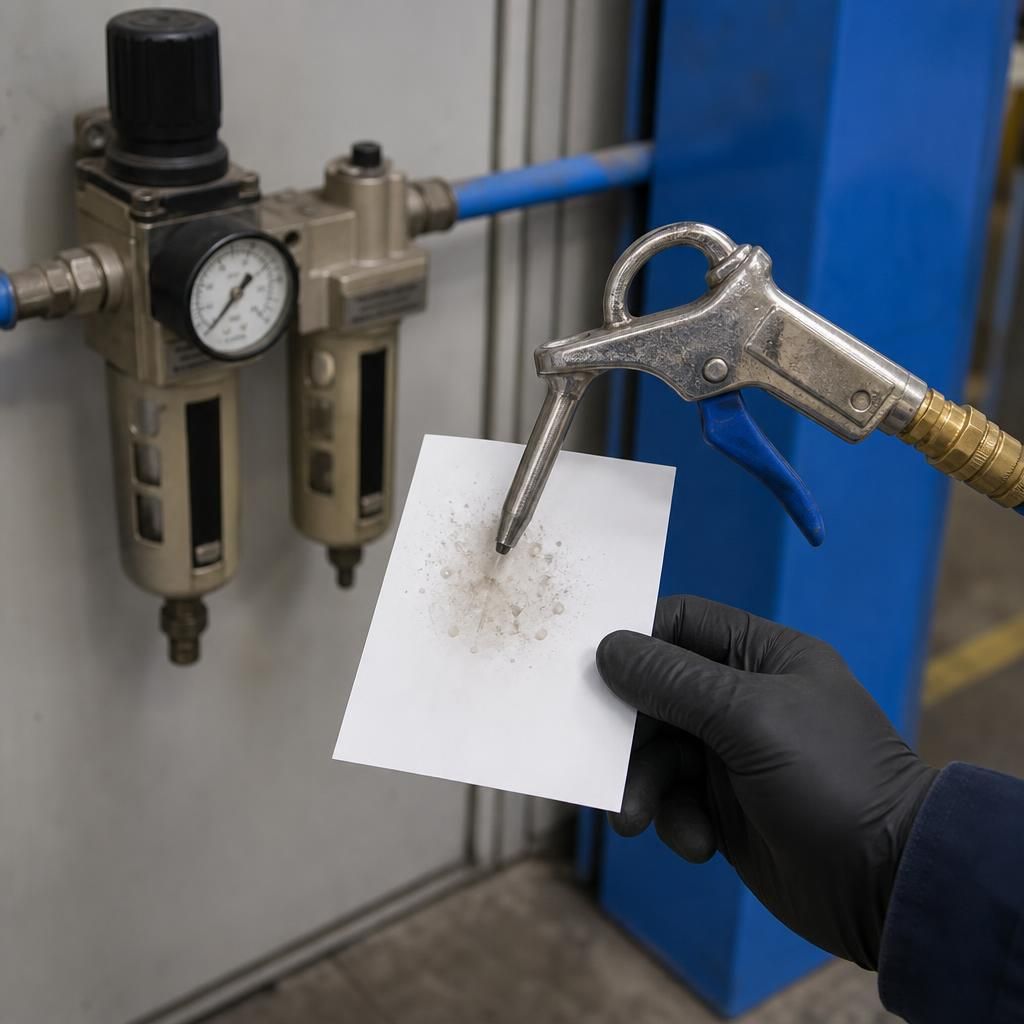
Compressed-air quality should be verified with more than the compressor’s pressure gauge. A clean white test card or lint-free blotter held at the blow-off point can reveal traces of oil or water before the air reaches a prepared component. Check the air path after filter changes, compressor maintenance or drainage work, because contamination introduced at this stage can remain invisible on dark metal.
This simple check complements the air-treatment equipment rather than replacing it. Keep the test result with the job or process records where traceability is required, and investigate any visible residue before continuing with nylon powder coating preparation.
Discuss your nylon powder coating preparation requirements
Discuss your nylon powder coating preparation requirements with the team, including the component material, geometry, existing finish and required coating specification. This information helps establish the appropriate preparation and inspection approach for your parts.