

Are there specific metal types or alloys that require special considerations during nylon powder coating preparation?
Yes. Steel, aluminium, galvanised metal, stainless steel and specialist alloys can require different preparation because their surface chemistry, oxide layers, zinc content and contamination risks affect nylon powder adhesion; the cleaning, abrasion and pre-treatment should therefore be selected for the specific substrate.
Yes. The metal grade, condition and previous history of a component can change how it should be prepared for nylon powder coating. The main considerations are oxide formation, surface porosity, galvanised or plated layers, embedded contamination, heat sensitivity and the risk of distortion. Preparation should therefore be based on the actual substrate rather than applying one abrasive and pre-treatment to every part.
Mild and carbon steel are generally straightforward substrates, provided rust, mill scale, oil and fabrication residues are removed. Welds, sharp edges and areas affected by grinding may need particular attention because uneven preparation can produce variations in coating thickness or adhesion. Deep corrosion and pitting can remain visible through a relatively thick nylon coating, so heavily affected parts may require additional mechanical preparation before coating. Any blast media must be clean and suitable for the required surface profile; trapped abrasive or dust can interfere with the finish.
Cast iron needs closer inspection than ordinary fabricated steel. Its porous structure can retain oil, moisture and machining fluids, which may be released during heating and cause pinholes, bubbling or local adhesion defects. Castings should be checked for porosity, blowholes and embedded contaminants, with cleaning and drying carried out thoroughly. Components with substantial porosity may need a controlled pre-treatment assessment before a production batch is approved.
Aluminium and aluminium alloys form an oxide layer rapidly after preparation. This layer is harder and chemically different from the underlying metal, so a light, even abrasion is normally more appropriate than aggressive blasting that could distort thin sections or create an irregular profile. Copper-rich, silicon-rich and heat-treated aluminium alloys may respond differently to cleaning and heating. Identification of the alloy and its condition is useful where appearance, dimensional accuracy or adhesion is particularly important.
Galvanised steel and zinc-coated components require care because the zinc layer is part of the finished substrate and can be damaged by excessive abrasion. The surface should be cleaned without removing unnecessary zinc, while white corrosion products and storage contamination must be addressed. Zinc and the underlying steel can also expand at different rates during heating. Vented hollow sections and suitable drainage or access points help reduce the risk of moisture or air contributing to blistering during the coating cycle.
Stainless steel often has a passive chromium-rich surface that can be less receptive to coating than freshly prepared carbon steel. Oils, fingerprints and polishing compounds are particularly important to remove because they may be difficult to see. The preparation method must create a consistent surface without embedding unsuitable abrasive particles or introducing contamination from equipment previously used on carbon steel. Welded stainless components may also contain heat tint or oxide residues that need separate attention.
Copper, brass and bronze can oxidise or tarnish, and some alloys contain constituents that affect cleaning, surface colour and heating behaviour. Brass and bronze may also be softer than steel, making aggressive blasting unsuitable for detailed or thin components. Any existing lacquer, protective film or machining residue needs to be identified before preparation, as a coating or residue left in place can act as a barrier between the nylon and the metal.
Specialist and mixed-metal assemblies present an additional challenge. A component made from steel with aluminium inserts, threaded fittings, plated fasteners or welded dissimilar metals cannot always be prepared as one uniform surface. Different metals may require different abrasion levels, and galvanic interactions can arise if moisture is trapped between adjoining materials. Where practical, parts should be separated before preparation, or the masking and pre-treatment plan should account for each exposed substrate.
- Confirm the base metal, alloy or coating rather than relying on appearance alone.
- Identify previous treatments such as plating, passivation, anodising, paint, oiling or chemical conversion coating.
- Check for porosity, weld scale, corrosion, sharp edges, threaded areas and recessed contamination.
- Select cleaning, abrasion and pre-treatment methods that are compatible with the substrate and the required nylon system.
- Protect areas that must remain uncoated, including threads, bearing seats, electrical contact points and close-tolerance faces.
- Use representative test pieces or an approved sample where the alloy, surface history or component geometry creates uncertainty.
Thickness and geometry matter alongside the alloy itself. Thin aluminium, sheet steel and precision components may be affected by excessive blasting or heat, while deep recesses and enclosed sections are more difficult to clean and inspect. Hollow components should be free from trapped water and contaminants before they enter the coating process. Masking materials must also tolerate the preparation and heating stages without leaving residue on the coating boundary.
For production work, the preparation specification should record the substrate, existing surface condition, approved cleaning method, abrasive approach, masking requirements and inspection checks. This prevents a mixed batch of steel, aluminium, galvanised parts or specialist alloys from being processed under unsuitable common settings. If the material cannot be confirmed, a small trial and adhesion assessment are preferable to assuming that a preparation method suitable for one metal will perform identically on another.
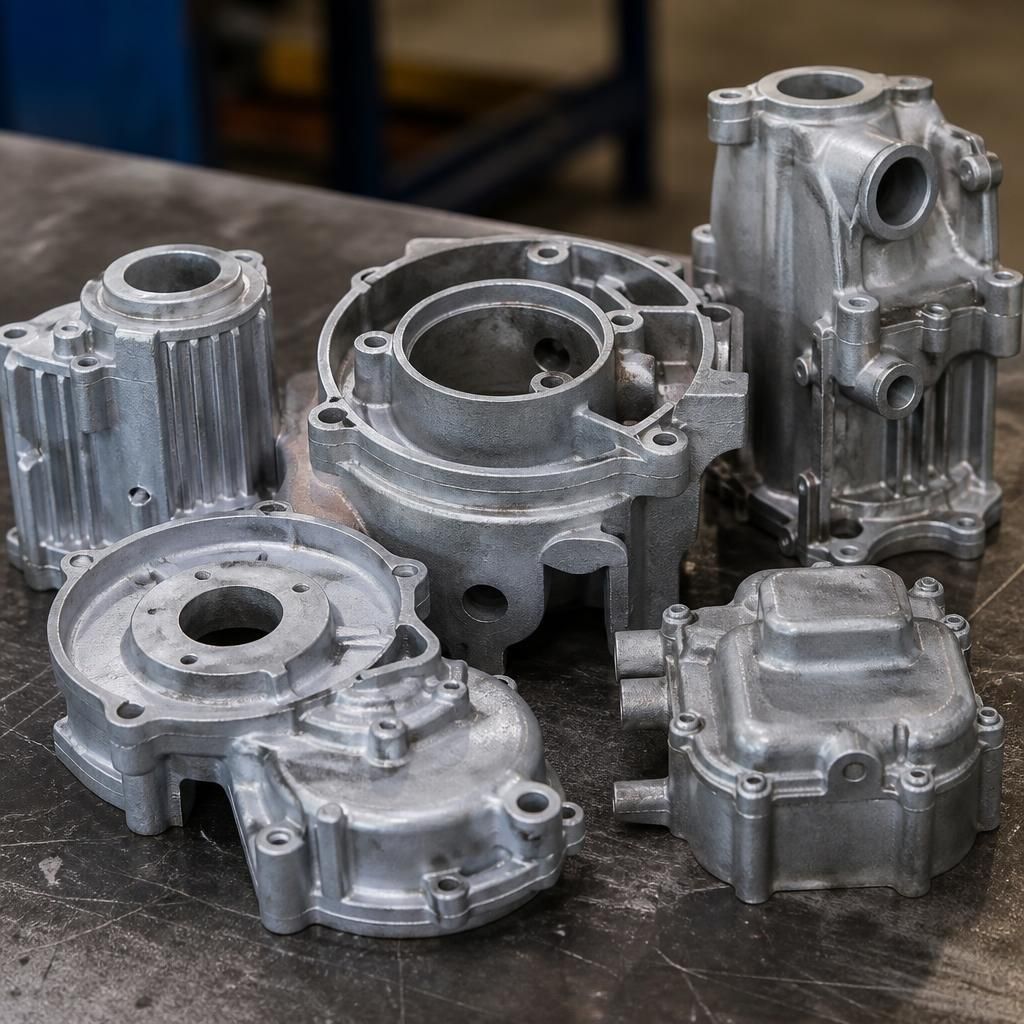
Zinc die-cast components need separate consideration from ordinary galvanised steel. Their relatively low melting range, thin sections and internal porosity make them vulnerable to distortion, outgassing and surface defects during the heating stages used for nylon powder coating. Preparation should therefore avoid unnecessarily aggressive abrasion, remove residues from mould release agents and machining, and confirm that the component can tolerate the required coating cycle.
Where zinc die-castings have complex geometry or enclosed cavities, a representative sample should be assessed before processing the full batch. This helps identify whether gas release, dimensional movement or adhesion problems are likely to affect the finished coating.