

What cleaning and degreasing methods are most effective in ensuring optimal powder coating adhesion?
The most effective approach is a controlled cleaning sequence that removes oils, grease, dirt and residues before coating: use a suitable aqueous alkaline cleaner or compatible solvent, rinse thoroughly, dry completely and inspect the surface. The method should match the metal and contamination, because any remaining film can prevent the powder coating from bonding properly.
The most effective cleaning and degreasing method is one that chemically dissolves or lifts the specific contamination without attacking the substrate, followed by controlled rinsing, drying and verification. In industrial powder coating, the process must remove oils, cutting fluids, grease, fingerprints, polishing compounds, corrosion inhibitors and handling residues rather than simply moving them across the surface.
Alkaline aqueous cleaning is commonly effective for steel and many other metal components. The cleaner combines alkalinity with surfactants to break down grease and suspend contaminants so they can be removed from the surface. Spray washing is suitable for accessible parts and repeatable production work, while immersion cleaning can be useful for components with complex profiles. Concentration, temperature, contact time and agitation all affect performance; an under-developed cleaning cycle may leave a thin film even when the component appears visually clean.
For heavy or aged contamination, a staged process is usually more reliable than relying on a single strong treatment. A preliminary wipe, soak or heavier-duty wash can remove the bulk of the oil before the main cleaning stage. This prevents the cleaner from becoming overloaded and reduces the risk of redistributing contamination over the component. The selected chemistry must still be compatible with the metal, welds, joints and any existing surface treatment.
Solvent degreasing can be appropriate for localised oil, grease or adhesive residues, particularly where a full aqueous wash is impractical. It is important to use a solvent that does not leave its own residue and to control cloth cleanliness during wiping. A contaminated cloth can spread oil rather than remove it. Solvent use also requires suitable ventilation, storage and handling controls, and it should not be assumed that a solvent wipe has removed salts, abrasive dust or corrosion products.
Emulsifying cleaners are useful where oily contamination is persistent. They surround oil and allow it to be carried away during the subsequent wash stages. For recessed, tubular or intricate components, agitation or ultrasonic cleaning can improve access to areas that spray or manual wiping may miss. These methods are most effective when the cleaning fluid remains within its working condition and is changed or maintained before contamination builds up.
Cleaning method selection should reflect the substrate. Steel may tolerate alkaline cleaning followed by an appropriate conversion treatment, whereas aluminium, galvanised steel and zinc-coated parts can react adversely to unsuitable high-pH or acidic products. Excessive attack can alter the surface, create staining or affect dimensional features. The coating process should therefore be based on the actual metal and its condition, not on a generic degreaser selected solely for its strength.
Visual inspection alone is not sufficient because a thin organic film can be transparent. Practical checks may include a clean white-cloth wipe, a water-break assessment or other process-control method specified for the substrate and coating system. A continuous water film generally indicates that the surface is wettable; beading or separated patches suggest residual oil or another contaminant. These checks should be used alongside documented control of cleaner condition rather than as a substitute for it.
Rinsing quality is also critical. Residual cleaner, dissolved salts or dirty rinse water can interfere with adhesion and may contribute to blistering or under-film corrosion. Rinse stages should be kept clean enough to prevent re-deposition, and parts should be dried without allowing flash rust or renewed handling contamination. Clean gloves, protected work areas and suitable racks help prevent fingerprints and dust from undoing the preparation.
Some contaminants need a treatment beyond degreasing. Rust, mill scale, weld discolouration and firmly attached oxides may require abrasion, shotblasting or a compatible chemical treatment after the organic contamination has been removed. Degreasing should normally precede abrasive preparation where oil could otherwise be driven into the surface. Conversely, abrasive dust must be removed before coating, because loose particles can create weak points in the finish.
For batch coating work, the most dependable approach is a defined process specification covering the cleaner, application method, operating conditions, substrate compatibility, rinse controls, drying and inspection. When parts arrive with unknown oils, silicone contamination, heavy storage preservatives or mixed metals, a trial on representative components can help establish whether the proposed method is suitable before processing the full batch.
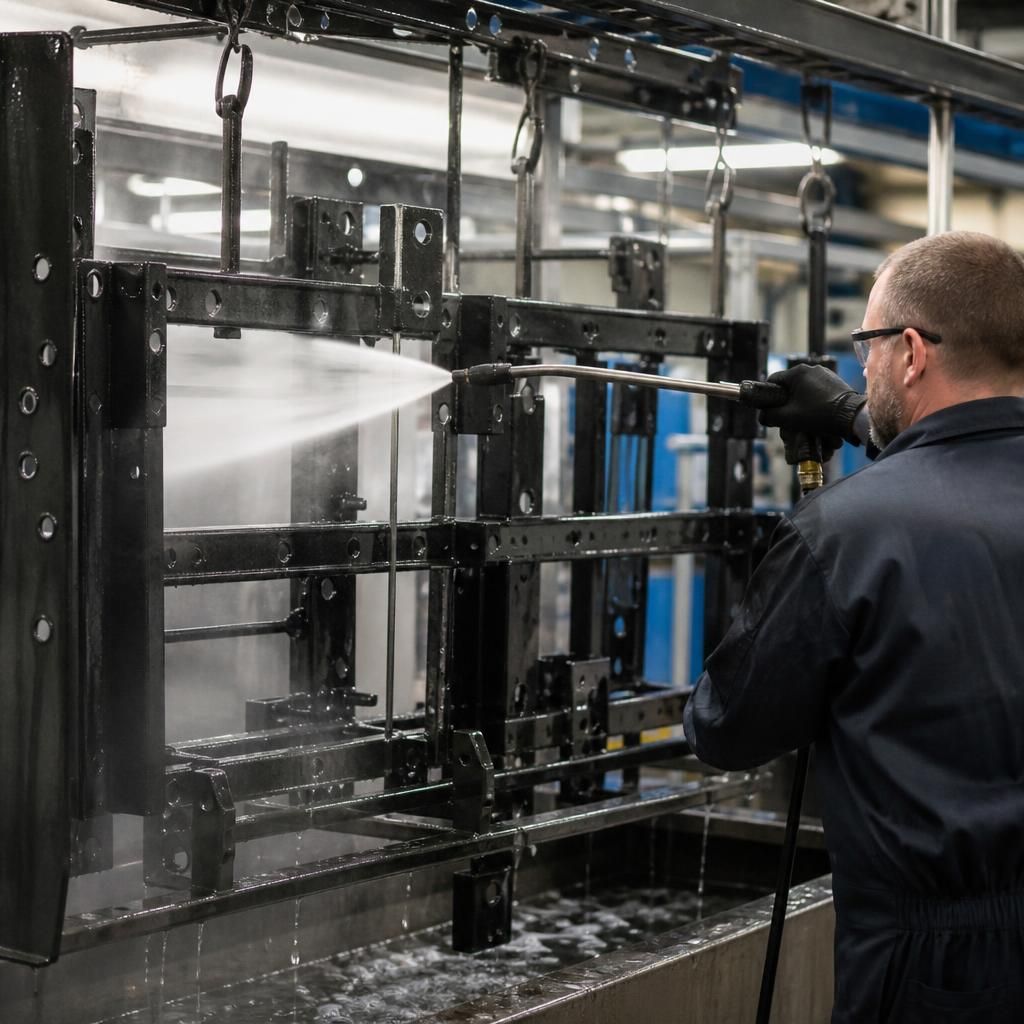
Cleaning effectiveness depends not only on the chemistry but also on how the component is presented to it. Parts should be positioned so spray reaches recessed faces, joints and internal surfaces, while holes, channels and enclosed sections can drain freely. Poor orientation may leave untreated shadow areas or allow contaminated solution to remain trapped, creating a local adhesion defect even when the accessible surfaces are clean.
For repeat batch work, the cleaning stage should therefore be checked against the component design rather than judged solely by the equipment cycle. Test pieces or representative parts can reveal areas with poor spray coverage, inadequate immersion contact or fluid carryover between stages. Correcting rack layout, rotation, agitation or drainage may improve preparation more effectively than increasing cleaner strength. This is particularly important for fabricated assemblies with overlapping joints, folded sections and tubular features.
Discuss your powder coating cleaning and degreasing requirements
Discuss your component materials, contamination concerns and batch requirements with the powder coating team to identify a suitable cleaning and degreasing process. Providing drawings, photographs or representative parts can help establish the most appropriate preparation approach.