

What are the differences between sandblasting and shotblasting in powder coating surface preparation?
Sandblasting uses fine abrasive media propelled by compressed air, while shotblasting uses metallic shot or grit, typically in a controlled blast cabinet or wheel-blast system. For powder coating preparation, the choice depends on the metal, coating or corrosion being removed, required surface profile and component geometry.
The practical difference between sandblasting and shotblasting is the way each process changes the metal surface. Sandblasting generally provides a more flexible, finely controlled abrasion for cleaning and preparing intricate areas, whereas shotblasting is better suited to robust metal parts that need rapid removal of mill scale, rust, old coatings or other firmly attached material.
Sandblasting uses an abrasive stream directed at the component through a blast nozzle. The operator can select a suitable abrasive and adjust the air pressure, nozzle distance and angle to control the cleaning action. This makes the process useful for components with recesses, edges, welds or mixed surface conditions where a uniform but relatively gentle preparation is needed.
The term “sandblasting” is still widely used, although ordinary silica sand is not generally suitable because respirable silica dust presents a serious health hazard. Modern abrasive blasting may use alternative media selected for the substrate and the required finish. Different media can produce different levels of cutting action, surface texture and contamination risk, so the abrasive must be specified rather than assumed.
Shotblasting is normally a more mechanised process. Components may pass through a blast cabinet or wheel-blast system while metallic particles are propelled at high speed and recovered for controlled reuse. It is effective for batches of steel fabrications, castings, brackets and other durable parts that can withstand repeated impact and, where appropriate, mechanical handling.
There is also an important distinction between shot and grit. Spherical shot tends to clean and peen the surface, while angular grit cuts into corrosion and existing coatings more aggressively. Peening can increase the surface’s resistance to certain forms of mechanical stress, but it may not provide the same anchor pattern as an angular abrasive. The correct choice depends on the coating system and the condition of the metal, not simply on the name of the blasting method.
- Surface profile: Angular abrasive normally creates a sharper key for the powder coating to grip. Excessive roughness, however, can leave peaks insufficiently covered by the coating or create a visibly coarse finish.
- Component geometry: Nozzle blasting allows more local control around corners, apertures, welds and awkward profiles. Wheel-blast systems are most consistent when parts can be presented evenly to the blast stream.
- Substrate thickness: Thin sheet, delicate edges and softer metals require careful control to prevent distortion, edge rounding or unnecessary loss of material. Heavier steel generally tolerates a more forceful process.
- Existing contamination: Oil, grease and some processing residues can interfere with blasting and contaminate the abrasive. Degreasing or other cleaning should be considered before abrasive preparation where contamination is present.
- Production requirements: Mechanised shotblasting can provide repeatable preparation for suitable batches, while manual blasting is more adaptable where components vary substantially in shape, size or condition.
- Dust and waste control: Enclosed equipment, extraction, abrasive recovery and appropriate protective measures are essential. The selected process must control airborne dust and prevent spent media or removed corrosion from remaining on the surface.
Neither process replaces inspection after blasting. The prepared metal should be checked for remaining rust, mill scale, old coating, embedded abrasive, flash rust, sharp edges and visible contamination. Weld spatter and burrs may need separate treatment because blasting alone will not correct poor fabrication or remove every projection safely.
The surface should also be handled carefully after preparation. Finger marks, workshop dust and moisture can compromise the bond between the metal and the powder coating. Components may require suitable masking, clean transfer and prompt progression to the next preparation or coating stage. If a primer or conversion treatment forms part of the specified system, its compatibility with the blasted profile and the powder coating must be confirmed before application.
In practice, sandblasting is often selected when access, local control or variable component geometry is the priority. Shotblasting is often preferred for durable parts and repeatable batch processing where the equipment can reach the relevant surfaces. A coating specialist will normally assess the metal type, component thickness, existing finish, required profile, final appearance and handling method before choosing the abrasive process.
For powder coating, the best preparation is therefore not the most aggressive one. It is the method that removes the unwanted material, produces a suitable and consistent profile, avoids damaging the substrate and leaves a clean surface compatible with the complete coating specification.
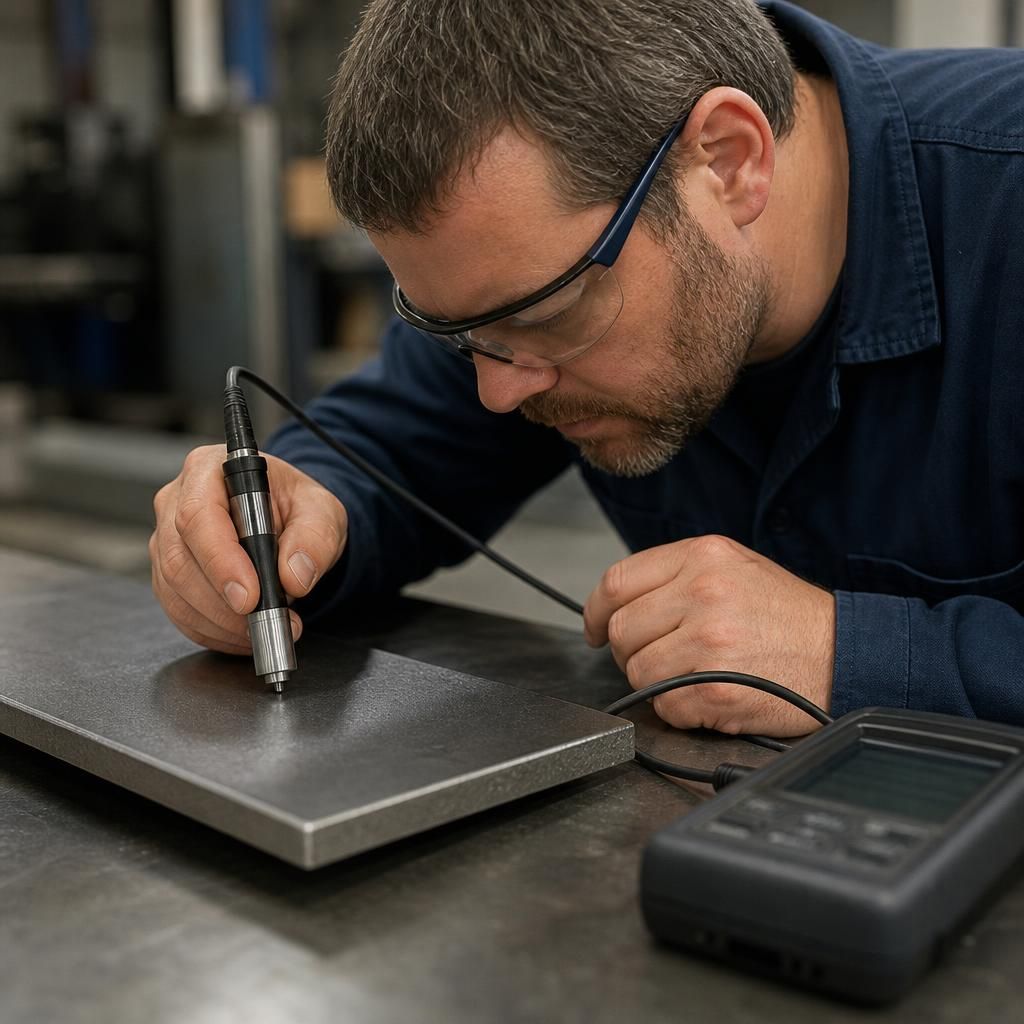
The correct blasting method is determined by the surface profile required by the powder coating system, not simply by how clean the metal looks. A surface can appear uniformly prepared while still having an unsuitable profile for the specified coating thickness or finish.
Where the specification is critical, the prepared surface should be assessed using an appropriate profile check rather than relying on visual inspection alone. A trial area or representative test piece can help confirm that the selected abrasive, pressure and equipment produce the required result without creating excessive roughness. This is particularly useful when comparing sandblasting and shotblasting on unfamiliar components or when the final appearance is important.
Discuss the Right Blasting Method for Your Powder Coating Preparation
Discuss your component material, geometry and existing finish with Powder-coatings.co.uk to help identify the most suitable blasting approach before powder coating. Collection and delivery options are available for businesses across the Midlands and surrounding areas.