

What materials can be effectively shotblasted before powder coating?
Steel, iron and other robust ferrous metal components are generally well suited to shotblasting before powder coating, as the process removes rust, mill scale, old coatings and surface contamination. Aluminium and other softer metals can also be prepared, but they require carefully selected media and controlled pressure to avoid distortion or excessive surface roughening.
Shotblasting is best suited to conductive metal substrates that can tolerate controlled abrasive impact and the curing temperature of the intended powder coating. In addition to conventional steel components, the process can be appropriate for stainless steel, castings, galvanised substrates, zinc-based alloys and selected non-ferrous metals, provided the abrasive, pressure and finishing system are matched to the material.
Stainless steel can be prepared by shotblasting where a uniform key is required or surface discolouration and contamination must be removed. The blasting media must be chosen carefully. Carbon-steel media can leave ferrous particles embedded in the surface, which may later produce staining or localised corrosion. Dedicated stainless, mineral or other non-contaminating media are normally more appropriate, followed by thorough cleaning before coating.
Cast metals, including cast iron and steel castings, are commonly suitable because blasting can reach recessed areas and remove casting residue, scale and remnants of previous finishes. Their shape and surface profile still need assessment. Deep pores, sharp edges, blowholes and moulding defects may retain abrasive or contamination, while trapped gases in porous castings can affect the powder coating during curing. Cleaning, inspection and, where appropriate, preheating or outgassing should therefore be considered as part of the preparation plan.
Galvanised and zinc-coated steel requires a more controlled approach than uncoated steel. Aggressive blasting can remove too much of the zinc layer, reducing the protection that the coating system is intended to supplement. Light, even preparation may be used to remove surface contamination and provide a suitable key, but the required treatment depends on the condition and thickness of the zinc coating. Any exposed steel, sharp edges and areas of white corrosion should be assessed before powder is applied.
Zinc die castings and other zinc-based alloys may be powder coated, but they are sensitive to excessive heat, impact and retained gases. Heavy blasting can deform fine features or expose casting imperfections. A lower-impact process, carefully controlled profile and suitable curing schedule are important, particularly for small detailed parts, housings and components with thin sections.
Copper, brass and other copper alloys can sometimes be prepared in this way, although they need a substrate-specific specification. Their relatively soft surfaces can be marked by unsuitable media, and residues or embedded abrasive may affect the appearance and adhesion of the finish. Where appearance is important, the required texture should be agreed before processing rather than assuming that a standard steel treatment is appropriate.
Material thickness and component design are as important as the material itself. Thin sheet, narrow edges, threads, machined faces, folded sections and delicate welded assemblies may be technically blastable but vulnerable to distortion, peening or loss of dimensional accuracy. Masking may be needed around bearing seats, electrical contact points, threaded holes and precision-machined surfaces.
Some materials are generally unsuitable for this preparation route. Plastics, rubber, timber and other heat-sensitive non-metallic substrates can be damaged by abrasive impact and are not normally compatible with the high-temperature curing used for conventional powder coatings. Glass and ceramics may withstand certain abrasive treatments, but they require a different coating and preparation specification from that used for metal components.
Before processing, a coating specialist should confirm:
- the exact base material and whether it contains mixed metals or plated areas;
- the condition of the existing surface, including corrosion, oil, scale, old paint and galvanising;
- the acceptable surface profile and areas requiring protection;
- the component’s thickness, geometry, tolerances and risk of trapped abrasive;
- the powder system and curing temperature intended for the finished part.
This assessment determines whether shotblasting is suitable, which media and settings should be used, and whether another preparation stage is needed before powder coating. For unusual alloys, coated substrates or precision components, a test piece or sample area can help verify the surface finish without committing the complete batch.
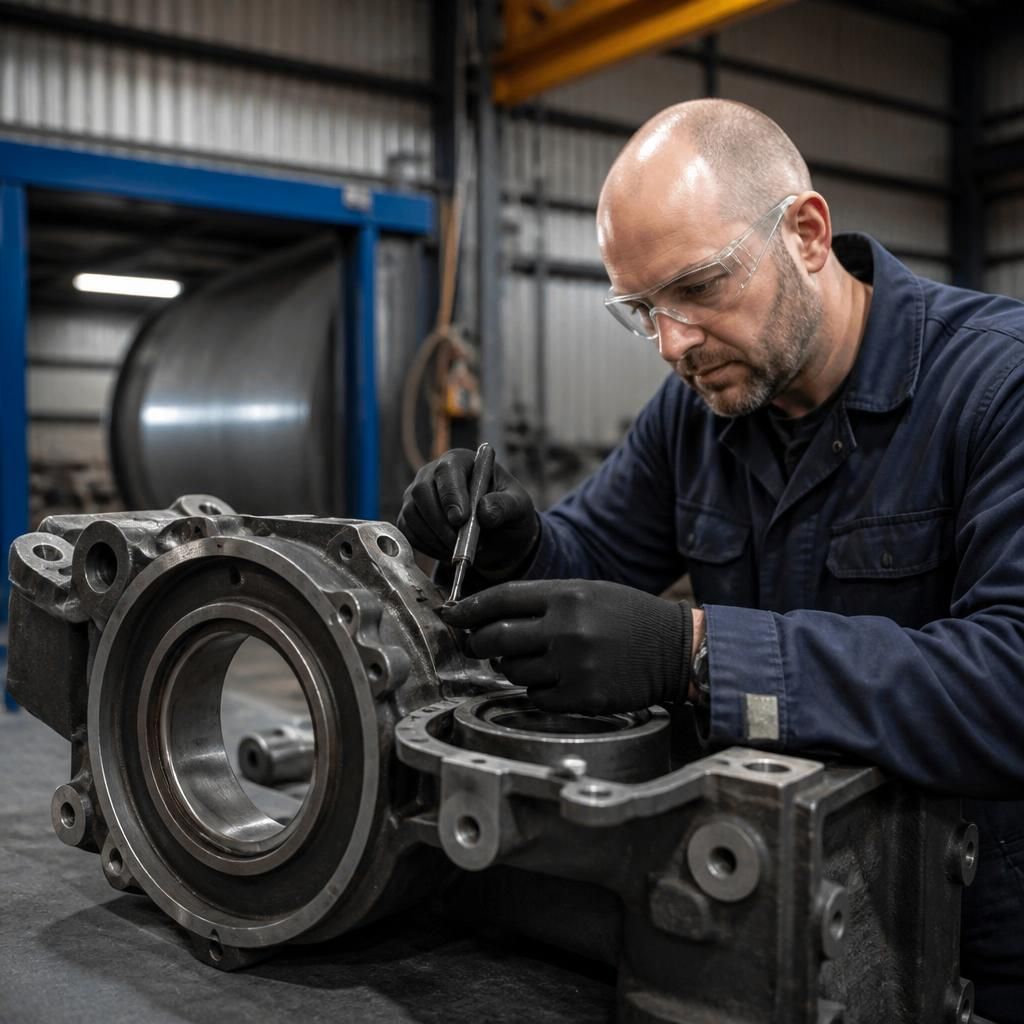
Material suitability applies to the complete component, not just its main metal substrate. A metal item may be suitable for shotblasting while an assembled unit is not, particularly if it includes seals, bearings, bushes, wiring, plastic fittings or other parts that could be damaged by abrasive impact or contaminate the coating process. These items should normally be removed before preparation, where the design allows.
Assemblies should also be checked for enclosed cavities, narrow channels and overlapping sections where shot could become trapped. The component must allow abrasive to be removed fully and provide access for consistent powder application afterwards. Reviewing the item in its intended processing condition helps determine whether it should be disassembled, masked or treated as separate parts.
Discuss Your Material’s Shotblasting Requirements
Discuss your component’s material, dimensions and existing finish with a coating specialist to establish whether shotblasting is appropriate and define the correct preparation specification. A sample assessment can help confirm the proposed treatment before the full batch is processed.