

What are the primary benefits of shotblasting before powder coating?
Shotblasting prepares metal for powder coating by removing rust, mill scale, old coatings and surface contaminants while creating a consistent textured profile. This cleaner, more even surface helps the powder coating bond effectively, supporting a durable finish and reducing the risk of premature coating failure.
Shotblasting before powder coating provides a controlled, repeatable preparation stage that helps produce a more consistent coating system. Beyond preparing the surface for bonding, its main benefits include more uniform appearance, better process control, clearer inspection of the metal, and improved reliability across batches of components.
More consistent finish quality
Powder coating can highlight differences in the underlying metal. Variations in mill scale, oxidation, fabrication residue or previous finishes may lead to changes in gloss, texture or colour across the same batch. Shotblasting gives the surface a more consistent starting condition, helping the applied powder produce a more uniform visual result on comparable parts.
This is particularly useful where components are visible, assembled together, or manufactured repeatedly. Consistent preparation makes it easier to identify whether a variation comes from the substrate, the coating material or the application process.
Improved inspection of the substrate
Removing surface layers allows defects and condition issues to be assessed more clearly before coating. Pitting, sharp edges, weld irregularities, deep corrosion and other imperfections can be identified before they are concealed beneath the powder finish. This gives the coater and the customer an opportunity to decide whether additional fabrication or repair is required.
That inspection benefit is important for structural, fabricated and engineered components, where coating alone cannot correct a significant defect in the underlying metal. It also helps prevent unsuitable parts from progressing through the coating process unnecessarily.
Better control over the coating process
Shotblasting creates a defined and repeatable preparation method rather than relying solely on manual abrasion or inconsistent cleaning. The blasting approach can be selected according to the component, its condition, geometry and the required finish. Factors such as abrasive type, blasting pressure, angle and duration need to be controlled so that the surface is prepared without deforming thin sections or damaging detail.
A controlled preparation stage supports more predictable powder application. It can also reduce variation between individual parts and make batch production easier to monitor, especially where components have been made by different fabrication processes.
Support for corrosion protection
Shotblasting contributes to the performance of a wider corrosion-protection system by ensuring that the metal is prepared consistently before coating. It helps expose the actual condition of the substrate and removes layers that could interfere with the intended protective specification. The final level of corrosion resistance will still depend on the metal, powder formulation, film thickness, curing conditions, component design and service environment.
For this reason, shotblasting should be treated as one stage of a correctly specified coating system rather than as corrosion protection on its own. Particular attention is needed around welds, crevices, cut edges and areas where moisture may collect.
Fewer coating-related defects and rework issues
Inconsistent preparation can contribute to visible defects, localised coating weakness and differences between parts. By creating a more controlled substrate, shotblasting can reduce the likelihood of preparation-related problems being discovered after powder application. This may help limit stripping, recoating and associated handling, although it cannot compensate for poor fabrication, unsuitable powder selection or incorrect curing.
Good preparation also supports clearer quality control. Components can be checked at the preparation stage, after blasting and again after coating, allowing faults to be identified closer to where they arise.
Suitable preparation for complex metal components
Shotblasting can reach many recessed, profiled and fabricated areas that are difficult to prepare evenly by hand. Its suitability depends on access, component dimensions, material thickness and the sensitivity of features such as threads, machined faces, apertures and moving interfaces. These areas may require masking, alternative preparation or specific handling instructions.
The process is therefore most effective when the component design and coating requirements are reviewed before work begins. A suitable preparation specification should consider:
- the base metal and its condition;
- the presence of welds, cast surfaces, rust or previous coatings;
- thin sections and edges that could be affected by aggressive blasting;
- surfaces that must remain free from coating;
- the required appearance and service environment; and
- how the blasted parts will be handled before powder application.
After blasting, components should be protected from new contamination and handled in a way that avoids transferring oil, moisture or other residues back onto the prepared surface. The interval and conditions between preparation and coating should be managed as part of the overall process, particularly where the metal may begin to oxidise.
In summary, the primary benefit of shotblasting is greater control over the condition of the metal before powder coating. That control supports consistent appearance, more reliable inspection, predictable batch processing and a better foundation for the specified protective finish. The best results come from matching the blasting method to the component and checking the prepared surface before powder is applied.
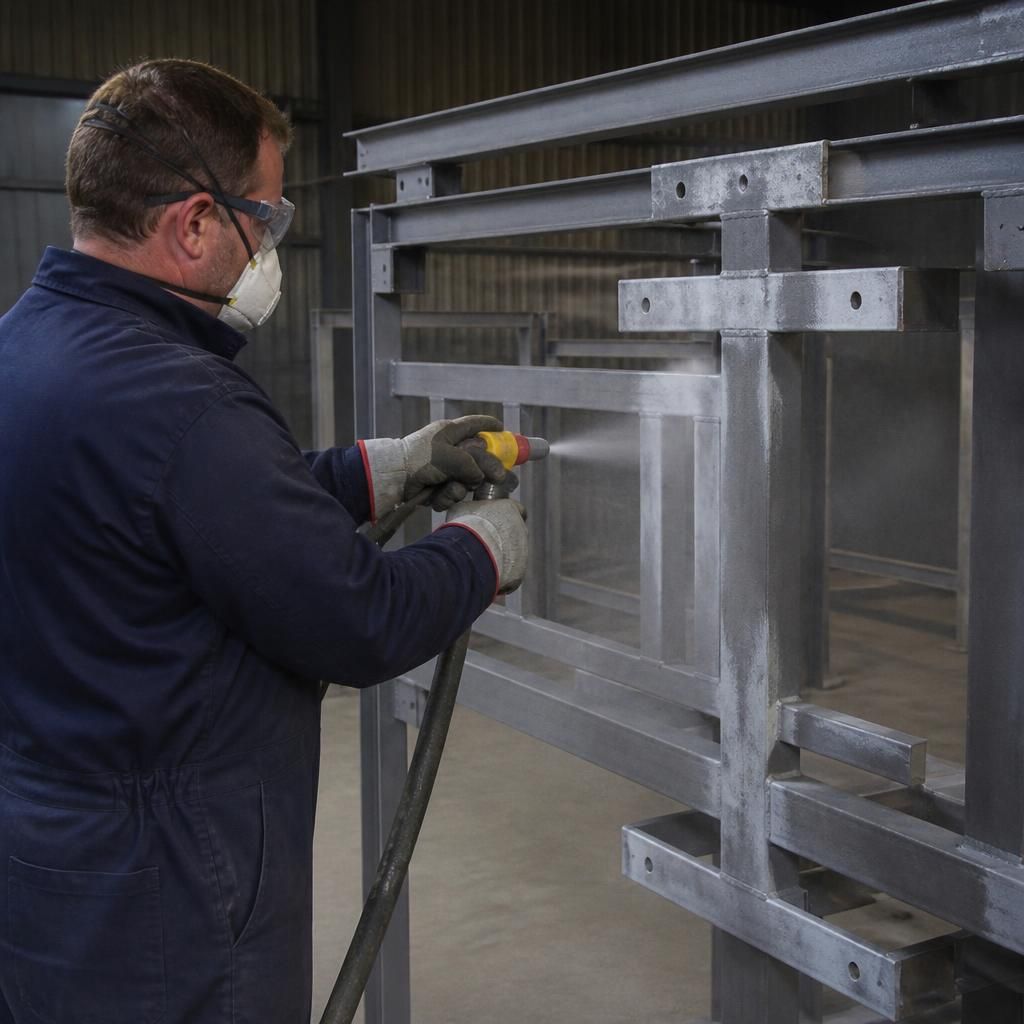
Shotblasting is particularly useful when metal components are being refurbished or recoated. It can remove remnants of an existing coating, corrosion products and accumulated surface debris, allowing the condition of the original substrate to be assessed before a new powder coating system is selected.
This prevents a new finish from being applied over a failing or incompatible layer. It also gives the coating specification a clearer starting point, which is important when previously coated components are being returned to service or adapted for a different application.
Discuss your shotblasting and powder coating requirements
Discuss your component dimensions, substrate and required finish with the Powder-coatings.co.uk team to establish whether shotblasting is suitable preparation for your powder coating project. Collection and delivery options are available for businesses across the Midlands and surrounding areas.