

Why is priming an important step in the preparation for powder coating?
Priming is important before powder coating because it creates an intermediate layer that helps the powder coat adhere to the metal and improves protection against corrosion. The correct primer can also support a more consistent, durable finish, particularly where the component faces demanding service conditions or the bare substrate requires additional protection.
Priming is the application of a prepared intermediate coating between the metal substrate and the powder topcoat. It is important because it allows the coating system to be designed around the metal, the operating environment and the required level of protection, rather than relying on the finish coat alone.
A primer is particularly useful when the component will be exposed to moisture, contaminants, abrasion or other demanding conditions. It can provide an additional barrier within the coating system and help isolate the substrate from the surrounding environment. This is different from a conversion treatment or chemical pretreatment, which modifies the metal surface; a primer is a separate coating layer that is applied and cured as part of the powder-coating process.
- It provides an additional protective layer: if the outer finish is damaged, a suitable primer can help reduce the speed at which moisture and contaminants reach the metal.
- It helps manage difficult substrates: certain metals, castings, fabricated sections and previously treated surfaces may need more than a standard topcoat system to achieve the required performance.
- It supports the coating specification: the primer can be selected according to the exposure conditions, the required mechanical resistance and the type of powder finish being applied above it.
- It can improve edge and recess protection: corners, weld zones, joints and complex profiles can be more vulnerable than broad, flat faces. A correctly applied primer helps make the overall coating system more consistent across these areas.
Priming should not be treated as a substitute for cleaning or pretreatment. Oil, grease, dust, mill scale, rust, weld residue and other contaminants must be removed first. If they remain on the surface, the primer may bond to the contamination instead of the metal, creating defects within the complete system. The substrate also needs to be suitably dry and prepared so that the primer can form a continuous film.
The choice of primer depends on several factors. The base metal is important because steel, galvanised steel, aluminium and other substrates have different surface characteristics. The intended environment also matters: an internal component has different requirements from a part exposed to weather, condensation, industrial pollutants or road contamination. The expected mechanical demands, the appearance required and the curing conditions must also be considered.
Primer and topcoat compatibility is essential. The two layers need to cure together without producing defects such as bubbling, pinholing, poor intercoat bonding, wrinkling or loss of appearance. The specified film build must also be appropriate. Too little primer may leave weak areas, while excessive build can affect edge definition, curing and the final appearance. For this reason, a primer should be selected as part of a complete coating system rather than as an unrelated extra layer.
Application normally involves preparing the metal, applying the primer powder, curing it in accordance with the product and process requirements, then applying and curing the finishing powder. In some systems the primer is partially cured before the topcoat is applied; in others, both layers are managed through a defined curing process. The correct approach depends on the materials, component geometry and production equipment. Parts with deep recesses, enclosed sections or variable thickness may need particular attention because heat reaches different areas at different rates.
Primer selection is also relevant when repairing or recoating components. Existing coatings must be assessed for adhesion, contamination and compatibility before another system is applied. Simply covering a failing or poorly prepared surface can conceal the problem temporarily without correcting it. Where corrosion has already started, the affected material and surrounding area need appropriate preparation before a new primer and topcoat are specified.
Not every component requires a separate primer. A suitable direct-to-metal powder system, supported by effective preparation and pretreatment, may be appropriate for less demanding conditions or particular substrates. Priming becomes more valuable when the specification calls for greater protection, when the substrate presents additional challenges, or when the component’s service conditions justify a multi-layer system.
For that reason, the decision should be based on the complete specification rather than on appearance alone. A coating specialist will normally consider the metal type, existing surface condition, component design, exposure, handling requirements and chosen powder system before recommending whether a primer is needed and how it should be applied.
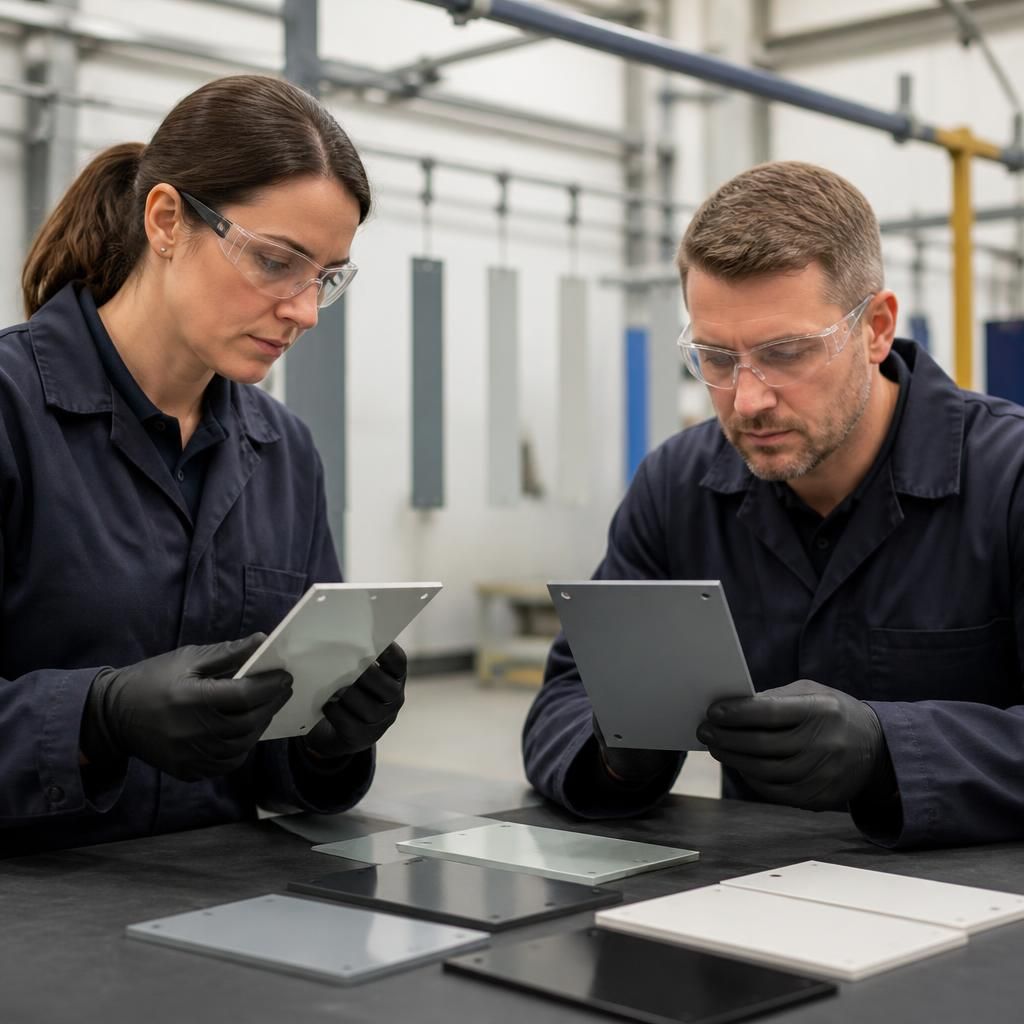
A primer can also help validate the complete powder-coating system before production parts are processed. Trial panels or representative components allow the coater to assess intercoat adhesion, curing behaviour and final appearance under the intended process conditions. This is particularly useful where the substrate, component shape or service environment makes the specification less straightforward.
Testing the primer and topcoat together is more reliable than judging either material in isolation. It can identify compatibility or application issues at an early stage, allowing the coating system and process settings to be reviewed before they affect a larger batch of components.