

What role does metal pretreatment play in enhancing the adhesion and corrosion resistance of powder-coated surfaces?
Metal pretreatment cleans and chemically conditions the surface before powder application, creating a more suitable base for the coating to bond to. It also helps inhibit corrosion beneath the finish, improving the durability of powder-coated metal in demanding service conditions.
Metal pretreatment enhances powder-coated performance by controlling the interface between the substrate and the coating. It does more than remove visible dirt: the process modifies the metal surface so the cured powder film can establish a stronger, more stable bond and so moisture and corrosive agents have fewer routes beneath the finish.
Adhesion depends on the condition of the metal immediately before coating. Oils, drawing compounds, fingerprints, mill scale, oxides and processing residues can prevent direct contact between the powder and the substrate. A coating applied over these residues may appear sound at first, but weak areas can develop during curing, handling or service. Pretreatment removes or transforms these interfering materials and produces a consistent surface across the whole component.
The chemical stage is particularly important. Depending on the substrate and specification, a conversion treatment can create a thin, tightly attached layer between the metal and the powder coating. This layer provides a more receptive surface for the coating to key into and helps stabilise the interface. It is not the same as a thick paint film or primer; its purpose is to improve the relationship between the metal and the subsequent coating system.
Corrosion resistance is improved through several related effects:
- residual contaminants that could retain moisture or promote local corrosion are removed;
- the treated surface is less vulnerable at the boundary beneath the coating;
- the interface is better able to resist loss of adhesion when exposed to humidity, water or corrosive contamination; and
- the coating is less likely to lift from an untreated weak point, which can otherwise expose fresh metal and allow corrosion to spread.
This matters because corrosion can progress beneath an apparently intact powder film. Once moisture reaches a defect, cut edge or area of poor adhesion, corrosion products can occupy more volume than the original metal and force the coating away from the surface. Good pretreatment does not make the metal immune to corrosion, but it helps the complete coating system resist this under-film progression.
The pretreatment sequence must be compatible with the substrate. Steel, galvanised steel and aluminium do not respond in the same way to cleaning and chemical treatment. Steel may require removal of rust, scale or fabrication residues. Galvanised surfaces need treatment that respects the zinc layer while preparing it for coating. Aluminium can carry tenacious oxide films and may require a different preparation approach from ferrous metals. Mixed-metal assemblies also need consideration, particularly where residues from one material could affect another.
Process control is as important as the choice of chemistry. Concentration, temperature, contact time, agitation and rinse quality all influence the resulting surface. Inadequate treatment can leave contamination behind, while excessive or unsuitable treatment may attack the substrate or leave residues that interfere with bonding. Thorough rinsing removes spent chemicals and loosened contaminants, and controlled drying prevents water marks, flash rusting or moisture being trapped beneath the powder.
Fabrication details can affect the result as well. Weld areas, heat-affected zones, folded sections, recesses and joints may hold contaminants or be more difficult for cleaning solutions to reach. Drainage and access should therefore be considered before processing, especially for components with hollow sections or complex geometry. Sharp edges and damaged areas also deserve attention because they can leave a thinner coating film and provide an easier entry point for moisture.
Inspection helps confirm that pretreatment has produced a suitable surface before powder is applied. Depending on the project requirements, checks may include visual assessment, verification that the surface is free from residue, monitoring of the treatment process and adhesion testing after curing. Corrosion testing or other performance tests may be specified for components exposed to demanding conditions. These checks assess the complete preparation and coating system rather than treating pretreatment as an isolated operation.
For manufacturers and fabricators, the practical implication is that powder coating performance is determined partly before the powder reaches the spray equipment. Providing information about the base metal, previous treatments, service environment, fabrication residues and required durability allows the preparation route to be selected appropriately. When cleaning, chemical conditioning, rinsing, drying and coating are treated as one controlled sequence, the finished surface has a better basis for maintaining adhesion and resisting corrosion throughout its intended use.
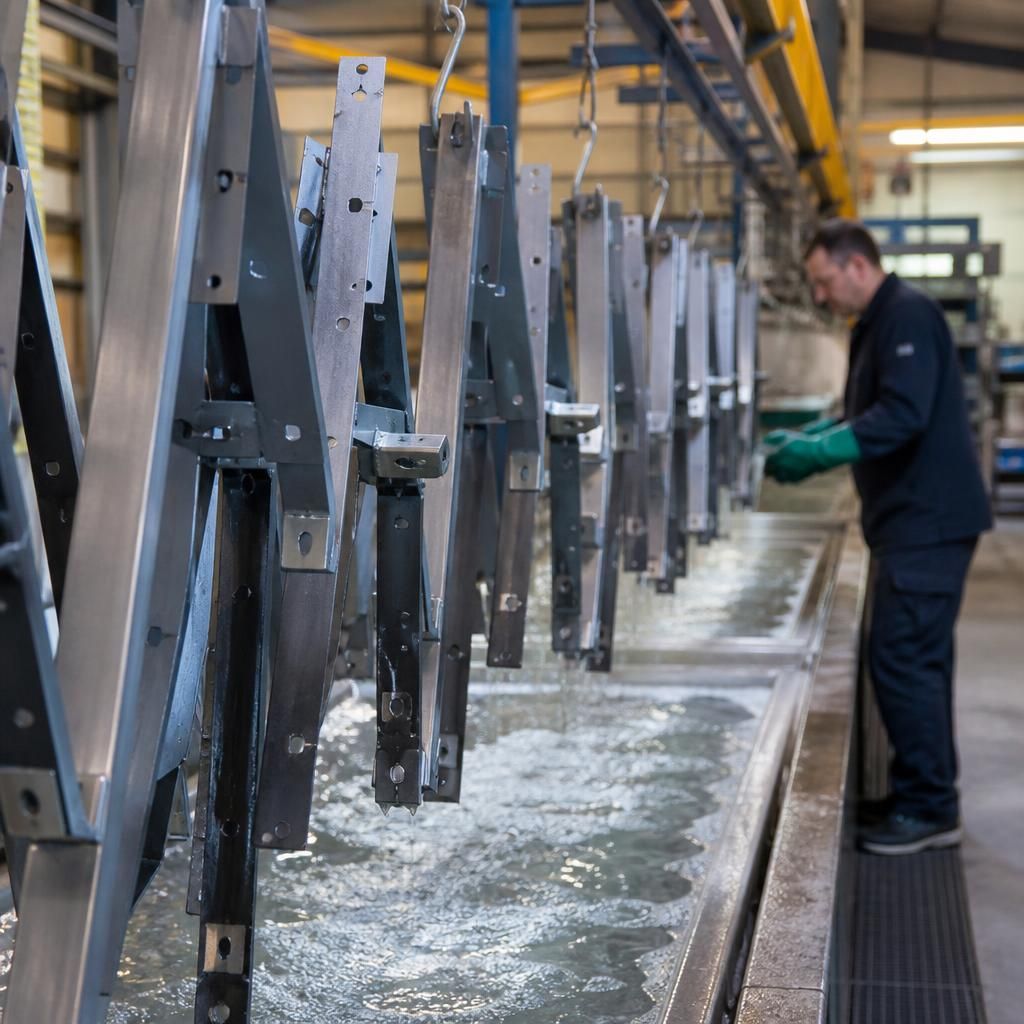
Metal pretreatment also improves the way the powder coating wets and spreads across the substrate during curing. A surface affected by oil, fine residues or an unsuitable oxide layer can cause local disruption in the melting film, leaving areas where the coating is less continuous or less securely bonded. Chemical conditioning helps create a more uniform interface, allowing the powder to form a consistent film over the prepared metal.
This uniformity supports corrosion resistance because a continuous coating presents fewer weak points through which moisture and contaminants can reach the substrate. Pretreatment is therefore not simply a cleaning step; it helps establish the surface conditions needed for the powder film to perform as a coherent protective barrier. The treatment still needs to be matched to the metal and followed by suitable application and curing controls, as pretreatment cannot compensate for defects elsewhere in the coating system.
Discuss the Right Metal Pretreatment for Your Powder Coating Project
Discuss your component material, fabrication history and intended service conditions with a powder coating specialist to identify a suitable pretreatment route. This helps ensure the preparation specification is aligned with the performance required from the finished coating.