

What environmental factors should be considered during the powder coating preparation process to ensure optimal results?
Temperature, humidity, airborne dust, ventilation and workspace cleanliness should be controlled during powder coating preparation, as they can affect drying, contamination levels and coating adhesion. Preparing metal in a clean, stable environment and keeping surfaces dry helps produce a consistent, durable finish.
Environmental control during powder coating preparation means preventing prepared metal from being recontaminated, retaining moisture, or receiving inconsistent pretreatment before the powder is applied. The surrounding work area, cleaning media, compressed air, handling methods, storage conditions and process sequence all influence whether a surface remains suitable for coating.
Separate preparation stages where possible. Abrasive blasting, grinding, welding, degreasing and final inspection can each introduce different contaminants. Sparks, metallic particles, spent abrasive, oils and residue from fabrication should not be allowed to migrate back onto metal that has already been cleaned. A sensible workflow moves components from the dirtiest operation towards final preparation, with completed surfaces protected from nearby fabrication and finishing work.
Control compressed air quality. Air used for blow-off must not reintroduce oil or water to the substrate. Compressors, receivers, filters and drain systems should be maintained so that the air supply is clean and dry. A contaminated air line can leave a thin film that is difficult to see but may interfere with adhesion or create defects after curing. Air lines used for general workshop duties should not automatically be assumed suitable for final surface preparation.
Consider water quality and rinse management. After aqueous cleaning or chemical pretreatment, residues can remain if rinse water contains dissolved salts, minerals or other contaminants. Poor drainage can also allow used solution to run back across a prepared component. Rinsed parts should be positioned so liquid leaves recesses, folded sections and drilled holes rather than collecting in them. The condition of rinse tanks, spray equipment and drainage arrangements should be checked as part of process control.
Prevent flash rust and trapped moisture. Bare steel can begin to oxidise after wet cleaning, particularly in enclosed joints, seams and hollow sections. The environmental risk is not limited to visible water on the outside of a component. Moisture retained in overlaps or cavities may emerge later and affect the coating. Components should therefore be dried thoroughly, inspected at vulnerable points and moved into the next preparation stage without unnecessary delay. If a prepared surface shows signs of corrosion or water staining, it should be assessed and corrected rather than coated over.
Keep preparation chemicals stable. Degreasers, conversion treatments and other pretreatment solutions can become less effective when they accumulate oil, metal fines or residues from previous loads. Concentration, contamination, replenishment and bath condition should be monitored according to the relevant process instructions. Carry-over between stages is another concern: excessive solution left on a part can dilute the next bath or leave deposits after drying. Correct racking, drainage and rinsing reduce this risk.
Use suitable racks and handling equipment. Contact surfaces can transfer grease, marking materials or loose particles onto freshly prepared metal. Racks, hooks, slings and worktables should be maintained and cleaned for their intended use. Operators should handle components with clean gloves where fingerprints or skin oils could affect the surface. Parts should be supported at suitable points so that preparation fluids drain correctly and so that contact marks do not create untreated areas.
Manage storage and transport between stages. Prepared components should be kept away from sources of moisture, oil and workshop residue while they await coating. Covers may be useful, but they must not shed fibres or trap condensation against the metal. Packaging materials should be selected carefully because cardboard, timber, dirty plastic and reused wrapping can introduce particles or chemicals. During collection or movement between facilities, parts should be secured without allowing abrasion, contact contamination or exposure to wet conditions.
Inspect difficult geometries and concealed areas. Environmental controls are especially important for box sections, folded edges, welds, threaded holes and overlapping joints. These areas can retain blasting media, cleaning solution or fabrication residue even when broad flat surfaces appear acceptable. Inspection should include edges, recesses and contact points, using appropriate lighting and visual checks before the component proceeds to coating.
- Keep prepared parts away from active grinding, welding and blasting wherever practicable.
- Use clean, maintained air equipment for blow-off and drying.
- Check that rinse systems and drainage do not leave chemical or mineral deposits.
- Dry cavities, seams and recesses as well as exposed faces.
- Maintain clean racks, gloves, hooks and handling surfaces.
- Protect prepared metal during storage and movement without trapping moisture or introducing fibres.
These controls complement the cleaning and pretreatment method rather than replacing it. A technically suitable preparation process can still produce an inconsistent result if the component is contaminated during handling, exposed to carry-over from another stage or allowed to develop corrosion before coating. Environmental checks should therefore form part of the preparation record, particularly for batch work and components with complex shapes.
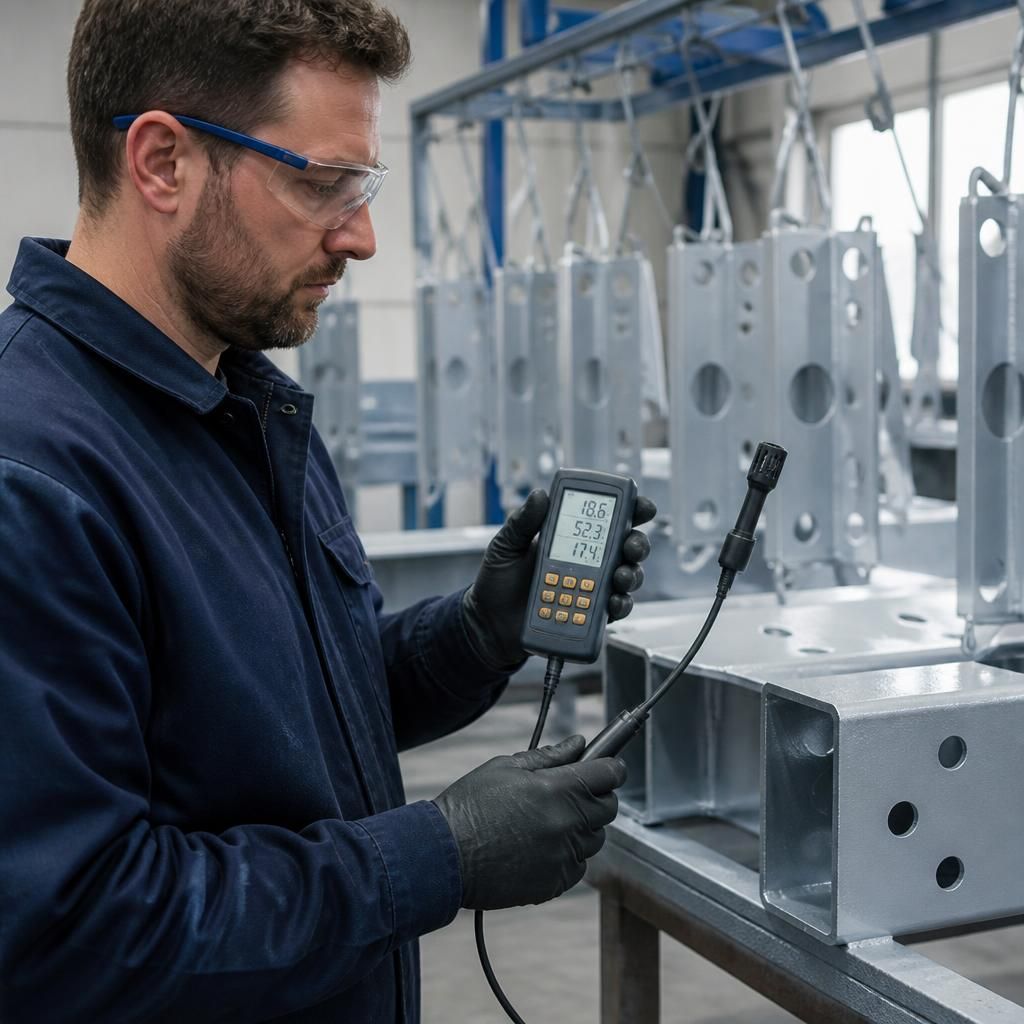
Ambient temperature and relative humidity should be assessed alongside the temperature of the metal itself. A cold component placed in warmer, humid air can develop surface condensation even when it appears dry, while excessive heat can cause cleaning solutions to evaporate too quickly or alter their working behaviour. These conditions may affect pretreatment consistency and the time available before coating.
Record environmental readings where appropriate and compare them with the requirements of the cleaning, pretreatment and coating process. Avoid moving components between areas with substantially different conditions unless the metal has been allowed to stabilise. This helps reduce condensation risk and supports more consistent preparation across a batch.