

How does the choice of primer impact the longevity and effectiveness of the powder coating?
Primer choice directly affects how well a powder-coated surface resists corrosion, adheres to the metal and withstands its working environment. Selecting a primer compatible with the substrate, powder topcoat and expected exposure helps create a more durable, effective coating system.
The choice of primer determines how the coating system manages corrosion, mechanical stress and exposure over time. A suitable primer forms the correct foundation for the powder topcoat, while an unsuitable or incompatible primer can reduce overall performance even when the topcoat itself is correctly applied and cured.
Primer chemistry is the first consideration. Different primers are formulated for different risks. Epoxy-based primers can provide strong bonding and barrier protection, making them suitable for many fabricated steel components. Zinc-rich systems offer sacrificial protection where steel may be exposed by scratches, cut edges or minor coating damage. Other primers are selected for flexibility, chemical resistance or compatibility with particular substrates. The best option depends on the metal, service conditions and the performance required from the complete coating system.
A primer can extend service life by slowing the movement of moisture and corrosive agents towards the substrate. This is especially important on components exposed to rain, condensation, road salts, industrial pollutants or high humidity. However, primer performance depends on continuity and correct film formation. Thin areas, pinholes, overspray or poor coverage around welds, corners and recessed sections can create weak points that allow corrosion to begin beneath the coating.
Compatibility with the powder topcoat is equally important. The two layers must work as a system rather than being chosen independently. The primer needs to accept the topcoat without recoating problems, loss of intercoat adhesion, surface defects or chemical interaction during curing. Its recommended cure schedule, recoat window and surface condition before topcoating must also be followed. A primer that remains too soft, becomes excessively brittle or is over-cured may prevent the finished coating from achieving its intended performance.
The primer also affects mechanical behaviour. Components that are bent, handled, assembled or exposed to vibration need a system that can tolerate movement without cracking or delaminating. A rigid primer may perform well in one application but be less suitable where the finished part is subject to impact or flexing. Conversely, a more flexible system may be preferable where resistance to chipping and handling damage is important.
Substrate selection influences the result. Primers for mild steel are not automatically suitable for aluminium, galvanised steel or other metals. Differences in surface chemistry, oxide layers and gas release behaviour can affect wetting, adhesion and the appearance of the topcoat. Galvanised and zinc-coated materials may require a primer and preparation method designed to control outgassing and promote reliable intercoat adhesion. Aluminium may need a different pretreatment and primer approach from carbon steel.
Film thickness must be controlled rather than increased without limit. Too little primer may leave inadequate barrier protection, while excessive build can cause poor curing, cracking, solvent or gas entrapment, and problems at edges or assembled interfaces. The specified primer thickness should therefore be considered alongside the topcoat thickness, component geometry and the tolerances required for fitting.
Application quality has a direct bearing on the effectiveness of the chosen product. Before priming, the surface must be suitably clean and prepared so that the primer can contact the metal consistently. The applicator must account for Faraday cage areas, sharp edges, welds, joints, holes and sheltered faces, where powder deposition can be uneven. Inspection should consider coverage, visible defects, curing and the condition of the primer before the topcoat is applied.
The operating environment should be assessed in practical terms, including:
- exposure to moisture, condensation, salt and corrosive contaminants;
- indoor or outdoor use and the degree of weathering;
- contact with fuels, oils, cleaning chemicals or process fluids;
- abrasion, impact, vibration and repeated handling;
- operating temperature and temperature changes; and
- the consequences of coating damage or maintenance access being difficult.
These factors help determine whether a conventional barrier primer is sufficient or whether a more specialised corrosion-protection system is warranted. They also influence the choice of topcoat, because the primer cannot compensate for a topcoat that is unsuitable for the same exposure.
Primer selection should therefore be based on the complete specification rather than on corrosion resistance alone. The specification should identify the substrate, preparation standard, primer type, topcoat type, target film build, curing requirements and any testing needed for the intended use. For critical components, sample panels or trial batches can help confirm appearance, intercoat adhesion, cure and resistance before full production.
In practice, a durable result comes from matching primer chemistry, substrate preparation, application control and topcoat compatibility. A specialist powder coater can review these requirements for manufactured and fabricated metal parts, including larger batches and components requiring protective coating systems, before the coating process begins.
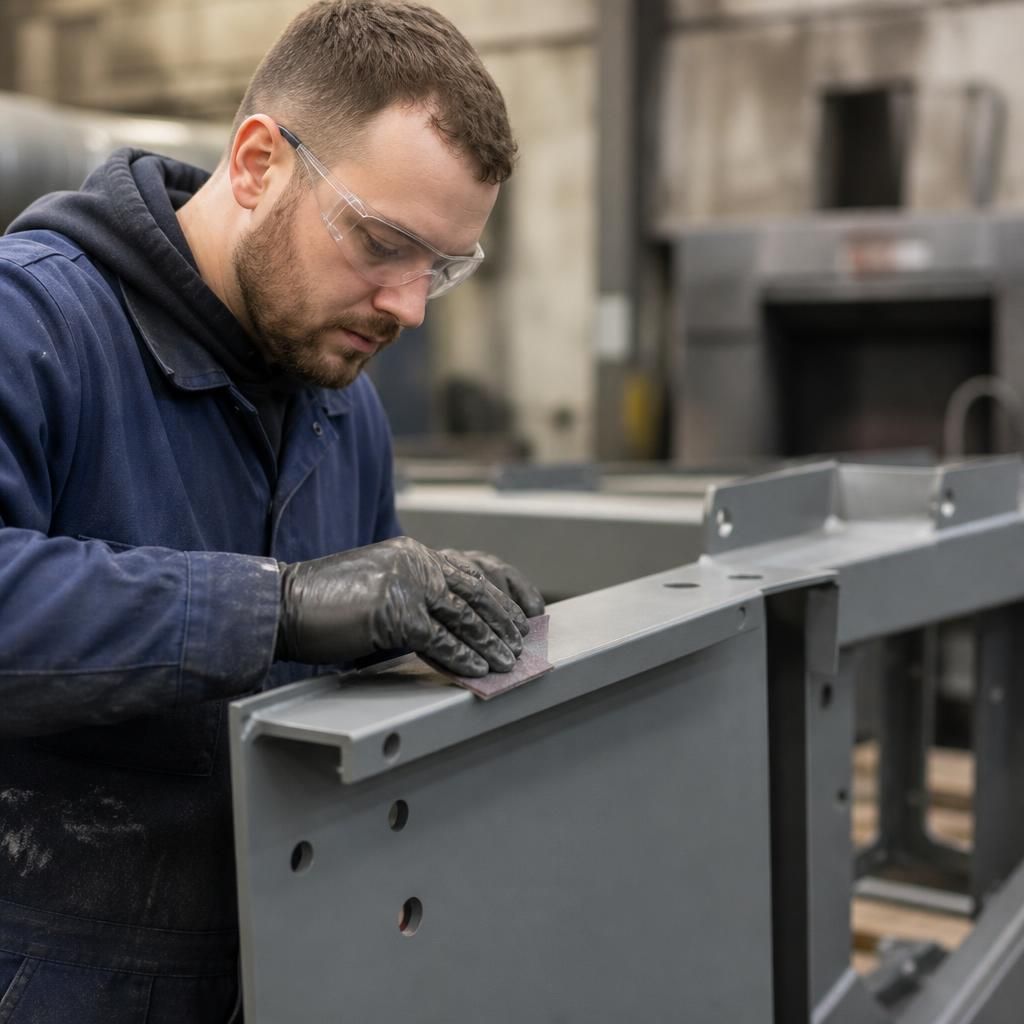
A primer can only protect the metal effectively when it bonds to a properly prepared surface. Residual oil, salts, dust, oxides or moisture may prevent consistent contact between the primer and substrate, allowing adhesion loss or corrosion to develop beneath an otherwise sound-looking topcoat.
This is why primer selection should be considered alongside the preparation standard, rather than treated as a separate product decision. The right primer improves the coating system’s resistance to its intended exposure, but it cannot compensate for contamination, unsuitable surface condition or inadequate preparation.