

What specific steps are involved in the surface preparation process for powder coating, and how do these steps improve coating adhesion and durability?
Powder coating surface preparation typically involves degreasing and cleaning the metal, removing rust, mill scale or existing coatings by suitable mechanical or chemical methods, applying the appropriate pre-treatment, rinsing and thoroughly drying the part, then inspecting it before powder application. These steps remove contaminants, create a suitable surface profile and support chemical bonding, helping the coating adhere securely and resist corrosion, impact and premature peeling.
Surface preparation improves powder coating by controlling the condition of the metal at the coating interface. A sound preparation process removes contaminants, provides a suitably active surface for pre-treatment and prevents moisture or residues from being trapped beneath the cured powder. The result is stronger adhesion, more consistent appearance and better resistance to corrosion, impact and handling damage.
The process is normally planned around the substrate, the condition of the component and the service environment. A clean, lightly oxidised steel part may require a different treatment from a galvanised, aluminium or previously coated component. The preparation sequence should therefore be selected after checking the material rather than applying one method to every job.
- Assess the component. The operator first checks the metal type, existing finish, welds, sharp edges, joints, holes and areas that may retain oil or moisture. Rust, mill scale, weld spatter, old paint, labels and silicone-based contamination are identified because each can require a different removal method. The component’s intended use also matters: parts exposed to weather or corrosive conditions generally require more comprehensive preparation than lightly used indoor items.
- Remove physical defects and unwanted material. Loose corrosion, scale, burrs, weld spatter and failing coatings are removed using a suitable mechanical process, such as blasting, abrasive treatment or controlled hand and power tooling. This stage is not simply cosmetic. Powder cannot reliably bridge loose material, sharp contamination or a weak old coating; if those layers detach, the new finish can fail with them. Edges and welds are checked particularly carefully because uneven geometry can create thin coverage or points where corrosion begins.
- Eliminate oils and other contaminants. Cutting fluids, grease, fingerprints, dust and workshop residues can prevent the powder from wetting the metal evenly. Cleaning products and methods must be compatible with the substrate and followed by adequate removal of the cleaning solution. A surface that looks bright may still carry a thin contaminant film, so visual appearance alone is not sufficient evidence of cleanliness.
- Create the correct surface condition. Where mechanical abrasion is used, it produces a controlled texture that gives the cured coating microscopic features into which it can key. The profile must be appropriate to the component and coating system: insufficient preparation may leave weak adhesion, while overly aggressive treatment can produce an unnecessarily rough finish, distort thin material or leave abrasive residue. Blasting media, equipment condition and operator control all influence the result.
- Apply substrate-appropriate chemical pre-treatment. Conversion treatments can improve the interface between the metal and the powder film and can provide additional protection if the coating is locally damaged. The chemistry, concentration, contact time and rinsing requirements need to suit the substrate. Incorrect treatment can stain the metal, leave salts behind or interfere with curing, so chemical stages are controlled rather than treated as a general-purpose wash.
- Rinse and dry thoroughly. Remaining cleaner, treatment chemicals and loose particles must be removed before coating. Drying is essential because water in seams, recesses, folded sections and drilled holes can later cause blistering, corrosion or surface defects. Components are inspected for trapped moisture as well as for visible residue; complex fabrications often need particular attention in enclosed or poorly drained areas.
- Inspect before powder application. The prepared surface is checked for visible rust, dust, residue, missed areas, excessive roughness and handling contamination. Where appropriate, checks may include assessing the surface profile, confirming that the surface is free from visible contamination and verifying that the part is sufficiently dry. Any defect found at this point can be corrected before powder is applied, when correction is simpler than repairing a cured finish.
These stages support adhesion in two complementary ways. Mechanical preparation gives the coating a suitable physical key, while chemical pre-treatment can improve the interaction between the substrate and the coating system. Cleaning is equally important because an oil, salt or moisture layer acts as a boundary between the metal and powder, preventing the coating from forming a reliable bond even when the final film appears visually uniform.
Preparation also affects durability after curing. Corrosion normally needs a combination of a vulnerable metal surface, moisture and a route beneath or through the coating. Removing corrosion products and contamination reduces weak points, while suitable pre-treatment helps limit the spread of corrosion from small breaks or edges. Thorough drying reduces the risk of blistering and loss of adhesion caused by trapped water or volatile residues.
Common preparation failures include painting over flash rust, leaving abrasive dust on the part, using an unsuitable chemical treatment, handling cleaned metal with contaminated gloves and allowing prepared components to remain exposed to workshop contamination. These problems are prevented through controlled handling, appropriate sequencing and inspection immediately before powder application. If a component becomes contaminated or develops oxidation after preparation, it should be reprocessed rather than coated over.
For fabricated parts, preparation should also account for design details. Tight crevices, overlapping plates and unsealed hollow sections can retain treatment fluid and later release it during curing. Drainage and venting holes, accessible welds and a surface that can be reached consistently by the preparation equipment all make it easier to achieve a durable finish. Surface preparation is therefore both a finishing operation and a quality-control stage: the quality of the final powder coating is limited by the condition of the metal beneath it.
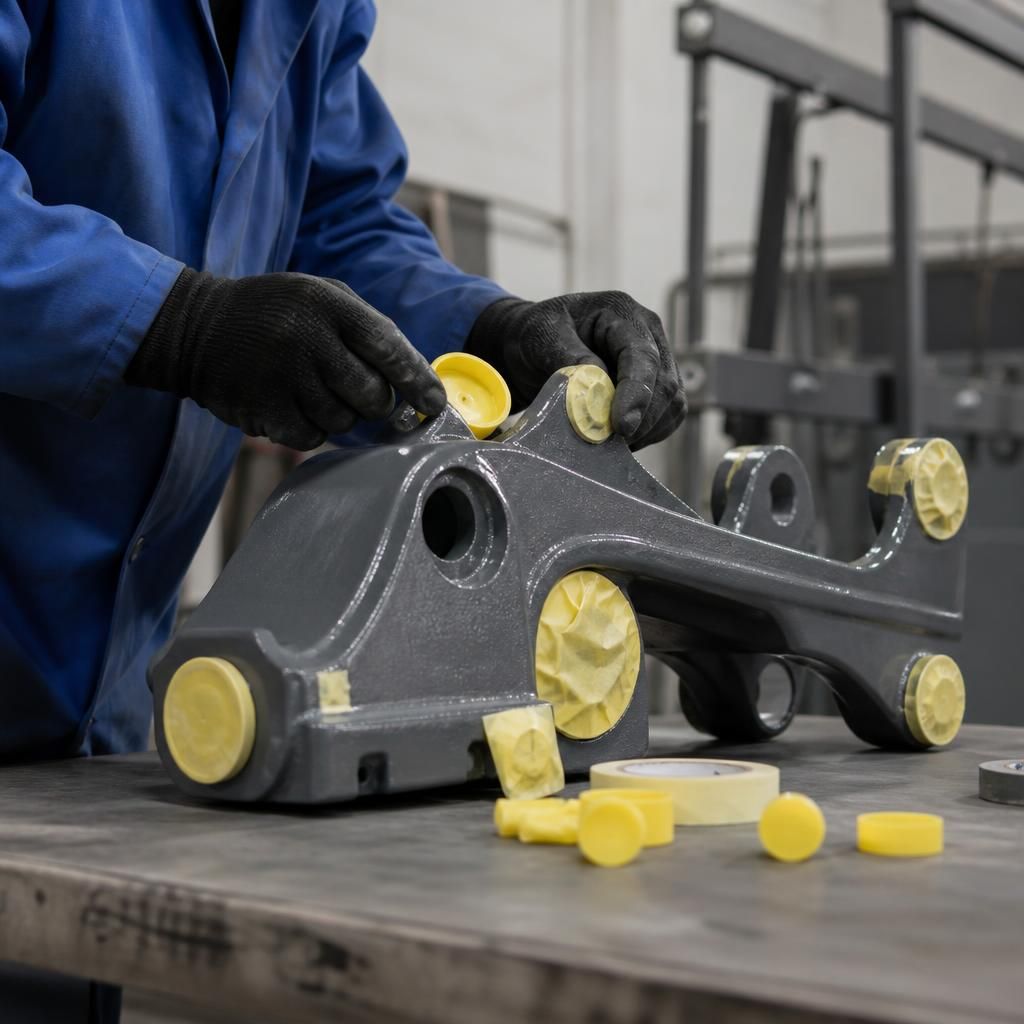
Masking is an important final part of preparation where powder coating must not cover functional surfaces. Threads, bearing seats, mating faces, electrical contact points and precision interfaces may need suitable plugs, caps or masking materials before the coating is applied. This prevents interference with assembly and avoids scraping the cured finish during installation, which could expose the metal and create a starting point for corrosion.
Masking must be planned alongside cleaning and pre-treatment rather than added without consideration. The protected areas still need to be free from oil, rust and loose material, while the masking boundary should be positioned so that powder does not build up where components must fit together. Correct positioning therefore supports both the coating’s long-term protection and the dimensional function of the finished part.
Discuss Your Powder Coating Surface Preparation Requirements
Discuss your component’s substrate, existing surface condition and intended service environment with Powder-coatings.co.uk to identify a suitable preparation sequence. Providing details of part dimensions, contamination, corrosion and any areas requiring masking will help establish the appropriate requirements before coating.