

What are the benefits of using mechanical abrasion in powder coating surface preparation?
Mechanical abrasion prepares metal for powder coating by removing rust, mill scale, old coatings and surface contaminants while creating a clean, consistent key for the powder to grip. This improves coating adhesion, supports a more uniform finish and helps the coated component resist premature flaking, corrosion and wear.
Mechanical abrasion benefits powder coating by giving the applicator direct, controlled preparation of the metal surface. Rather than relying solely on a chemical reaction, abrasive methods physically condition the substrate so that remaining residues, oxidation and uneven areas can be managed before pre-treatment and powder application.
Its main advantages include:
- Consistent surface condition: Blasting, sanding, grinding or wire brushing can produce a more even substrate across a component. This helps reduce localised differences that may otherwise affect the appearance or performance of the finished coating.
- Control over the surface profile: The abrasive method, media and operating settings can be selected according to the metal, component geometry and required finish. A suitable profile provides mechanical interlocking without unnecessarily damaging thin sections, sharp edges or detailed features.
- Effective treatment of firmly attached material: Some rust, mill scale, weld discolouration and previous coating residues may be difficult to address with cleaning alone. Mechanical action can break down or remove these adherent layers where a simple degreasing stage would be insufficient.
- Improved inspection: Once deposits and loose layers have been removed, defects such as pitting, corrosion, weld irregularities and previous coating failure become easier to identify. This allows unsuitable areas to be repaired or discussed before powder is applied, rather than concealing the problem beneath the new finish.
- Reduced risk of surface contamination from preparation chemicals: Mechanical preparation does not leave the same type of chemical residue as some wet processes. The surface must still be cleaned correctly afterwards, because abrasive dust, grease and handling marks can interfere with pre-treatment and coating application.
- Useful for targeted or localised work: Hand tools and powered abrasives can reach specific areas, repair damaged sections or treat components that cannot be processed uniformly by a larger blasting system. This can be particularly useful for fabrication repairs, weld zones and awkward profiles.
- Adaptability to different components: Abrasion can be scaled from controlled hand preparation to production blasting, depending on component size, quantity, material and condition. The technique can therefore form part of a preparation process for both individual fabricated parts and repeat batches.
The choice of abrasive process is important. Blast cleaning may be appropriate for robust steelwork and larger batches, while finer abrasive tools may be more suitable for thin material, small areas or components with delicate details. Excessive abrasion can round edges, remove too much material, embed media or create a profile that is unsuitable for the specified powder system. Aluminium and other softer metals require particular care because aggressive treatment may distort the surface or leave unwanted marks.
Mechanical abrasion is normally one stage within a wider preparation sequence, not a substitute for every other stage. After abrasion, the component should be cleared of dust and loose particles, degreased where necessary and given the appropriate pre-treatment for its metal and intended service conditions. The prepared surface also needs protection from recontamination before coating, especially through contact with oily equipment, dirty packaging or bare hands.
For B2B coating work, the practical value of mechanical abrasion is its repeatability when the process is properly specified. Recording the abrasive method, media, equipment settings, inspection requirements and subsequent cleaning steps helps maintain a consistent standard between components and batches. The best results come from matching the preparation intensity to the substrate rather than treating every metal part in exactly the same way.
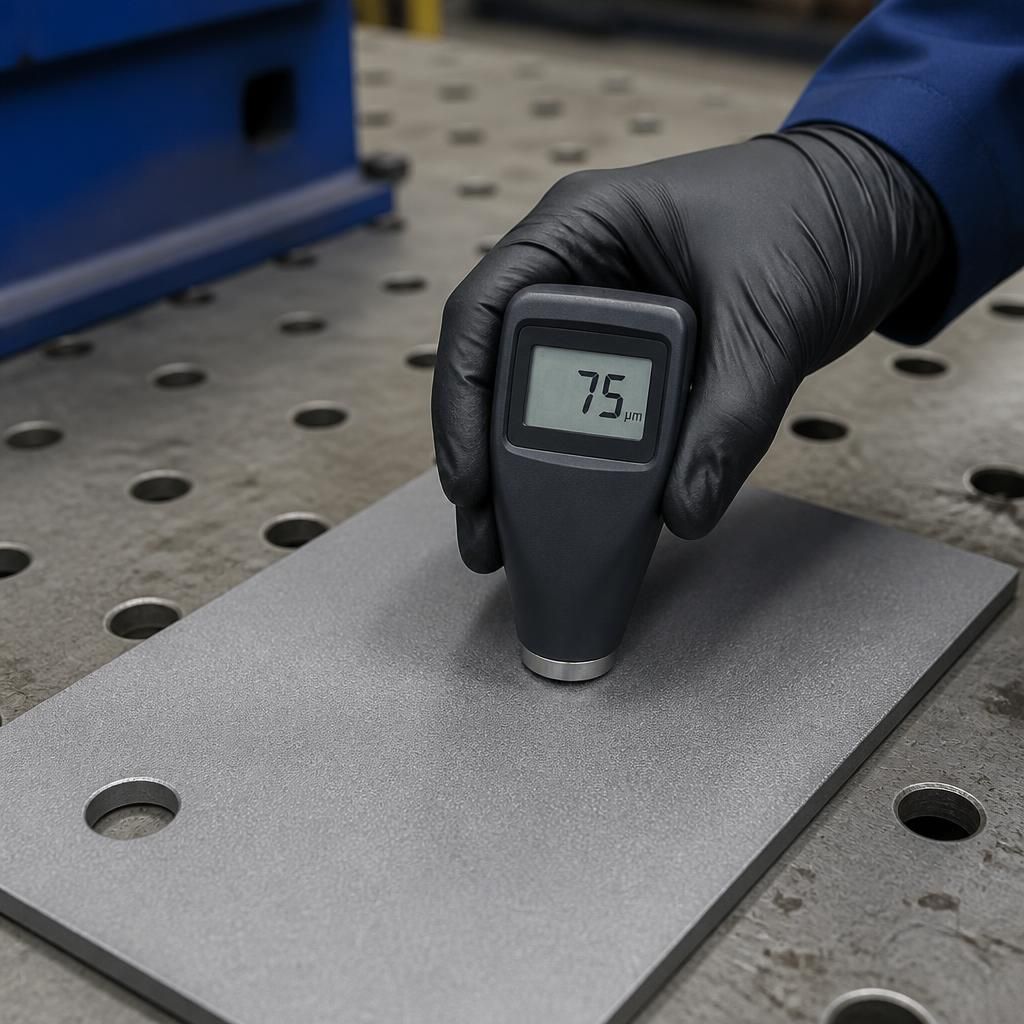
A further benefit of mechanical abrasion is that the resulting surface profile can be checked before powder application. Visual cleanliness alone does not show whether the surface has the required texture for the specified coating system. A suitable comparator or profile gauge can help confirm that the abrasive treatment has produced an even, controlled surface rather than an overly smooth or excessively coarse finish.
This check is particularly useful for repeat production work, where components need to meet the same preparation standard from one batch to the next. It also helps identify inconsistent blasting or preparation areas before coating, when corrective work is more straightforward. The inspection method should reflect the substrate, abrasive process and powder specification, rather than applying one profile requirement to every metal component.
Discuss Mechanical Abrasion for Your Metal Components
Discuss your metal components with Powder-coatings.co.uk to establish whether mechanical abrasion is suitable for the substrate, geometry and coating requirements. The team can advise on an appropriate preparation approach for individual parts or repeat batches across the Midlands.