

What is the role of surface preparation in the powder coating primer process?
Surface preparation removes contaminants, corrosion and surface irregularities before primer application, giving the primer a clean, suitable base. This helps the primer bond consistently to the metal and supports the adhesion, durability and finish quality of the subsequent powder coating.
Surface preparation is the control stage that determines whether a powder coating primer can form a stable, continuous film on the substrate. It does more than clean the metal: it establishes the surface condition, profile and chemical compatibility needed for the primer to perform as designed throughout curing and service.
Preparation normally begins with an assessment of the component and its previous condition. The coating process must take account of the metal type, existing mill scale or oxide layers, welds, sharp edges, drilled holes, fabrication residues and any previous coating. Steel, aluminium and galvanised components may require different preparation methods because their surface chemistry and reaction to cleaning or abrasion are not the same.
- Degreasing: Oils, cutting fluids, handling residue and workshop dirt are removed before mechanical or chemical treatment. If these materials remain, they can spread across the component during later processing or interfere with the primer’s wetting and curing.
- Mechanical treatment: Abrasive blasting, suitable sanding or other controlled methods can remove tightly attached oxide, scale and aged coatings while producing a consistent surface profile. The profile gives the cured primer a physical key, but excessive roughness can increase coating demand and make it harder to achieve an even finish.
- Weld and fabrication treatment: Weld spatter, sharp projections, burrs and loosely attached residues should be corrected where the specification requires it. These features can create thin coverage, trapped contamination or local stress points in the primer and topcoat.
- Chemical pretreatment: Cleaning and conversion treatments may be selected where they are compatible with the substrate and the complete coating system. They can improve the chemical basis for adhesion and help control the reactivity of surfaces such as aluminium or galvanised steel.
- Rinsing and drying: Any process chemicals must be removed or neutralised as required, followed by thorough drying. Water, rinse salts and residues left in joints or recesses can cause defects beneath the primer or contribute to corrosion at weak points.
The final condition immediately before priming is particularly important. A prepared component can be compromised by unclean handling, airborne dust, condensation or renewed oxidation while it is waiting for the next stage. For ferrous metal, the interval between preparation and primer application should therefore be controlled according to the environment and the required specification. Parts with box sections, overlaps or drainage paths also need attention because retained moisture or abrasive media can remain hidden after external surfaces appear clean.
Surface profile is another important variable. A primer needs enough texture to anchor to the metal, but the profile should be consistent across the component rather than heavily peaked or polished in places. Excessive abrasion may expose a different substrate condition, reduce dimensional accuracy at mating faces or leave debris that becomes trapped in the coating. Preparation is therefore a controlled process rather than simply making the metal look visibly clean.
Good preparation also supports coverage at difficult features. Edges, corners, weld zones, recesses and internal faces can receive a different film build from broad, flat areas. Edge rounding where appropriate, removal of sharp contamination and correct part orientation can help the primer form a more uniform layer. Drainage and venting considerations are relevant for hollow fabrications, since enclosed moisture or treatment residue can affect the coating during curing.
Inspection before primer application commonly includes a visual check for remaining oil, dust, scale, flash rust, abrasive residue and untreated areas. Depending on the project specification, the process may also involve checks of surface cleanliness, profile, dryness, substrate temperature and the condition of pretreatment. These checks identify preparation faults before primer is applied, when correction is simpler than repairing a defect within a completed coating system.
Insufficient preparation can produce more than an immediate cosmetic problem. It may lead to local lifting, blistering, pinholes, uneven film formation or loss of adhesion when the component is exposed to moisture, chemicals, impact or cyclic temperature changes. A primer can only protect the interface that it is able to contact properly; it cannot compensate for loose scale, trapped contamination or an unsuitable surface profile.
For industrial components, the most suitable preparation route is selected alongside the primer formulation, metal type, service environment and finishing requirements. Aligning these stages helps the primer cure as a continuous intermediary layer and gives the subsequent powder coat a more dependable foundation, particularly on fabricated parts with mixed surface conditions.
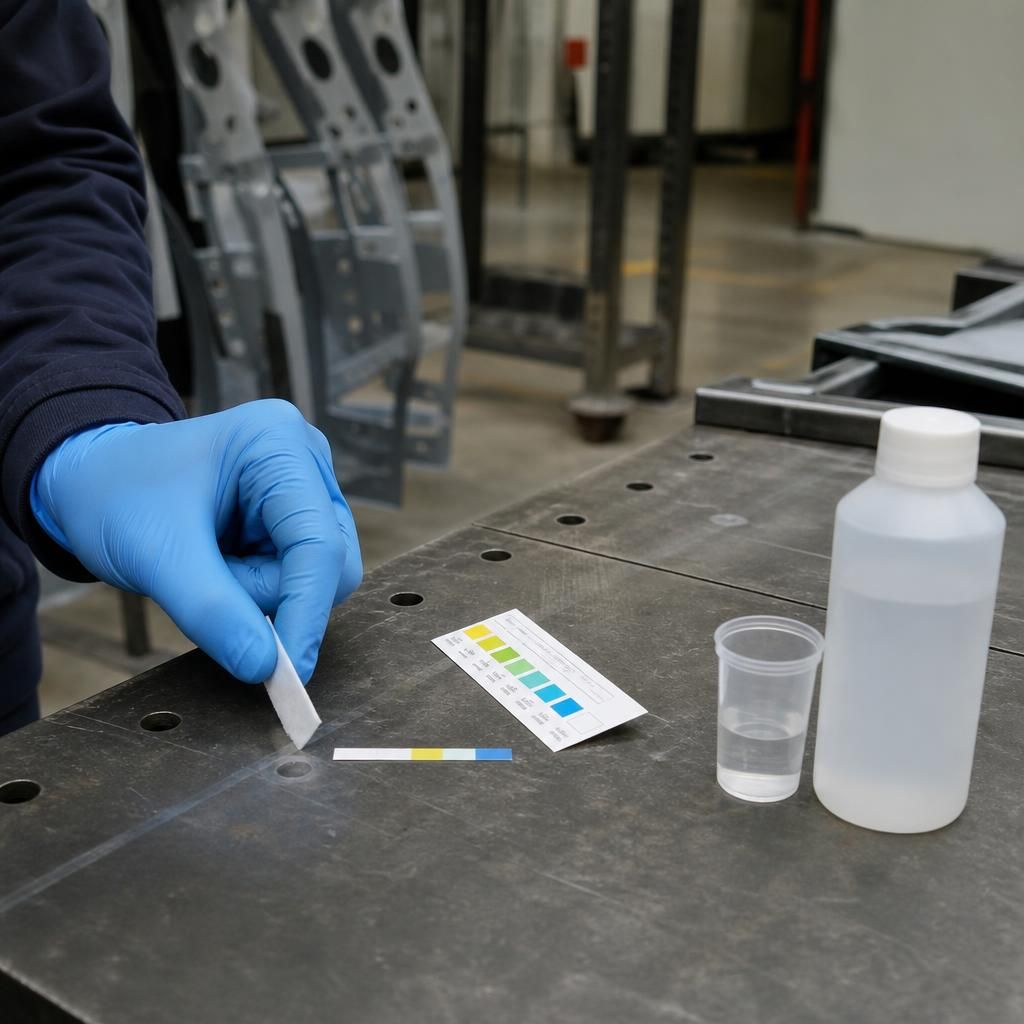
A surface can appear clean while still carrying invisible soluble salts or fine residues that interfere with the primer interface. These contaminants can attract moisture beneath the coating and contribute to premature adhesion failure. Where the specification requires it, surface preparation is therefore verified with suitable cleanliness, salt-contamination and dryness checks rather than visual inspection alone. This confirms that the substrate is not merely free from visible dirt, but suitable for reliable primer application.