

What are the benefits of using a primer in the powder coating process?
Using a primer in the powder coating process creates an intermediate layer that helps the topcoat bond securely to the metal. It can also improve corrosion protection, reduce the risk of coating failure and support a longer-lasting finish, particularly where components face demanding service conditions.
A primer in powder coating is a preparatory coating applied beneath the visible powder topcoat to provide additional control over the finished system. Its benefits extend beyond basic protection: it can improve finish uniformity, help manage difficult substrates, support the required film build and allow the coating specification to be matched more closely to the component’s service conditions.
More consistent coverage: A primer can create a more even base over small variations in the metal surface, including differences in texture, porosity or colour. This is particularly useful where the topcoat is a light shade, a bright colour or a finish that makes substrate irregularities more noticeable. The primer provides a controlled foundation, helping the visible coat achieve a more uniform appearance across a batch of parts.
Improved appearance over challenging substrates: Some metals and previously treated components do not provide an ideal visual base for a single powder coat. A suitable primer can reduce the influence of the underlying material and help limit issues such as uneven colour development, pinholing or visual show-through. It does not replace proper cleaning and preparation, but it can make the coating system more tolerant of minor variations once the substrate has been correctly prepared.
Greater flexibility in film build: A primer and topcoat system allows the total coating thickness to be distributed between two layers rather than relying on one layer to provide every required property. This can help the coater specify a system for components with demanding edges, recesses or complex profiles. The correct balance is important: excessive film build can affect appearance, curing and dimensional fit, so the primer must be selected and applied as part of a defined coating specification.
Separation between the metal and topcoat: A primer can act as a controlled intermediate layer where the substrate, pretreatment and topcoat need to work together carefully. This is relevant to components made from different grades of metal, castings with variable surface characteristics, and parts where the topcoat alone is not the most suitable system. The primer should be compatible with both the substrate and the powder applied over it; an unsuitable combination can create defects rather than solve them.
Better suitability for demanding service conditions: Primer selection can be adapted to the environment in which a component will be used. Factors may include exposure to moisture, industrial contaminants, abrasion, impact, cleaning chemicals and outdoor weathering. A primer does not make every coating system suitable for every environment, but it gives the specification more scope to address particular risks through compatible layer construction.
Support for batch consistency: For manufacturers and fabricators coating repeated production runs, a primer can help establish a repeatable coating system across components that vary slightly in geometry or surface condition. Consistency still depends on controlled preparation, correct application, suitable curing and inspection. Primer is therefore one part of process control, not a substitute for it.
Using a primer is not automatically the best choice for every powder coating job. It adds an application stage, requires an additional cure or compatible two-coat curing schedule, and increases the need to control thickness and intercoat compatibility. It may be unnecessary where the substrate, operating environment and topcoat specification are straightforward. The decision should consider the metal type, component design, required appearance, exposure conditions, handling demands and any dimensional tolerances.
In practice, the most effective primer system is chosen alongside the topcoat rather than as a separate product decision. The coating specification should define the preparation method, primer type, application sequence, curing conditions and inspection requirements. For industrial components, discussing these details with the powder coater before production helps establish whether the additional layer provides a practical benefit and how it should be incorporated into the process.
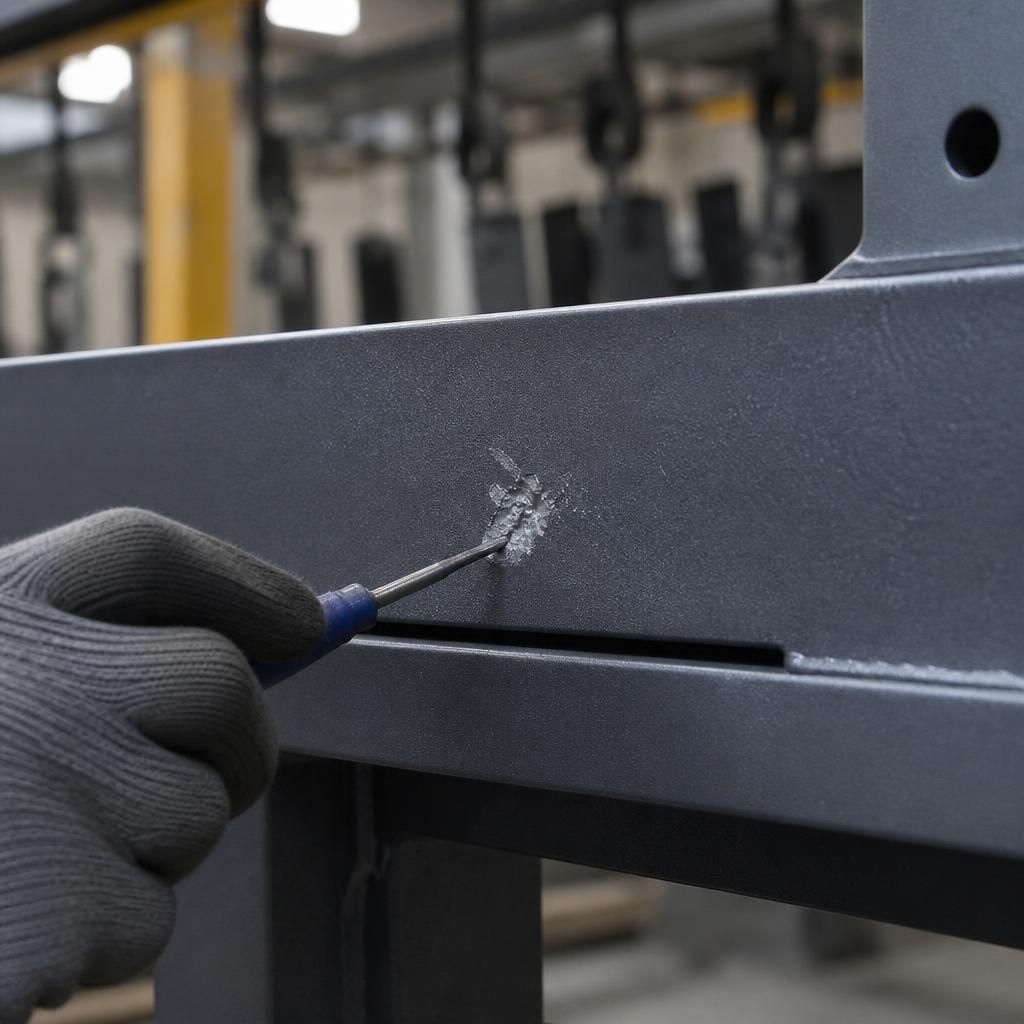
A further benefit of a suitable primer is improved protection against minor mechanical damage. By adding a compatible layer beneath the topcoat, the coating system has more resistance to light scuffing, handling marks and small impacts than a single layer may provide. The primer can help maintain separation between the metal and the surrounding environment if the outer surface is locally worn, although damage that penetrates the full coating system still requires assessment and repair.
This benefit depends on choosing a primer and topcoat designed to work together. Poor intercoat adhesion, excessive thickness or incomplete curing can reduce mechanical performance rather than improve it, so the full system should be assessed against the component’s handling and service requirements.
Discuss Whether Primer Is Right for Your Powder Coating Project
Discuss your component’s metal type, service environment and coating requirements with a powder coating specialist to establish whether a primer is appropriate. This assessment can help define a compatible preparation, primer, topcoat and curing specification for the project.