

How does the primer application process affect the overall longevity and performance of the powder coating?
Correct primer application creates a uniform, well-adhered foundation between the prepared metal and powder topcoat, helping prevent premature delamination and corrosion. Consistent coverage, suitable film thickness and proper curing therefore improve the coating system’s long-term durability, protective performance and finish quality.
Primer application influences the service life of a powder-coated part by determining how well the coating system tolerates moisture, handling, temperature changes and mechanical stress. The result depends not only on the primer selected, but also on how it is applied, how the coated part is handled before the topcoat, and whether the primer and powder finish are processed as a compatible system.
The main effects of a controlled application process are:
- More reliable protection at vulnerable areas: Edges, corners, welds, recesses and joints can be more difficult to coat consistently than broad, accessible faces. Application technique must account for these features so that they are not left with weak spots, excessive build-up or exposed substrate.
- Fewer coating defects: Incorrect spray settings, poor powder flow, contamination or unsuitable application conditions can cause pinholes, craters, runs, roughness or inclusions. These defects may provide routes for moisture and can also affect the appearance and performance of the topcoat.
- Better compatibility with the powder finish: The primer must be suitable for the topcoat chemistry and the intended processing route. A primer that is not compatible can lead to poor intercoat bonding, surface defects, blistering or loss of flexibility. The supplier’s technical guidance should be followed for recoat timing, curing and overcoating rather than treating every primer as interchangeable.
- Improved resistance to mechanical stress: Industrial components may be cut, assembled, transported or exposed to vibration after coating. A properly applied primer helps the complete coating system respond more consistently to impact, abrasion and movement. Poor application can create local weaknesses that become visible when the part is handled or put into service.
Surface condition immediately before priming is particularly important. After cleaning and pretreatment, the metal should not be allowed to collect dust, oil, moisture or handling marks. The interval between preparation and primer application should be controlled because contamination or flash corrosion can reduce the effectiveness of the coating system. Clean gloves, suitable racking and careful part handling help prevent the prepared surface from being compromised.
Application equipment also affects performance. Spray guns need to be set up for the powder and component geometry, with suitable voltage, air flow and powder delivery. Excessive electrical charge can contribute to back-ionisation or uneven deposition, while inadequate control may leave recessed areas insufficiently covered. The operator should use an application path that reaches faces, edges and difficult profiles without creating heavy deposits on corners. Faraday cage effects in recesses may require changes to gun distance, angle or application technique.
Primer coverage should be assessed across the whole component rather than judged only from its most visible face. Particular attention is needed around welds, drilled holes, folded sections, sharp transitions and areas where water or contaminants could collect. If the design creates inaccessible areas, the coating specification may need to address those limitations before production begins. Masking must also be secure and appropriate for the process so that it does not introduce gaps, contamination or unwanted residue.
Drying and curing conditions influence the primer’s subsequent behaviour. A primer that is insufficiently cured may remain vulnerable during handling or may interact adversely with the topcoat. Excessive curing, on the other hand, can affect the surface available for intercoat bonding when the specified system relies on a defined overcoat window. The correct oven conditions, part temperature and dwell time should therefore be established from the primer and topcoat specifications, taking account of the component’s mass and geometry rather than relying only on the oven air temperature.
Where a powder primer is used beneath a powder topcoat, the process may involve partial curing, full curing followed by overcoating, or another system-specific sequence. These routes are not automatically equivalent. The selected method should be validated for the materials, component design and required finish. Recoating outside the recommended interval, contaminating the primed surface, or sanding without suitable controls can reduce the consistency of the final result.
Inspection provides an important link between application and long-term performance. Checks may include visual examination, coating thickness readings where appropriate, assessment of curing, adhesion testing on representative parts and inspection for pinholes or missed areas. Test methods should reflect the coating specification and the service conditions. Inspection does not correct an unsuitable process, but it can identify variation before a batch is released and help distinguish application problems from defects originating in preparation, curing or the topcoat.
For manufacturers and fabricators, the practical lesson is that primer application should be specified as part of the complete powder coating process, not as an isolated operation. The component material, geometry, pretreatment, primer, topcoat, application equipment, handling method and curing sequence all influence one another. Consistent preparation, controlled application and documented inspection give the coating system a more predictable basis for long-term service and help reduce premature repairs or recoating caused by avoidable process variation.
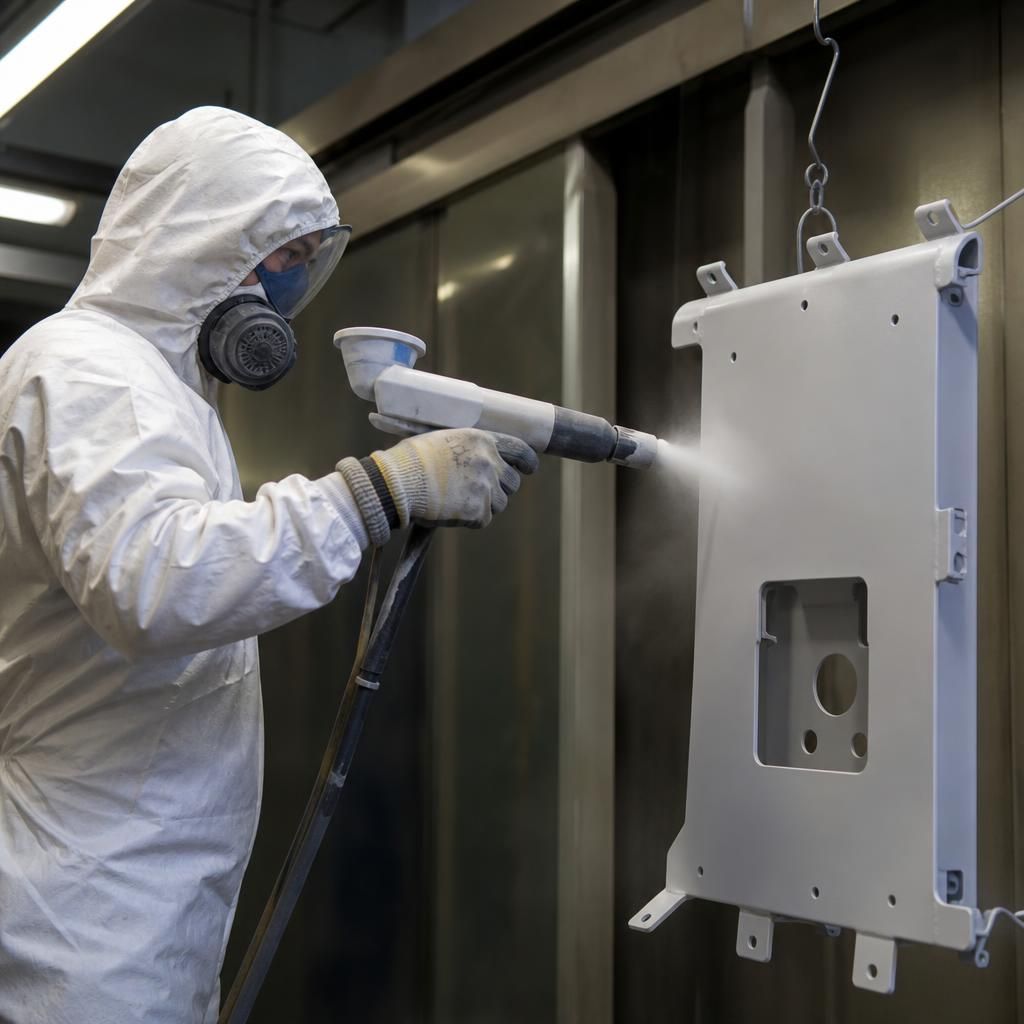
Primer application affects longevity by determining how well the coating layers accommodate movement between the metal, primer and powder topcoat during repeated heating and cooling. If the primer is uneven, excessively brittle or poorly bonded, thermal expansion and contraction can place stress at the interfaces and contribute to microcracking or delamination over time.
For components exposed to outdoor conditions, engine heat or other temperature cycling, the primer and topcoat should therefore be assessed as a complete system. The application process must produce a consistent layer with the flexibility and adhesion required by the substrate and service conditions. Where long-term thermal exposure is a concern, representative coated parts can be subjected to suitable environmental testing before the process is approved for production.