

Why is metal pretreatment essential for achieving a high-quality powder coating finish?
Metal pretreatment is essential because it removes contaminants and conditions the surface before powder is applied, helping the coating bond consistently. It also supports the finished coating’s resistance to corrosion, peeling and premature failure.
Metal pretreatment is essential because it creates a controlled, suitable surface for powder coating rather than leaving the coating to compensate for variations in the raw metal. The pretreatment stage influences how consistently the finish forms, how accurately it reflects the required specification and how well the coated component performs in service.
Powder coating cannot correct every defect in the substrate. Scratches, sharp edges, weld spatter, burrs, pits, mill scale and embedded workshop debris may remain visible after coating or create weak points in the finished film. Mechanical preparation, such as deburring, abrasive cleaning or smoothing where appropriate, helps establish a more uniform starting condition. This is particularly important on fabricated parts, where cutting, welding and handling can leave different surface conditions on the same component.
Pretreatment also creates consistency between batches. Bare metal may vary in texture, oxide condition and reactivity, even when components have been manufactured to the same drawing. A controlled sequence of cleaning, rinsing and substrate-specific treatment reduces these differences before powder is applied. Without that control, identical parts can develop variations in appearance, edge coverage or film performance, making the finished batch harder to inspect and approve.
The chemistry must be appropriate for the metal involved. Mild steel, galvanised steel, aluminium and other alloys do not react in the same way to cleaning or conversion treatments. A process suitable for one substrate may be ineffective or unnecessarily aggressive on another. For example, galvanised surfaces can require treatment that accommodates the zinc layer, while aluminium needs preparation that addresses its naturally forming oxide without damaging the underlying metal. Correct selection therefore begins with identifying the substrate, its existing finish and the conditions it will face.
Surface preparation affects the coating interface at a microscopic level. Powder melts and flows during curing, but it does not automatically create a reliable interface with every surface. Pretreatment can alter the surface condition so that the cured film forms a more stable connection with the metal. This is one reason a visually clean component is not necessarily adequately prepared: appearance alone does not confirm that the surface chemistry and physical condition are suitable.
Thorough preparation is also important around features that are difficult to coat evenly, including:
- welded joints, corners and recesses;
- holes, folded edges and enclosed sections;
- cut ends and areas exposed by fabrication;
- interfaces between different metals or existing finishes; and
- large components that may experience uneven rinsing or drying.
These areas can retain process residues or behave differently during coating and curing. If they are not considered during pretreatment, defects may appear locally even when the broader surface looks acceptable.
Moisture and retained chemicals are further reasons for controlling the process carefully. Incomplete rinsing or drying can leave residues beneath the powder, while trapped moisture in joints and cavities can lead to blistering, staining or other coating defects during curing or later use. Components should therefore be designed, presented and processed in a way that allows solutions to drain and surfaces to dry fully. Drainage holes, accessible cavities and suitable racking can be relevant for fabricated assemblies.
Pretreatment is also part of quality control, not simply a preliminary washing operation. A robust process includes checks on the incoming metal, preparation method, chemical concentration or condition where applicable, rinsing, drying and the resulting surface. Records and inspection criteria help identify whether a problem originated in fabrication, preparation, powder application or curing. This makes corrective action more precise than simply recoating a part after a defect appears.
The consequences of inadequate preparation can include:
- inconsistent colour or gloss across a batch;
- pinholes, blistering or surface bubbling caused by gases or residues;
- visible marks where fabrication defects remain beneath the film;
- localised breakdown around edges, joints or damaged areas; and
- rework, rejected components or difficulty meeting the agreed finish specification.
For B2B projects, the pretreatment requirement should be agreed alongside the coating type, substrate, part geometry, intended environment and inspection standard. Providing accurate information about previous coatings, fabrication processes, oils, galvanising and service conditions allows the preparation route to be selected before production begins. Where components are collected for specialist powder coating, this information is also useful when planning handling, racking and the treatment sequence.
In practical terms, pretreatment is what converts a variable manufactured metal surface into a controlled coating surface. It supports a repeatable finish, helps prevent defects that powder application alone cannot resolve and allows the coating system to be matched to the component’s construction and intended use. For this reason, it should be treated as a defined part of the specification rather than an optional step before powder coating.
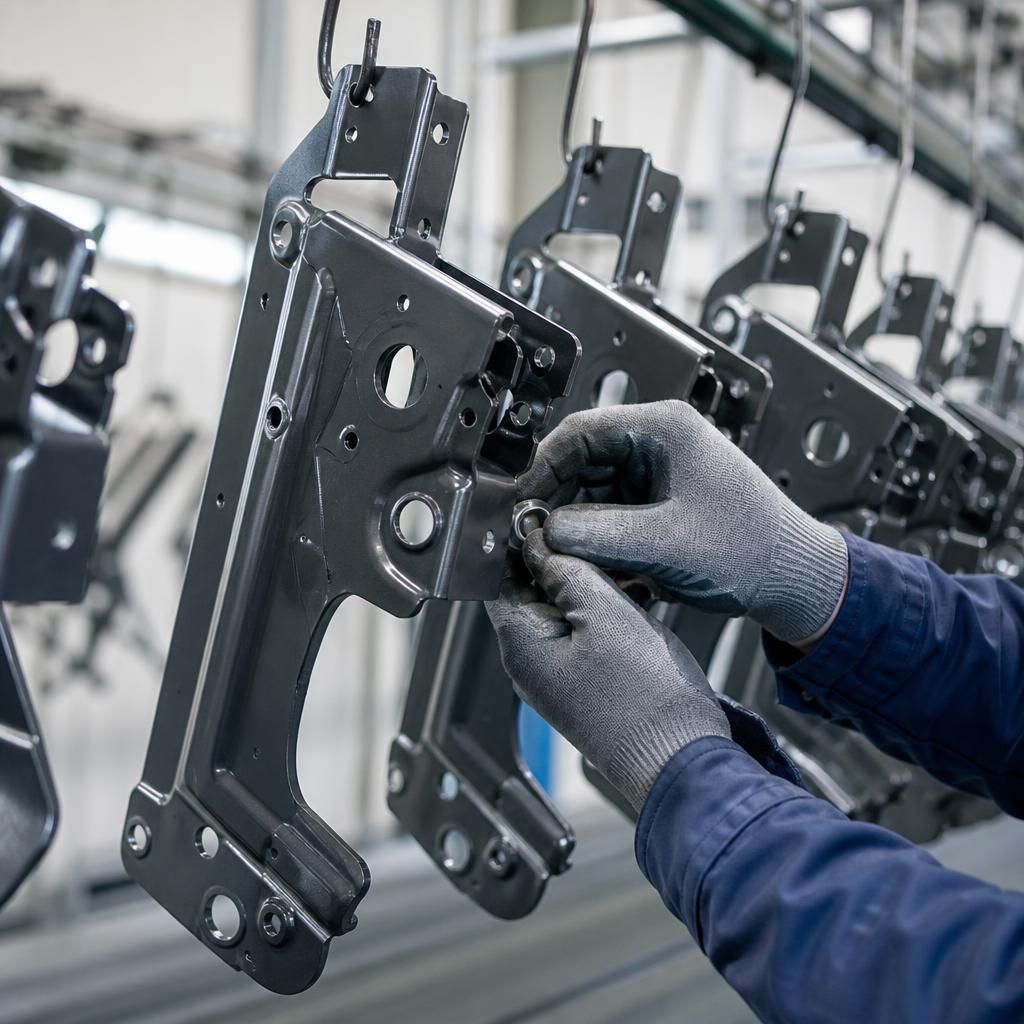
Metal pretreatment is essential because it must prepare the areas receiving powder without compromising the component’s functional features. A high-quality coating is not only judged by its appearance; the finished part must also remain suitable for assembly and use.
Threaded holes, machined faces, bearing seats and electrical bonding points may need to remain free from treatment residues or coating. These areas should be identified before processing so they can be protected, masked or inspected separately. Otherwise, a visually sound finish could interfere with fit, movement or electrical contact. This makes the definition of coating boundaries and keep-out areas an important part of pretreatment planning for engineered metal components.