

What role do specialised chemical treatments play in metal pretreatment before powder coating?
Specialised chemical treatments prepare metal surfaces for powder coating by removing remaining contaminants, conditioning the surface and creating a suitable base for adhesion. They can also improve corrosion resistance by forming a protective conversion layer, helping the finished coating remain durable in demanding applications.
Specialised chemical treatments are controlled stages in metal pretreatment that alter the surface chemistry of a component before powder is applied. Their role is to make the substrate chemically consistent, reduce the risk of under-film corrosion and support reliable coating performance, particularly where simple washing or degreasing cannot provide sufficient preparation.
The treatment selected depends on the substrate, the contaminants present, the intended service environment and the powder coating system. Steel, galvanised steel, aluminium and mixed-metal assemblies do not respond identically to the same chemistry. Applying an unsuitable treatment can leave residues, attack the substrate or produce a surface that is less receptive to coating.
Common specialised treatments include:
- Alkaline cleaning: Removes oils, greases and manufacturing residues that may interfere with subsequent stages. It is often used as part of a wider cleaning sequence rather than as the complete pretreatment.
- Acid pickling or etching: Dissolves oxidation, mill scale or other inorganic deposits and can help create a more uniform surface. The concentration and contact time must be controlled to avoid excessive attack on the metal.
- Phosphate treatments: Create a microcrystalline layer on suitable substrates. This layer provides a more stable interface for the coating and can help limit the spread of corrosion if the coated surface is later damaged.
- Chromium-free conversion treatments: Form a thin chemically bonded layer, commonly for aluminium or galvanised substrates, without relying on hexavalent chromium chemistry. They require correct application and rinsing to perform consistently.
- Silane and zirconium-based treatments: Produce very thin conversion layers and may be selected where lower sludge generation, reduced chemical loading or treatment of more than one metal type is important.
- Sealing stages: A final seal can close or stabilise the conversion layer, helping prevent residues or untreated areas from undermining the subsequent coating process.
The main benefit of these treatments is not simply that they make the metal look clean. They modify the interface between metal and powder coating at a microscopic level. A chemically suitable surface gives the coating a more consistent foundation and can reduce weak points caused by oxide films, embedded contamination or uneven reactivity across the component.
Chemical pretreatment also supports corrosion control in several ways. It can reduce the activity of the exposed metal, provide a barrier between the substrate and moisture, and limit corrosion migration beneath the coating. This is especially relevant for fabricated parts with joints, edges, recesses or areas that are difficult to prepare uniformly by mechanical methods alone. It does not, however, make poor fabrication, trapped contamination or damaged powder coating irrelevant; the complete system still depends on sound cleaning, coating coverage and curing.
Process control is critical. A treatment is effective only when its chemistry and application are kept within the correct operating conditions. Important controls can include:
- the concentration and temperature of each bath;
- contact time or line speed;
- spray coverage and access to recesses;
- rinse-water quality and the removal of carry-over between stages;
- the condition of the treatment bath and build-up of dissolved contaminants;
- complete drying before powder application.
Insufficient treatment may leave oils, oxides or reactive residues behind. Excessive treatment can etch the surface unnecessarily, stain the substrate or leave salts that interfere with coating performance. In either case, visual inspection alone may not reveal the problem, so process records and suitable checks are important for repeatable batch work.
Specialist chemical treatment is therefore best viewed as part of a coordinated pretreatment system rather than a standalone solution. The substrate should be identified first, previous coatings or corrosion assessed, and the required finish and service conditions considered before selecting the chemistry. A suitable sequence, followed by thorough rinsing, drying and prompt powder application, gives the coating process a more controlled and predictable surface on which to operate.
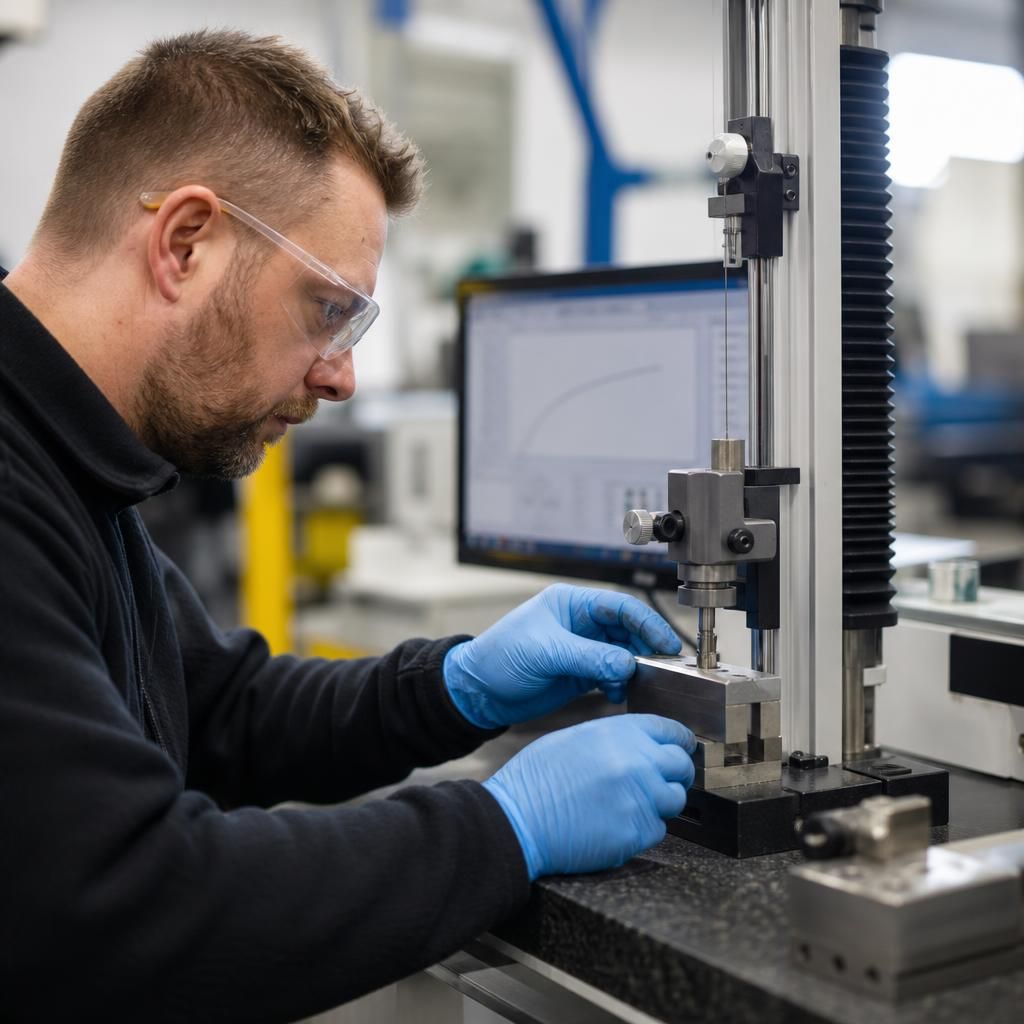
The effectiveness of a chemical pretreatment is assessed at the metal–coating interface, not solely by the appearance of the finished part. A visually even powder coating may still have weak adhesion if the conversion layer is incomplete or the surface has been contaminated between treatment and application.
For repeat production, checks such as adhesion testing on representative parts or test panels can help confirm that the selected chemistry is producing a sound bond. These checks are particularly useful when substrates, component designs or coating specifications change, because they provide evidence that the pretreatment remains suitable rather than relying on appearance alone.
Discuss Chemical Treatments for Your Powder Coating Project
Discuss your component material, operating environment and coating specification with our team to identify a suitable chemical pretreatment approach. We can help assess the preparation requirements for your powder coating project, including collection and delivery options across the Midlands.