

What are the benefits of using chemical treatments in metal pretreatment before powder coating?
Chemical treatments in metal pretreatment remove contaminants and alter the surface so powder coating bonds more reliably. They can also improve corrosion resistance, helping the finished coating protect the metal and maintain its performance for longer.
Chemical treatments provide a controlled conversion layer between the prepared metal and the powder coating. Their main benefit is that they change the surface chemistry in a consistent, measurable way, helping the coating system perform more reliably than cleaning alone. The correct treatment depends on the substrate, the required durability and the conditions in which the finished component will be used.
They create a more uniform coating foundation. Bare metal can vary in surface condition across a single component, particularly where it has been formed, welded, stored or handled. A suitable chemical treatment reacts with the surface to produce a more consistent condition for powder application. This is particularly useful for batch work, where parts need to achieve a similar finish across repeated production runs.
They support different metal substrates. Steel, galvanised steel and aluminium do not respond to pretreatment chemicals in the same way. A process selected for one substrate may be unsuitable for another, so chemical treatment allows the preparation stage to be adapted to the metal rather than relying on a single method. For example, iron or zinc phosphate systems may be used on suitable steel substrates, while aluminium may require a different conversion treatment. Mixed-metal assemblies may need especially careful process selection.
They help protect vulnerable areas of a component. Welds, edges, recesses, joints and formed sections can be more susceptible to coating breakdown than broad, accessible faces. Proper chemical conversion can improve the condition of these areas before powder is applied, although component design, drainage, rinsing and curing remain important. Treatment cannot compensate for trapped moisture, inaccessible contamination or unsuitable joint construction.
They improve process control and inspection. Chemical pretreatment can be managed through defined stages such as cleaning, rinsing, treatment, further rinsing and drying. Operators can monitor factors including bath condition, concentration, temperature, contact time and rinse quality. This makes the preparation stage easier to control and investigate when a finish does not meet specification. It also helps identify whether a problem originated in surface preparation, powder application or curing.
They can reduce variation caused by handling and storage. Prepared components may be exposed to humidity, fingerprints, workshop dust or short periods of storage before coating. A suitable conversion process provides a more stable treated surface than freshly cleaned metal alone, provided the parts are rinsed, dried and handled correctly afterwards. Clean gloves, suitable racking and controlled storage are still needed because chemical treatment is not a substitute for good handling practice.
The main chemical treatment options have different purposes:
- Iron phosphate is commonly associated with steel preparation and can provide a suitable conversion layer for general powder coating applications.
- Zinc phosphate produces a more substantial crystalline conversion layer and may be selected where a higher level of pretreatment performance is required, subject to the coating specification and process design.
- Chromium-free conversion treatments, often based on zirconium or titanium chemistry, can be used where the process requires a thin conversion layer and tighter control of chemical composition.
- Chromate-based treatments may be encountered in specific industrial applications, but their use is subject to applicable health, safety and environmental controls.
These treatments are not interchangeable. The choice should consider the metal type, component geometry, expected exposure, powder coating system, required appearance and any customer or industry specification. A treatment that is appropriate for mild steel may not provide the same result on aluminium or galvanised material.
Chemical treatment also makes surface preparation more repeatable, but only when the complete process is controlled. Poor rinsing can leave residues, inadequate drying can introduce moisture into the coating process, and an exhausted treatment bath can produce an inconsistent conversion layer. Excessive treatment or incorrect chemical conditions can also affect the appearance of the finished powder coating. For this reason, pretreatment should be assessed as a complete process rather than as a single chemical stage.
For metal components being prepared for industrial powder coating, the practical benefit is greater consistency between the substrate, the pretreatment and the coating system. The specification should identify the metal, the intended service environment and the required performance, allowing the pretreatment route to be selected and controlled accordingly. Collection and delivery arrangements may also be relevant where components are prepared as part of a wider coating project across the Midlands and surrounding areas.
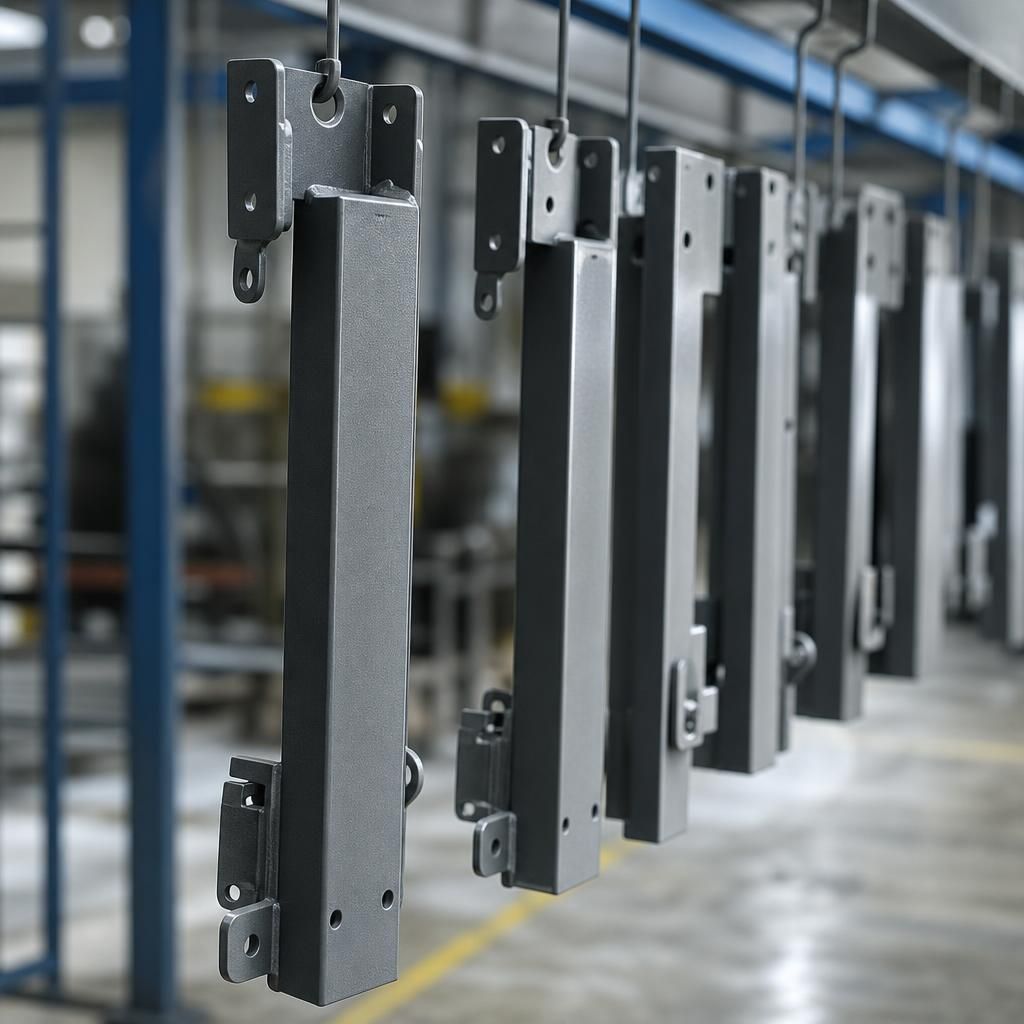
A practical benefit of chemical pretreatment is that it can improve coating performance without materially changing the dimensions of the metal component. Conversion layers are thin, so they are suitable for parts with close-fitting interfaces, drilled holes, threaded features or other areas where an additional build-up could affect assembly.
This is particularly relevant to fabricated and machined components that must retain their designed tolerances after finishing. The treatment still needs to be compatible with the substrate and powder coating system, and the specified cleaning, rinsing and drying stages must be completed correctly.
Discuss Chemical Pretreatment for Your Powder Coating Project
Discuss your metal substrate, service environment and required finish with a powder coating specialist to identify a suitable chemical pretreatment route. This helps ensure the preparation process is compatible with the coating specification and component requirements.