

How does proper metal pretreatment impact the powder coating process?
Proper metal pretreatment cleans and chemically prepares the surface before powder is applied, removing contaminants that can interfere with adhesion. It helps the coating bond consistently, improving resistance to corrosion, peeling and finish defects while supporting a more durable result.
Proper metal pretreatment affects the powder coating process by controlling the condition of the substrate before application. It removes process residues, stabilises the surface and creates consistent conditions for spraying and curing, so the final coating is less affected by variations in the original metal, fabrication method or handling.
It controls surface contamination. Oils, cutting fluids, polishing compounds, mill scale, dust, weld residues and handling marks can behave differently in the coating line. Some prevent the pretreatment chemicals from reaching the metal; others become trapped beneath the powder film. Thorough cleaning therefore needs to cover recessed areas, joints, holes, welds and the undersides of components, not just the most visible faces.
It manages the condition of the substrate. Steel, galvanised steel, aluminium and other metals do not respond identically to cleaning or conversion treatments. A process that is suitable for one substrate can over-attack another, leave an unsuitable residue or fail to provide the required surface condition. Pretreatment must therefore be selected according to the alloy, existing finish, level of contamination and intended service environment.
It improves process consistency between batches. Two visually similar components may carry different amounts of oil, oxidation or fabrication residue. If these differences are not addressed, the powder can behave unevenly during application and curing. A controlled pretreatment sequence reduces this variation, helping coaters achieve more uniform coverage, colour appearance and texture across a production run.
Rinsing and drying are just as important as cleaning. Cleaning chemicals and conversion products must be removed or controlled as specified by the process. Residual chemicals, salts or rinse water can lead to staining, surface deposits, blistering or other defects when the component enters the oven. Parts should be drained effectively and dried thoroughly, with particular attention to folded sections, hollow areas, drilled holes and overlaps where moisture can remain concealed.
Pretreatment also influences powder application. A clean, appropriately prepared surface gives the powder a more predictable base during electrostatic spraying. This helps the operator identify genuine application issues, such as poor coverage in corners or excessive build, rather than trying to compensate for contamination or inconsistent surface condition. Good preparation is especially important on fabricated assemblies with welds, sharp edges and mixed metal sections.
It supports the curing stage rather than replacing it. Pretreatment cannot correct an incorrect powder specification, insufficient film coverage or an oven that does not deliver the required metal temperature. Conversely, a correctly cured powder film can still show premature problems if the substrate was poorly prepared. Pretreatment, application and curing must therefore be treated as linked stages, with each one controlled independently.
Useful checks before coating include:
- confirming the substrate and any existing treatment or plating;
- checking that oils, grease, dirt, scale and weld residues have been removed;
- examining joints, recesses and drainage points for trapped chemicals or moisture;
- verifying that the prepared surface is free from visible staining, powdery deposits and flash rust where relevant;
- ensuring components are handled in a way that does not reintroduce grease or dirt after treatment; and
- recording the pretreatment route when repeat batches or mixed substrates are involved.
The practical result is a more predictable coating operation. Proper pretreatment gives the powder coater a stable starting point, reduces the likelihood of defects being built into the finish and makes it easier to trace any problem back to the correct stage of production. For industrial metalwork, this preparation is therefore a key part of process control, not simply a preliminary cleaning step.
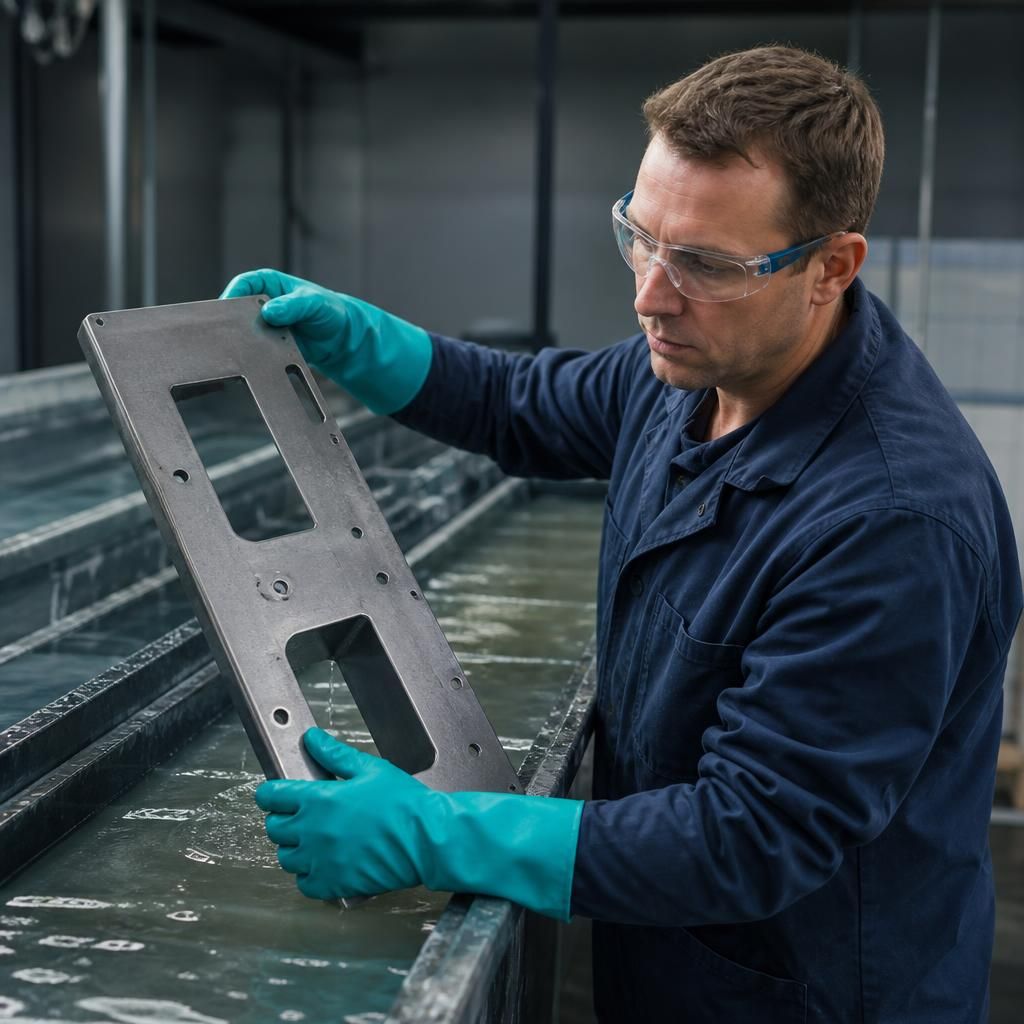
Proper metal pretreatment changes the chemistry of the interface between the substrate and the powder film, rather than simply making the metal look clean. After suitable cleaning, a conversion treatment can create a controlled surface layer that provides a more stable bonding base for the cured coating. This helps reduce the risk of poor interfacial contact, where the powder appears sound initially but separates when the component is exposed to handling, moisture or service conditions.
This is why visual inspection alone cannot confirm that pretreatment has been effective. A bright, grease-free surface may still have an unsuitable chemical condition, while an incorrectly selected treatment can leave residues or alter the substrate. The pretreatment route should be matched to the metal and controlled so that the coating receives the intended surface chemistry before powder application.