

What steps are involved in the curing process for powder-coated steel?
The powder-coated steel curing process involves placing the coated parts in an oven, heating them until the steel and powder reach the specified curing condition, then allowing the finish to melt, flow and chemically cross-link. After controlled cooling, the coating is inspected for complete coverage, adhesion and visible defects.
The powder-coated steel curing process is a controlled thermal treatment that converts the deposited powder into a continuous, mechanically stable coating. The main stages are checking the coating specification, preparing and loading the parts, establishing the correct steel temperature, maintaining that temperature for the required dwell period, and verifying that the finished film has been properly cured before release.
- Confirm the curing specification. Before the parts enter the oven, the coating system is checked against the powder manufacturer’s technical data. This identifies the required metal temperature and dwell time, which can vary according to the powder chemistry, colour, film thickness and intended performance. The specified condition relates to the temperature of the steel itself, not simply the temperature displayed by the oven controller.
- Check the parts and loading arrangement. Components should be free from moisture, loose contamination and handling damage before curing. They are positioned so that heated air can circulate around coated surfaces and so that parts do not touch one another. The loading method also needs to prevent marks, distortion or contact between areas where the coating is still vulnerable.
- Bring the steel to the required temperature. The oven heats the complete component, and thicker or heavier sections generally take longer to reach the target temperature than thin sections. For this reason, the elapsed time from closing the oven is not necessarily the effective cure time. Temperature monitoring equipment can be attached to representative areas, particularly where components have different wall thicknesses, complex shapes or substantial welds.
- Maintain the required dwell period. Once the relevant steel areas have reached the specified temperature, they must remain at that condition for the required period. This allows the coating reaction to proceed consistently across the component. If the steel has not reached the required condition, the surface may appear finished while remaining short of its intended hardness, adhesion or chemical resistance. Excessive temperature or dwell can also damage the coating system, alter its appearance or affect the steel component.
- Account for part geometry and batch variation. A single oven setting may not affect every item in a batch in the same way. Hollow sections, folded components, dense fabrications and assemblies with different metal thicknesses can heat at different rates. The curing plan should therefore be based on the slowest critical area rather than on the quickest part to reach temperature. For repeat production, recording successful oven profiles helps maintain consistency between batches.
- Allow controlled handling after curing. Once the required thermal cycle is complete, parts need to be handled in a way that avoids scuffing, indentation or contamination. Cooling behaviour can differ between lightweight and heavy steelwork. Components should be supported at suitable contact points, with care taken around edges, hooks and areas that may still retain heat. Packaging or stacking too early can mark a coating that has not yet reached its handling condition.
- Verify the result. Final checks may include visual examination for incomplete coverage, cratering, pinholes, runs, gloss variation and contamination. Where the specification requires it, operators can also assess dry film thickness, adhesion and cure response using suitable inspection methods. These checks help distinguish a coating that merely looks acceptable from one that has developed the required physical performance.
Under-curing and over-curing require different corrective decisions. Under-cured powder may show inadequate adhesion, reduced hardness or poor resistance to chemicals and moisture. Over-curing may cause yellowing, loss of gloss or changes to the coating’s appearance and performance. Reprocessing is not automatically suitable; the decision depends on the powder system, the degree of curing and the condition of the steel and film.
Accurate curing depends on controlling the whole thermal profile rather than relying on a nominal oven temperature alone. Specification review, representative temperature measurement, appropriate loading and documented inspection are particularly important for steel fabrications supplied in mixed sizes or batch quantities.
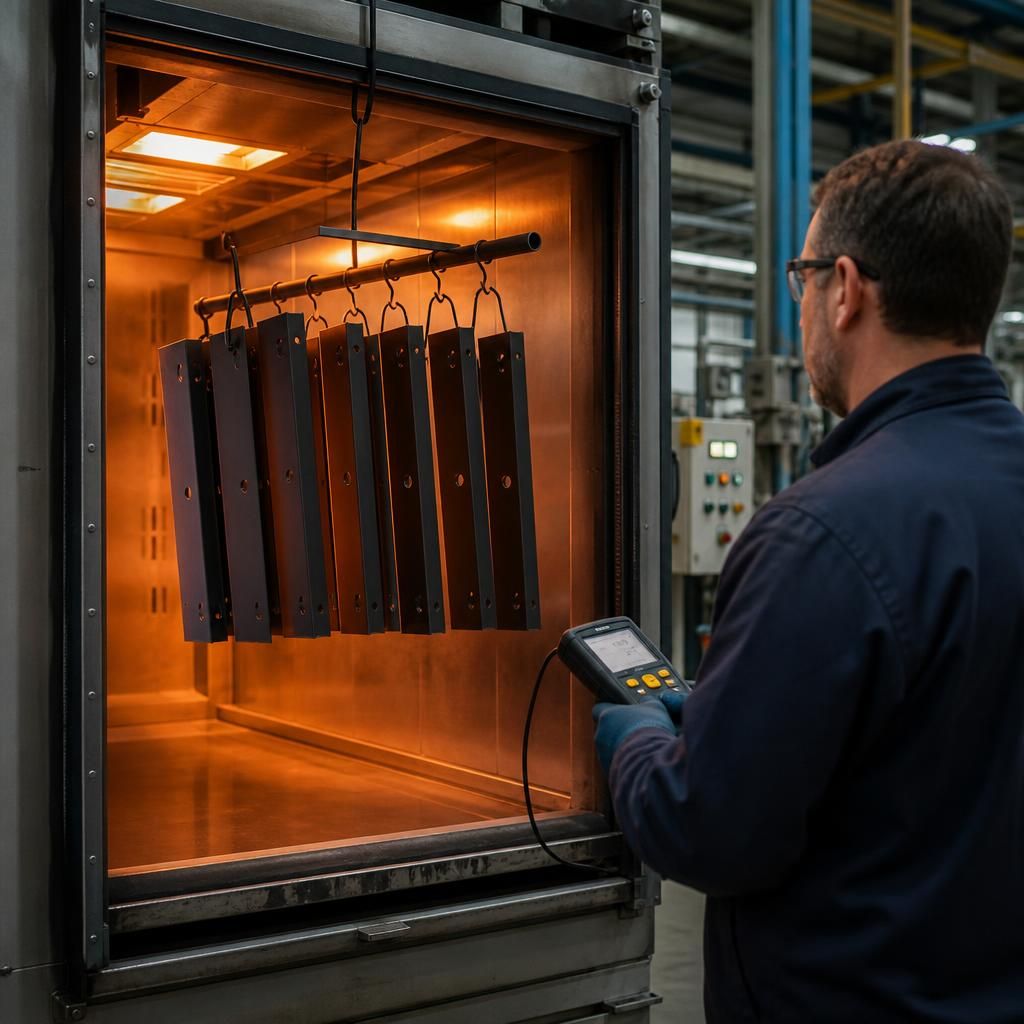
Powder coating curing is a chemical reaction rather than simple drying. As the coating reaches its specified condition, the resin and curing agents form a cross-linked structure that gives the finished film its hardness and resistance. Once this reaction has progressed, the powder cannot simply be softened back into its original form, so an incorrect thermal cycle may affect the coating permanently.
This is why the curing schedule must be matched to the particular powder system and steel component. A film that appears smooth may still have an incomplete cross-linking reaction, while excessive heat can change its colour, gloss or other properties. The visual finish should therefore be assessed alongside the required performance characteristics when deciding whether the curing process has been successful.
Discuss Your Powder-Coated Steel Curing Requirements
If you are planning a steel powder coating project, discuss the component design, powder specification and required performance with the Powder-coatings.co.uk team. Providing drawings, batch details and any finish requirements will help establish an appropriate curing approach for your parts.