

What are the key considerations when determining the optimal powder coating thickness for steel?
The optimal powder coating thickness for steel depends on the required corrosion resistance, service environment, component geometry, substrate condition and specified finish. The coating must be thick enough to provide the intended protection and appearance, but controlled carefully to avoid defects, uneven coverage and problems around edges or recessed areas.
Determining the optimal powder coating thickness for steel is a specification exercise rather than a decision to apply the thickest possible film. The correct thickness is the one that provides the required protection and appearance while remaining compatible with the powder system, steel substrate, component design, curing conditions and inspection method.
Start with the service environment. Steel used indoors in a controlled, dry setting generally has different coating requirements from steel exposed to rain, condensation, road contaminants, industrial pollutants or coastal conditions. The risk of corrosion, the frequency of wetting and drying, exposure to chemicals, abrasion and ultraviolet light should all be considered. A coating intended for sheltered internal equipment may not be suitable for external structural or fabricated parts, even if both are made from the same grade of steel.
The specification should therefore identify the expected environment and the required durability classification where applicable. It should also state whether the coating is decorative, protective or required to perform both functions. A purely visual finish may place greater emphasis on uniformity, colour and texture, whereas a protective system may place greater emphasis on continuity, adhesion, edge coverage and resistance to mechanical or chemical attack.
Consider the steel and any pre-treatment. The condition and composition of the substrate influence how consistently a film can be applied and how well it will remain bonded. Mill scale, rust, weld residue, oil, grease and other contaminants must be removed through an appropriate preparation process. Surface profiling can improve mechanical adhesion, but an excessively rough profile can affect the apparent film thickness and leave high points with less coverage than recessed areas.
Galvanised steel, previously coated steel and newly fabricated mild steel can each require different preparation and coating controls. Welds, heat-affected areas, sharp edges and areas containing fabrication residue may behave differently from flat parent material. Thickness should not be selected in isolation from the pre-treatment process, because a sound coating system depends on the condition of the surface beneath it.
Match the thickness to the powder system. Powder chemistry, intended use and finish type affect the practical film build. Smooth, textured, metallic and special-effect finishes can respond differently to application and may reveal variations in thickness in different ways. Some systems are designed to provide a particular balance of flexibility, hardness, chemical resistance and outdoor durability; increasing the film beyond the supplier’s stated working range does not automatically improve all of those properties.
The powder manufacturer’s technical data and the project specification should be used together. They normally define an intended dry film thickness range, curing requirements and test conditions. If a specified thickness falls outside the powder system’s recommended range, the issue should be resolved before production rather than corrected by applying additional powder without technical justification.
Account for component geometry. A flat panel is relatively straightforward to coat, but a fabricated assembly may include narrow faces, internal corners, holes, channels, returns and recessed sections. Powder is attracted to the component during application, and the electrical field can cause it to accumulate more readily on some areas than others. Faraday cage effects can make deep recesses and internal corners difficult to coat, while external edges may receive a different film build from adjacent faces.
Sharp edges deserve particular attention. They can reduce the effective protective coverage at the point most vulnerable to impact and corrosion. Suitable edge preparation, controlled application and inspection of critical locations may be more important than simply increasing the overall nominal thickness. Where a part includes concealed surfaces or difficult geometry, the requirement should define which areas are critical and how they are to be assessed.
Separate nominal thickness from minimum coverage. A drawing or coating specification may state a target or nominal dry film thickness, but the coating also needs to meet an agreed minimum at relevant points. Averages can conceal thin areas around edges, corners or recesses. Conversely, an isolated high reading may indicate excessive build without representing the condition of the whole component.
Inspection plans should specify the measurement locations, the number of readings, the acceptable range and how unusual readings are treated. This is particularly important for batch work, where changes in part orientation, gun settings, grounding, powder flow or operator technique can alter the result from one component to the next.
Allow for appearance requirements. Thickness affects more than corrosion protection. Excessive film build can contribute to runs, sagging, poor edge definition, orange peel, pinholing, trapped gases and changes in texture. Insufficient or uneven build can produce visible substrate variation, weak colour coverage and inconsistent gloss. Metallic and textured finishes may make differences in application more noticeable, so the required visual standard should be agreed before coating begins.
Colour, gloss, texture and viewing distance should be considered alongside the protective requirement. A technically acceptable thickness may still be unsuitable if it produces an inconsistent appearance on a visible assembly. Where appearance is critical, representative sample panels or approved reference parts can help establish what level of variation is acceptable.
Take curing into account. Powder coating thickness and curing cannot be assessed independently. The coating must receive the correct combination of part temperature and time for the specified powder system. A thicker film may affect heat transfer and the way the coating flows, while a component with substantial mass may take longer to reach the required temperature than a thin section. Under-cured powder may have inadequate performance even when its measured thickness appears correct.
Production controls should therefore confirm the actual part temperature and curing cycle, not merely the oven air temperature. The finished film can then be assessed using appropriate checks for thickness, adhesion, appearance and other properties relevant to the service environment.
Use a controlled application and inspection process. Consistent grounding, clean equipment, stable powder delivery, correct gun settings and suitable component hanging all help control film build. Operators should pay particular attention to edges, recesses, welds and areas that are difficult to reach. Dry film thickness gauges should be suitable for the steel substrate, correctly calibrated and used in accordance with the relevant inspection procedure.
When the required thickness is uncertain, the practical approach is to review the service environment, substrate preparation, powder data, component geometry and acceptance criteria with the coating specialist before production. For manufacturers and fabricators, providing drawings, part orientation, material details, finish requirements and any critical areas allows the coating process to be designed around the actual component rather than an assumed flat surface.
In short, the optimal thickness is established by balancing protection, durability, appearance, geometry, curing and measurable quality requirements. It should be specified as part of the complete coating system, with particular attention to minimum coverage in vulnerable areas and consistent verification across the finished steel components.
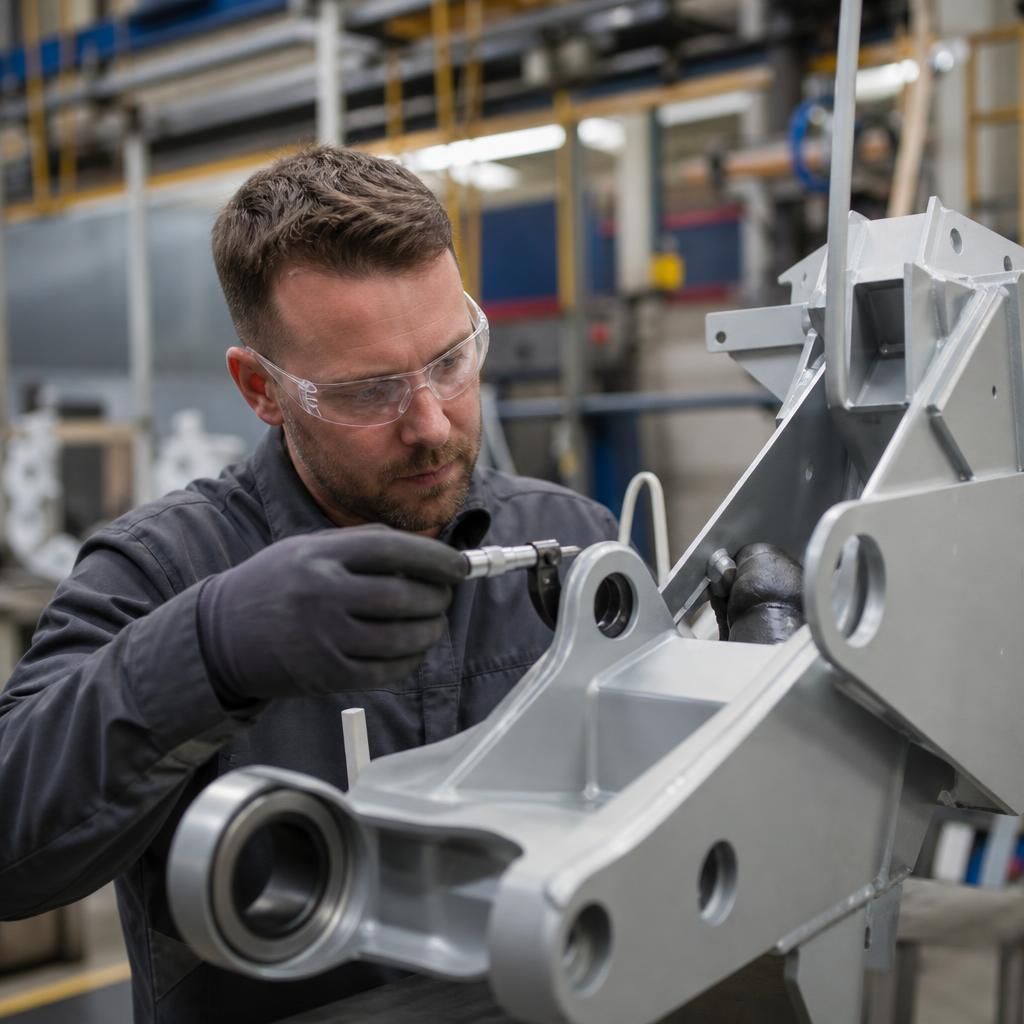
Component fit and function are important considerations when setting powder coating thickness on steel. The finished film adds material to coated surfaces, so a thickness that is suitable for corrosion protection may still affect the assembly of close-fitting parts, threaded connections, hinges, shafts, bearing seats or sliding interfaces.
Drawings should identify areas where coating build could interfere with tolerances, electrical contact or subsequent welding. These locations may require masking, plugs or a defined uncoated zone, while exposed surfaces can be coated to the specified protective thickness. Checking clearances and mating parts before production prevents the coating requirement from creating assembly problems.
Discuss the Right Powder Coating Thickness for Your Steel Components
Share your steel component drawings, material details and finish requirements with our powder coating specialists to help establish a suitable thickness specification. We can discuss critical areas, inspection requirements and the coating system before production begins.