

How does surface profiling influence the adhesion and performance of powder coating on steel?
Surface profiling creates a controlled texture on steel, giving powder coating a larger, more secure area to bond to than a smooth surface. The correct profile improves adhesion and helps the cured coating resist chipping, peeling, corrosion and environmental wear; an uneven or excessive profile can cause coverage and finish defects.
Surface profiling influences powder-coated steel by determining how the coating contacts and conforms to the substrate. A suitable profile supports consistent powder coverage, controlled film formation and reliable performance in service; the profile must therefore be selected and checked as part of the preparation process rather than treated as a by-product of blasting.
Profiling produces a pattern of peaks and valleys in the steel. This geometry affects the available surface area and the way the powder settles before curing. It also influences how the coating flows during the oven cycle. If the profile is compatible with the specified coating system and film thickness, the cured film can form a more uniform layer across the prepared surface. If it is poorly controlled, the coating may bridge deeper recesses or become relatively thin over prominent peaks.
The required profile depends on several linked factors:
- Coating thickness: a thin coating has less material available to cover pronounced surface features, while a thicker system may accommodate a more substantial profile.
- Steel condition: mill scale, corrosion, weld spatter and previous coatings can require different preparation approaches and may leave an inconsistent underlying texture.
- Service environment: components exposed to moisture, chemicals, abrasion or outdoor conditions require preparation that supports the complete protective system, not merely an attractive finish.
- Component geometry: corners, recesses, holes and welded areas can receive different blast exposure, making local profile variation more likely.
- Powder system and specification: the coating manufacturer’s technical requirements and the project’s corrosion-protection specification should determine the acceptable preparation range.
For steel components, abrasive blasting is commonly used when a defined profile is needed. The abrasive type, particle shape, size, operating pressure, nozzle distance and angle all affect the resulting surface. Reusing abrasive, uneven movement across the component or inadequate access to recessed areas can produce inconsistent preparation. The steel should be free from loose contamination and blasting residue before powder application, because embedded dust or oil can interfere with the coating process even where the profile itself is suitable.
Profile depth is not the only consideration. The shape and distribution of the profile matter as well. Sharp, closely spaced peaks can affect the amount of powder needed to form an even protective layer, while a rounded and consistently distributed texture is generally easier to coat predictably. Welded zones may need particular attention because weld irregularities, heat-affected areas and spatter can create local differences in both surface condition and profile.
Profile should be verified rather than judged by appearance alone. Depending on the specification, checks may use surface-profile comparators, replica tape or a suitable stylus instrument. Measurements should be taken at representative locations, including areas that are difficult to blast uniformly. The results can then be compared with the coating system’s preparation requirements and recorded alongside checks for cleanliness, residual dust and visible defects.
Correct profiling also supports corrosion protection at joints and damaged areas. A consistent prepared surface gives the coating a sound basis around welds, edges and fabricated details, reducing the likelihood that local preparation weaknesses will limit the performance of the finished component. Profiling cannot compensate for poor design, unsealed crevices, inadequate curing or contamination, so it must be considered alongside degreasing, rinsing, drying, powder application and curing.
In practice, the most reliable approach is to establish the required profile before production, confirm that the chosen blasting method can achieve it across the full component, and recheck the surface when steel condition or preparation equipment changes. Powder coating specialists handling batch or fabricated steel work can use this assessment to select an appropriate preparation route and identify areas that need additional treatment before coating.
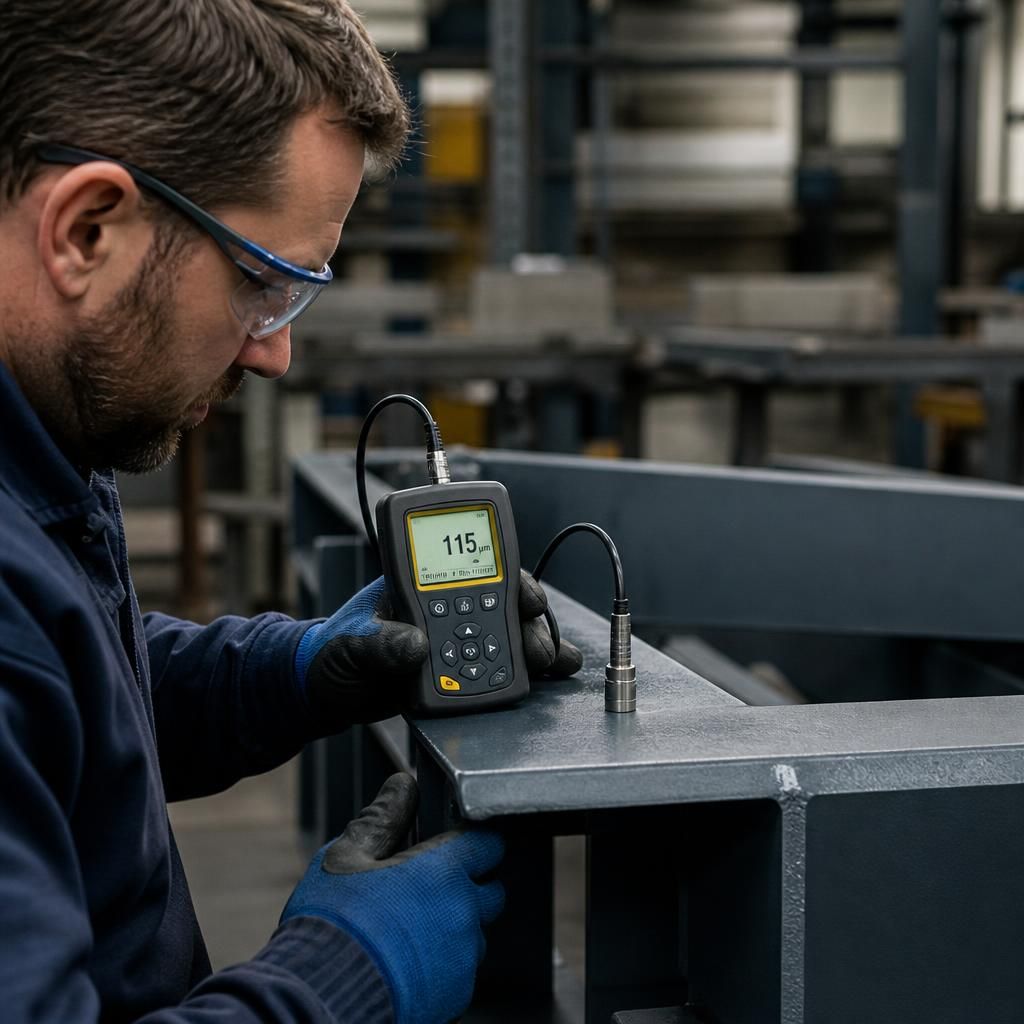
Surface profiling also affects how the finished coating thickness is interpreted. A rough steel surface contains peaks and valleys, so a thickness reading taken over a peak may not represent the protection available in the recesses. An apparently acceptable average can therefore conceal areas where the powder film is relatively thin.
For this reason, coating thickness checks should consider the profile and include representative locations across the component, rather than relying on a single reading or a visually uniform finish. Comparing the results with the coating system specification helps confirm that the prepared texture and applied film work together to provide consistent protection.
Discuss surface profiling for your steel components
Discuss your steel components with our powder coating team to confirm the preparation and profiling requirements for the specified coating system. Provide details of the component, steel condition and service environment so the coating route can be assessed before production.